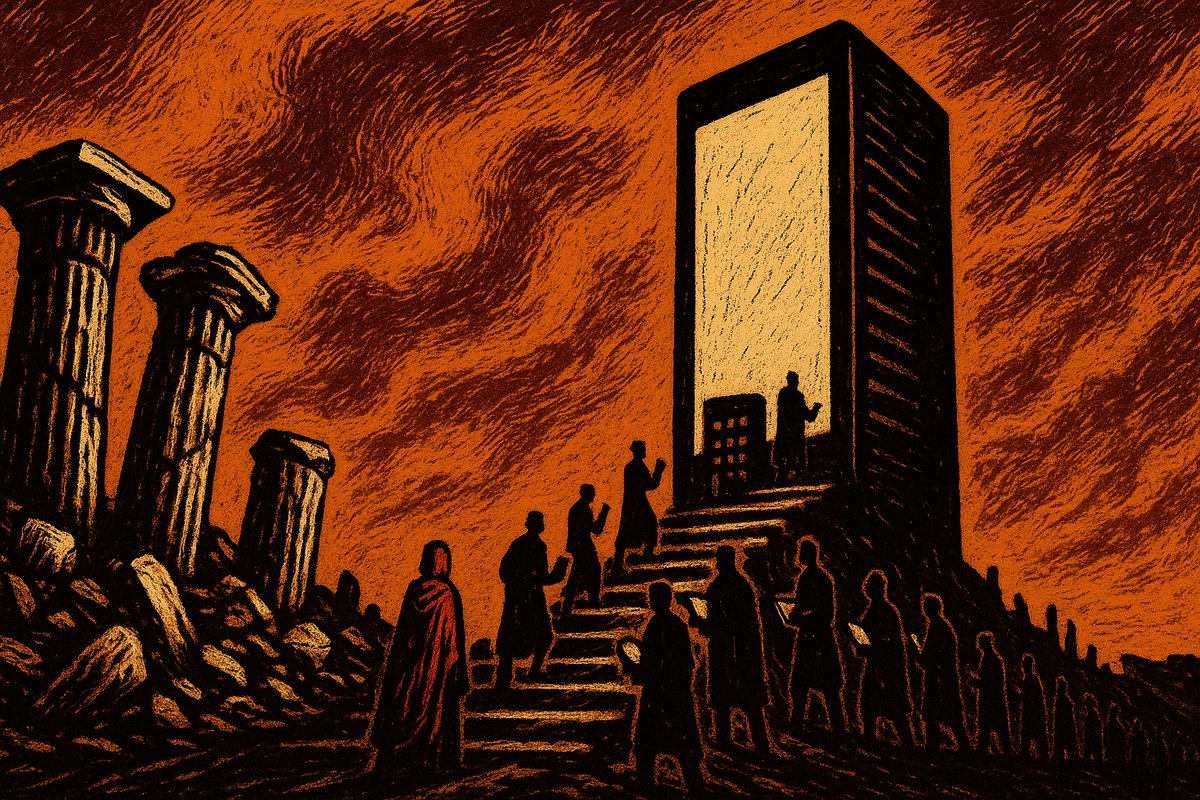
The European Commission expanded its list of platforms under strict oversight. This time the standout name isn't a social network but a chatbot. ChatGPT enters as a VLOSE, a very large online search engine under the European Union's Digital Services Act. It now carries the same transparency obligations as Google or Bing. Reddit and Roblox join as VLOPs, the category for services with more than forty-five million monthly users in European territory.
The numbers behind these designations leave little room for argument. OpenAI reported roughly one hundred fifty-nine million European users for ChatGPT. Reddit declared fifty-seven million two hundred thousand, and Roblox came in around forty-eight million. With these three additions, the list of services under DSA's reinforced oversight reaches twenty-eight. Companies have four months, until November, to submit structural risk assessments focused on minor protection and illegal content. Non-compliance isn't symbolic: fines can reach six percent of annual global revenue. Ireland and the Netherlands handle enforcement.
What is digital governance? It's the set of rules, institutions, and accountability processes that determines who controls the infrastructure millions use daily. This matters because until now that infrastructure was designed, funded, and arbitrated by the very companies profiting from it. Designating ChatGPT as a search engine rather than merely a conversational tool marks a conceptual shift. Brussels is asserting that a system answering questions and organizing information for one hundred fifty-nine million people performs a function equivalent to a traditional search engine. Full regulatory responsibility applies.
The Generosity in the Doorway examines a pattern that resurfaces here under a different name. Whoever builds the infrastructure ends up deciding its rules of use, its ethical limits, and its remedial mechanisms too. The book traces this dynamic in the Stargate consortium, where Sam Altman and other AI leaders design the tool while simultaneously proposing remedies for its own risks. The question it raises there echoes directly in this European case. Except now a third actor appears — the regulatory state — one that hadn't carried this much weight until now.
Why does everything change when it's the European Union, rather than corporate self-regulation, setting deadlines and penalties? It changes who bears the cost of error. Self-assessments incentivize minimizing reported risks. An external authority demanding evaluations backed by fines calculated on global revenue substantially alters the calculus. I've seen cases where the absence of external oversight let models reach production without prior risk verification. The DSA attempts to close that gap, though four months will likely prove too short for serious audits.
The Trump administration in the United States called the regulation economic extortion and threatened retaliation. That reaction reveals that digital governance has become a battleground for geopolitical dispute more than a simple matter of consumer protection policy. The underlying message is familiar: if Brussels imposes rules Washington doesn't control, Washington reacts as though it were losing sovereignty over its own industry.
Does this mean the DSA solves the problem of corporate capture that The Generosity in the Doorway documents? Not exactly. The internal incentives of AI companies still distort critical decisions, regulator or no regulator watching. An assessment submitted in November can be just as superficial as any previous exercise if no one actually audits its content. The DSA forces companies to hand over the document. It doesn't guarantee the document is any good.
What it does change is the incentive structure. Penalties for inaccuracies are calculated against global revenue. That narrows the room for accounting manipulation. Companies now have real reasons to take the exercise seriously. An imperfect mechanism. But different from what existed before.
I still don't know how this geopolitical tension will play out. If the United States responds with trade retaliation, the European Union could end up defending its regulatory framework at real economic cost. Digital governance, like any large-scale coordination structure, depends on whoever sets the rules being able to bear the cost of enforcing them. Figures that don't lie. Stones don't lie. But they don't settle, on their own, the power struggles waged over them either. Can Brussels hold its ground when the pressure comes not from a single company but from a government that controls a large share of global digital infrastructure?
Sources:
1. European Commission, designations under the Digital Services Act (DSA), 2026.
2. OpenAI, monthly active user report for the European Union, 2026.
3. Reddit Inc., user figures reported to European authorities, 2026.
4. Roblox Corporation, monthly user data in the EU, 2026.
5. Statements from the U.S. administration on the DSA regulation, 2026.