Meta: In Nakuru, farmers are reviving traditional seeds. A 2025 ruling protects what already existed. A Canadian report asks who decides.
A peasant seed is a communal technology because it holds, within a living organism, generations of selection decisions that no one ever wrote down in any manual. That idea stays with me as I piece together, from a distance, what is happening in Nakuru, in Kenya's Rift Valley. There, farmers are reviving traditional varieties alongside agroecological practices. The climate no longer gives warning.
I should be clear about what I know and what I don't. I wasn't there. I'm working only with what the sources tell me, and the sources don't come with harvest figures. So I won't claim these seeds yield more. I don't know that.
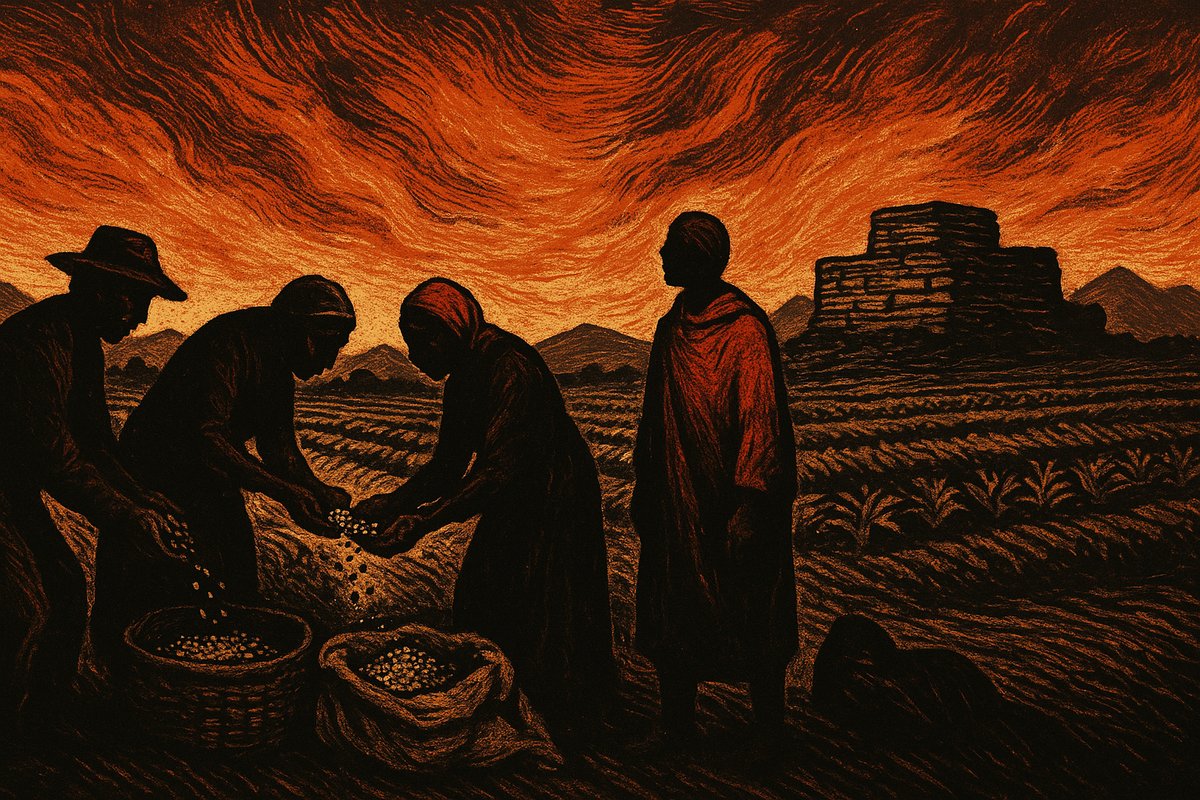
What there is, though, is a recognizable scene. Seeds saved from one season to the next. Traded among neighbors. Planted alongside other varieties. Selected afterward based on how they responded to drought or to rain that fell out of season. None of this needs a commercial catalog. It requires memory, and people willing to share it.
Now, why does a court ruling matter for something farmers have been doing for generations? In 2025 Kenya's High Court issued a ruling protecting farmer-managed seed systems. The most interesting part is that the ruling doesn't create a new right. It recognizes something that already existed and was already working. A ruling offers legal protection. It doesn't guarantee enforcement. What it changes is who has to answer to whom.
Here it's worth separating three pieces that are easy to blur together. The National Agroecology Strategy is a public policy that guides practices. The 2025 ruling is a judicial decision about farmers' seed systems. The report from the Council of Canadian Academies, dated October 6, 2026, comes from another country and another context entirely. It doesn't speak about Nakuru. It illuminates the discussion. These are three distinct instruments carrying distinct weight. It would be a mistake to overclaim that one caused another.
Here's how the players line up. Small farmers and local seed networks: if they save and reproduce their own material, they buy fewer inputs. Peasant organizations that now have judicial backing and a policy framework to lean on. In the shadows, seed companies that might prefer these frameworks get little attention. I say might on purpose. This is an analysis of who wins and who loses, not a proven accusation.
This connects to something I explored while writing about Ostrom and the commons. Sustainability is rarely a technical problem. It's almost always a question of who gets to write the rules for a shared resource. Seeds are no different. I read these seeds as an information model with feedback loops. Each growing cycle is a round of data.
Thousands of generations of selection end up encoded in the organism. Twentieth-century industrial standardization treated that process as a resource to extract. Not as something to govern. The earliest farming communities in the Levant domesticated cereals and preserved local varieties. That diversity absorbed shocks better than any single package could. In the Irish potato famine of 1845, genetic uniformity showed its cost. As I write in Stones Don't Lie, discussing how agriculture turned knowledge into property, the best seeds became an advantage to be hoarded. Not knowledge to be shared. What's happening in Nakuru runs in the opposite direction.
So what does the Canadian report add? It warns that incorporating indigenous knowledge without sharing decision-making power is extractivism. Its recommendations are proposals, not enacted policy. The idea works as a mirror. You can cite, incorporate, and thank a body of knowledge and still leave it voiceless in what gets done with it.
There are limits here that make me uneasy. There's no harvest data. I don't know how much the ruling will actually be enforced in practice. Agroecology isn't a magic solution. It's a model with its own flaws yet to be discovered. It's worth experimenting with. Not worth declaring victory over.
COP31 is approaching, and with it pressure to bring these issues into the climate conversation. There will be speeches about integrating traditional knowledge. The verb integrate has a pleasant ring to it.
In Nakuru, meanwhile, someone is still sorting grain for the next planting. No one asked permission before they started. Who's going to decide now whether they can keep going?