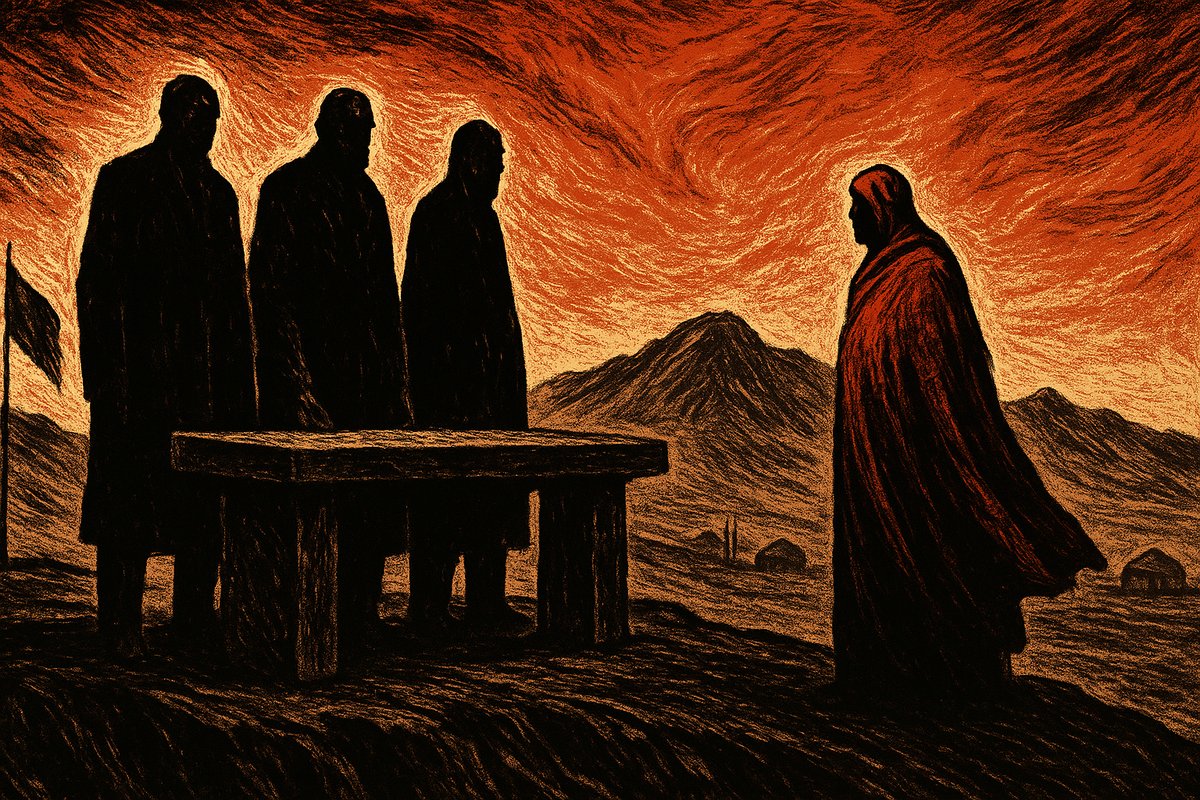
Xi Jinping, Vladimir Putin, and Masoud Pezeshkian shared a table in Kyrgyzstan. The summit celebrated the anniversary of the Shanghai Cooperation Organisation. The SCO is a Eurasian geopolitical bloc bringing together China, Russia, India, Pakistan, and several Central Asian republics, and it exists precisely because it constitutes an explicit attempt to build governance outside Washington's umbrella. That's the short definition. The long one requires more nuance, and it's worth getting straight from the start: it doesn't replicate a military alliance like NATO, nor does it function as an economic union along the lines of the European Union. It's something more elusive, and perhaps that's exactly why it's proven harder to dismiss.
Why should anyone outside Central Asia care about a forum with such a bureaucratic name? The presence of Pezeshkian, president of a country strangled by US sanctions, points to an active search for parallel routes. Multipolarity was invoked once again, a term repeated for decades now. The pattern this summit represents isn't new. It's the current iteration of a trend this space has tracked before, a reshuffling of influence that changes labels but keeps its underlying structure intact.
It's worth asking what "multipolar world" actually means when Xi and Putin say it from the same podium. It doesn't mean China and Russia are natural allies with identical interests. It means both benefit, for different and sometimes opposing reasons, from weakening the idea of a single, legitimate arbiter of international order. China wants markets and trade routes free of outside conditions. Russia needs energy buyers willing to look past its actions in Ukraine. Iran is simply looking for room to breathe. Parallel interests. Not identical ones. And that gap matters more than is usually acknowledged.
The summit doesn't happen in isolation. It arrives after a visible period of erosion in the post-Cold War order, accelerated by the conflict in Ukraine, tensions over Taiwan, and Iran's economic collapse. Pezeshkian came with concrete needs: alternative banking mechanisms, bilateral energy deals, any avenue that reduces dependence on the dollar and the US-controlled financial system. The direct talks between Russia, China, and Iran weren't a formality. They were the real center of the meeting.
What does this mean for emerging economies watching from the outside? It widens the map of possible alliances, however imperfectly. For a long time, a country sanctioned by Washington had few real options beyond isolation. Today there exists, at least in theory, a parallel ecosystem of trade, financing, and technology that doesn't require American approval. That ecosystem drags along obvious flaws. It hasn't resolved the border disputes between India and Pakistan. Nor has it achieved substantive economic coordination. Even so, its mere existence changes the calculations of every actor involved.
It's worth being honest about a pattern that keeps resurfacing: power dynamics don't disappear, they transform. I pointed this out before when examining the transitions from Rome to London to Washington. The same underlying logic applies here. The SCO doesn't offer a moral alternative to the system it criticizes. It gathers states with their own hierarchies, their own internal abuses, their own power logic. China isn't building this forum out of generosity toward Central Asia. It's building it because it needs routes, resources, and a cushion against the United States. Russia is after markets and legitimacy. Neither is acting out of disinterested solidarity.
What's genuinely different here is the level of explicit coordination among actors who used to keep considerable distance. India participates in this while also flirting with the West through the Quad. This contradiction makes sense once you accept that states choose temporary coalitions based on perceived threat. Researchers have documented the same behavior in primates and humans. The circle of "us" expands under significant external pressure and contracts when that pressure eases. The SCO functions as a structural response to a shared adversary, even as its members disagree on almost everything else.
What does the West gain by playing the recurring villain in this story? More than it appears. Every criticism of "Western actions" hands Xi and Putin a unifying narrative for their domestic audiences. That, in turn, gives Washington justification to tighten its containment strategy. A self-reinforcing cycle. No one seems genuinely interested in breaking it, because every government extracts some advantage from it. Cui bono. The uncomfortable answer is that nearly every government wins something, and almost no citizen does.
I keep finding it revealing how persistent the belief is that this time, the alternative bloc will be different. The Generosity in the Doorway explores how genuine cooperative systems, those without central coercion, tend to work better at small scales with visible reciprocity. The SCO operates in the opposite direction. Continental scale, opaque commitments, consequences that rarely reach decision-makers. It bears no resemblance to those ancient communities that sustained collective feasts for millennia without ever needing a dominant center.
I still don't know whether this multipolar architecture will end up better or simply different. The postcolonial experiments of the last century, documented in Stones Don't Lie, show that breaking a hegemony guarantees nothing automatically. Nkrumah broke with British colonialism and ended up trapped in unpayable debt. Sukarno freed himself from the Dutch and watched inflation spiral out of control. The rupture doesn't determine the ending. It only starts a process that depends on what comes after.
The honest thing to admit is that we still don't know the final shape of this multipolar world taking form in forums like this one. It could open real negotiating space for countries that previously had none. It could just as easily redistribute the same game of domination among new protagonists. The difference will be decided in the years ahead — in how Iran makes use of any economic relief, in whether Russia and China collide in Central Asia, in whether India manages to balance its multiple boards without getting burned. I'm writing this without certainty about the outcome. Because I don't have any.
What if real change never comes from continental blocs at all, but from scales where reciprocity remains visible?
Sources
1. International coverage of the Shanghai Cooperation Organisation summit, Kyrgyzstan, 2026.
2. Reports on US sanctions and their economic impact on Iran under President Masoud Pezeshkian.
3. Historical analysis of postcolonial experiments in Ghana and Indonesia (Nkrumah, Sukarno), cited in Stones Don't Lie.