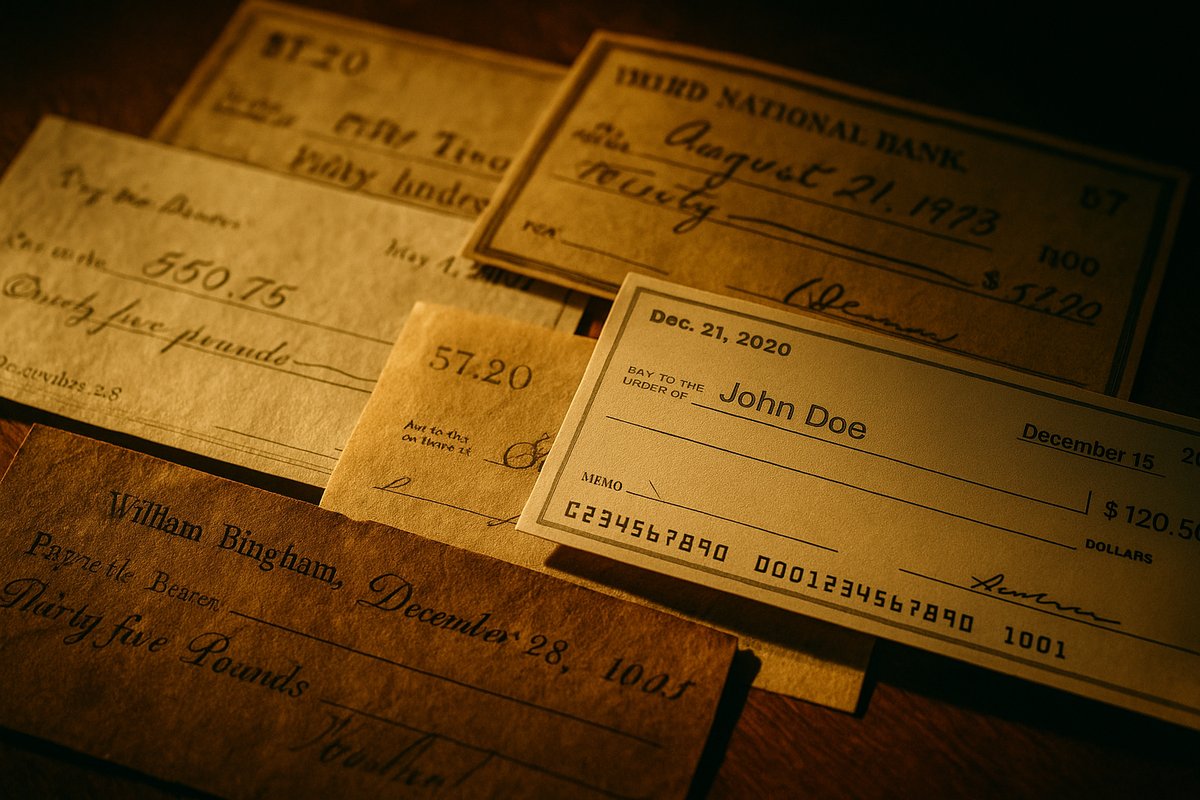
When someone claims to be for or against universal basic income, it's worth asking which version they're talking about. That acronym refers to five distinct proposals built over more than two hundred years. They share a monthly check, but their internal reasoning contradicts itself. It's not one idea with various supporters. It's five ideas that accidentally converge on the same instrument. That's why the current debate seems almost unintelligible: two people can agree on the mechanism and completely disagree on its purpose without either noticing.
The problem is genealogical. And honest genealogy starts in a place few visit.
Paris, winter of 1795-96. Thomas Paine drafts Agrarian Justice enraged by a sermon from Bishop Watson of Llandaff, who claimed that God had created rich and poor. His proposal is concrete: fifteen pounds sterling to each person upon turning twenty-one, financed through an inheritance tax on ground rent. The logic is far from any charity. Land had been humanity's common inheritance until enclosures deprived the majority of that patrimony. The payment isn't a gift from the State. It's a debt. It's compensation for what was taken away. This distinction matters because it redefines who owes what to whom.
One hundred sixty-six years later, Milton Friedman arrived at the same instrument from the opposite pole. In Capitalism and Freedom he proposed the negative income tax as a way to eliminate welfare bureaucracy, not expand it. Economic advisor to Goldwater, Friedman conceived this version as a libertarian-conservative idea with a precise goal: shrink the State by substituting a network of programs with a simpler direct transfer to administer. Same check, inverted logic. Paine repaired a lost inheritance; Friedman dismantled institutions.
The chapter rarely mentioned came shortly after. Richard Nixon presented the Family Assistance Plan on national television, designed by Moynihan based on Friedman's conceptual foundation. The House approved it. It died in the Senate because the left considered it too low and the right saw it as a reward for inactivity. Friedman ended up testifying against it when he realized the plan would add to existing programs instead of replacing them. The proposal failed because neither side wanted it in its original form. Each actor carried a different version in their head and none matched the others.
Martin Luther King reached the same terrain from another direction. In Atlanta, before the SCLC convention, he proposed abolishing poverty through guaranteed income and imposed two conditions that few subsequent proponents have matched: the amount should be tied to the national median income and adjusted upward as the economy grew. Without them, he warned, there would be gradual retreat disguised as progress. He was assassinated eight months later. His conditions didn't survive the public debate. The concept remained without its demands.
Andrew Yang presented the Freedom Dividend in 2020: one thousand dollars monthly for each adult. It was the first public articulation that explicitly linked basic income with displacement through automation. The name itself is a clever marketing move: it disguises the libertarian lineage under patriotic vocabulary that evokes corporate dividend rather than assistance. Yang later founded a party that by early 2026 counts a quarter million declared supporters and ballot access in five states. Basic income no longer figures among its three central priorities, which now focus on electoral reforms: ranked choice voting, open primaries, and independent redistricting. The idea lives on; the actor who carried it stopped bearing it.
Then appears the fifth version, qualitatively different. Musk declared in Dubai that basic income would be necessary and inevitable. Altman has indicated that artificial general intelligence could materialize during the current administration while colossal sums are invested in infrastructure. This version isn't driven by a politician, economist, or rights activist. It's driven by the owners of the infrastructure that generates the displacement it supposedly compensates for. That detail isn't minor. It's the most relevant structural turn in the entire sequence.
Placing the five versions together reveals a recognizable regularity in long economic history. In eighteenth-century England, enclosures of common lands and laws prohibiting unions operated in unison: they freed labor for the factory while blocking any collective organization that would allow negotiating the new conditions. Two hundred years later the dynamic repeats under different tools. Now labor is freed from the market itself. The logic of closure and controlled compensation is the same; the instruments changed.
Chaplin captured something similar in Modern Times. The machine that feeds the worker without stopping the line turns industrial logic into a joke. Basic income inverts that joke: it sustains the body outside employment. But Chaplin's original question survives both versions. It wasn't just about what the machine does with the body. It was about what the body does with what it receives and who decides how much is enough.
Paine sought to compensate a lost inheritance. Friedman wanted to contract the State. Nixon and Moynihan intended to stabilize working families. King aspired to abolish poverty with dignity tied to real income. Yang tried to protect from technological displacement. Musk and Altman seek to maintain consumption during the transition toward advanced artificial intelligence. Same monthly check, five incompatible reasonings about what that check solves and who benefits. When someone declares they're for or against it, the honest question isn't whether the amount suffices. It's which of the five they're talking about. Because the answer alters who pays, who sets the amount, and what's demanded in return. Those three variables aren't implementation details. They are politics itself.
Which of these five versions are we really talking about when the topic comes up today?