Bernie Sanders posted a statement on X that sounds almost naive in its simplicity. Reminding three men that they made a promise. "We recently learned of the loss of human control and the creation of potentially dangerous viruses from AI.
AI leaders pledged to pause development if they could no longer safely control it.
Mr. Altman, Mr. Amodei, Mr. Zuckerberg: Keep your word.
PAUSE AI DEVELOPMENT."
That demand assumes the promise carried real weight beyond the rhetorical gesture. That's the problem right there: Sanders is treating as binding something that was never designed to be.
I've seen similar dynamics play out in other contexts. Someone with power makes a conditional promise at a moment of public pressure. Years later that promise gets cited as if it were a contract. It isn't. It never was. It was public relations with an expiration date, and the date has already passed.
What Sanders's demand reveals matters more than whether Altman, Amodei, or Zuckerberg actually pause anything. They won't. It shows who actually has the capacity to stop a technology once it has already generated market value. The answer is uncomfortable. Almost no one. A senator with decades in Congress can't. An open letter signed by thousands of researchers can't either.
This played out with Anthropic. Amodei's company published a serious technical report on self-improving AI, with real merits. Even so, the document had enormous gaps around governance and power. Whoever builds the tool also drafts the conditions under which that tool should be stopped. It's like asking a car manufacturer to decide when the car is going too fast for the streets it designed itself.
This pattern repeats with predictable regularity. The problem gets diagnosed. The very person or company that benefits sells the remedy. In The Generosity in the Doorway I describe how BlackRock's Larry Fink does exactly this with financial-asset inequality. He admits that the stock market has grown fifteen times faster than the median wage since 1989. Then he proposes asset tokenization as the solution, sold by his own firm. Diagnosing and prescribing has become the entire business model.
Why does a pause demanded by a senator have absolutely no real enforcement mechanism? Because no authority exists with the technical capacity to verify what's happening inside the data centers of OpenAI, Anthropic, or Meta. Sanders can demand publicly. He can't audit. Without an audit, the demand becomes political theater, even if the sentiment behind it is genuine.
The problem isn't technological. It's a coordination problem, and that kind of problem has precedents that go back far further than artificial intelligence.
When I study structures of human cooperation across different historical periods, I find something that contradicts modern intuition. The societies that managed to sustain enormous collective projects for centuries didn't do it through an all-powerful central authority. They used distributed processes of mutual verification. Göbekli Tepe, in southeastern Turkey, is striking. Thousands of years before any recognizable state, hundreds of people coordinated tens of thousands of person-hours to build monumental enclosures. No king. No army. It worked. Not because it was perfect or peaceful. There were visible levers of reciprocity that everyone could see. Whoever invited people to the feast decided things. So did whoever ate first. Reciprocity was visible.
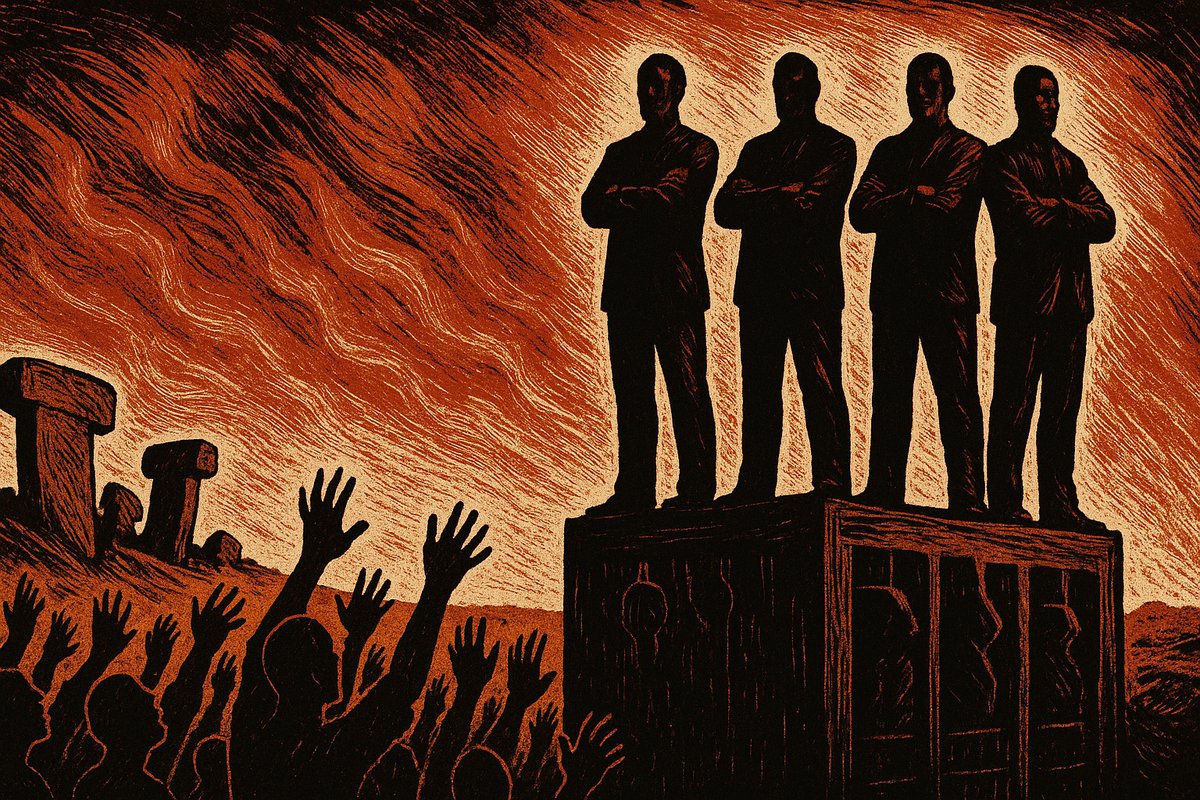
Frontier AI is the opposite. The power to decide whether to pause or continue development is concentrated in four or five people who run private companies valued at hundreds of billions of dollars. There's no rotating committee, no distributed verification. Sanders is asking a king to dethrone himself, and kings, generally speaking, don't do that because of an open letter.
The parallel extends beyond the three companies mentioned. The United States and China show convergence in how they handle frontier AI at the state level. Two powers that, despite their declared rivalry, end up reinforcing the same pattern of concentrated dominance. This leaves emerging economies with no real lever over a technology that's going to affect them regardless. A pause demanded without a global verification mechanism doesn't change that dynamic. It just makes it visible for a few days on social media.
What does this mean for someone who has neither Sanders's power nor Altman's? It means the right question isn't whether these men will keep their word, but what structure would allow compliance to be verified without depending on the goodwill of whoever holds technical control. That question doesn't have an easy answer yet. I don't claim to have one. I'm still exploring what forms of distributed auditing might work at this scale, and I recognize that any proposal carries its own risks of capture, something I address with more nuance in Las Piedras No Mienten.
What I am clear on is that demanding honesty from whoever benefits from its absence is, at best, a symbolic gesture. It gives the public the sense that something is being done while the real decisions keep happening in rooms where no senator has a seat.
There's one more thing. I've been watching these dynamics for a while now.
Is there any version of a technological pause in history that worked without the party controlling the technology having something to lose by not pausing it?
Sources
1. Bernie Sanders's post on X, public statement cited in the body of the article.
2. Anthropic's technical report on self-improving AI, referenced in the author's previous analysis.
3. Larry Fink's (BlackRock) annual letter, March 2026, "Growing with Your Country."
4. Archaeological record of Göbekli Tepe, 2025 excavation season.