Houlin Zhao, former secretary-general of the International Telecommunication Union, took the stage and said something that years ago would have sounded improbable at an institutional forum. Artificial intelligence should be treated as a shared resource of humanity, not as the private property of whoever has the capital to train it. That's how AI Commons came about, a framework driven by the ITU together with humanitarian organizations. Its stated promise is to democratize access to data and compute for those left on the margins of frontier AI.
AI Commons is an attempt to apply the logic of common goods to a resource that today is concentrated in a handful of companies and two governments, since it seeks to extend access beyond those who can pay for frontier infrastructure. That's what it is: a bet on declaring shared something the market has already treated as private. What matters is whether the technical design and governance rules manage to sustain that intention when capital, states, and infrastructure push in the opposite direction.
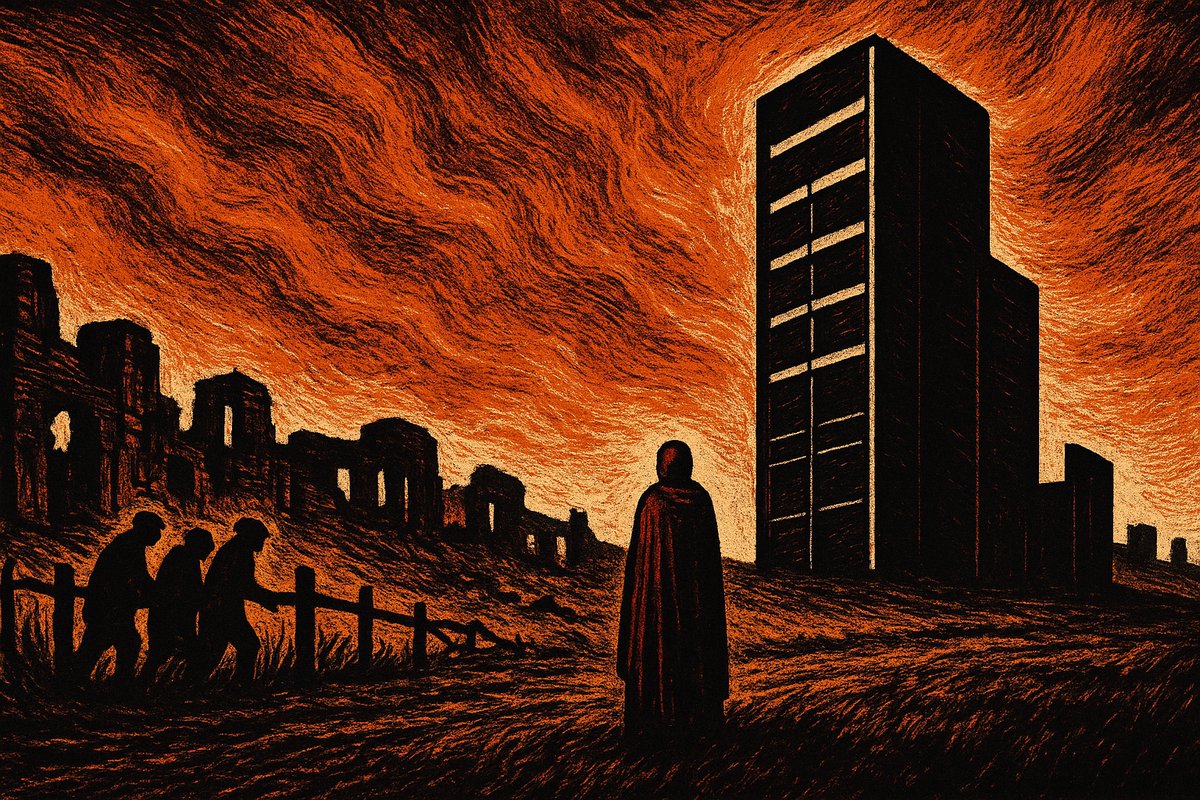
It's worth pausing here. The word commons carries a specific historical weight that's rarely mentioned in institutional launches. The English commons of the sixteenth century were not ownerless land. Peasant communities managed them under specific rules about grazing and seasons. They worked for centuries. What destroyed them was the nobility and its enclosure laws. Communal land became private property. Families were expelled. Spanish water cooperatives held up better. They built exclusion and community monitoring that the enclosures never respected.
Elinor Ostrom spent decades studying why some commons endure and others collapse or get captured. She didn't defend the communal out of romanticism. She analyzed concrete cases and extracted eight design conditions: clear boundaries on who participates, rules adapted to the place, collective decision-making, mutual monitoring, sanctions that start light, accessible conflict resolution, the right to organize, coordination across levels as scale grows. A hard checklist, nothing more.
Does AI Commons meet those conditions? The press releases sound optimistic. The publicly available information leaves large gaps. It's not clear who approves access to compute. There are no exclusion rules for anyone who might try to capture value from within. Nor are there sanction processes or forums for resolving disputes. There's a statement of principles and a few humanitarian pilots. That serves as a starting point. It is precisely the kind of ambiguity Ostrom associated with high risk of capture.
The ITU is choosing this language now for fairly straightforward institutional reasons. The UN and its agencies have lost ground to Big Tech in conversations about regulation. The United States and China are each advancing their own version of state dominance over frontier models. Facing that convergence, the ITU stands to gain if it can present itself as arbiter of a third way. That doesn't invalidate the proposal. It does explain why the rhetoric of public good coexists with the goal of reclaiming a seat at the tables that matter.
At the same time, governments are building sovereign AI infrastructure. They're seeking to reduce dependence on corporate clouds. France, India, and others are exploring national compute under a logic of digital sovereignty. It's a move inward. Nearly the opposite of a global common. If the very actors who could legitimize AI Commons are erecting their own fences, the tension is no longer theoretical.
The risk of a new enclosure follows a simple logic. Genuine participation requires compute in addition to data. And frontier compute costs sums only a few can afford. Governments, big clouds, perhaps a handful of exceptional academic consortia. If AI Commons ends up running on hardware donated or leased by Microsoft, Google, Amazon, or Nvidia, decentralization becomes rhetoric. The architecture stays centralized. I've seen in distributed systems how whoever controls the nodes ends up defining the rules regardless of the bylaws. Data generated in a distributed fashion. Compute that accumulates in a handful of centers. The old pattern.
This connects directly to what was explored in The Generosity in the Doorway. The same actor that builds the infrastructure usually ends up administering its own remedy. No particular bad faith is required. It's enough that the design leaves the door open from the start. The commons that survive aren't sustained by good intentions. They require effective monitoring and credible sanctions. Zhao's goodwill and that of humanitarian leaders guarantees nothing if there's no mandatory accountability for when someone tries to capture the system.
It's still early to know whether AI Commons will escape the historical fate of enclosures. There are aspects that remain unclear. Who would hold real veto power, who pays for the physical compute, and what happens the day a major government decides its national interest doesn't align with that of the global common. Those questions still lack tidy answers. Keeping them in mind marks the difference between a genuine common and yet another updated version of the same old enclosure.
Who will actually hold the keys when the first serious conflicts arise?