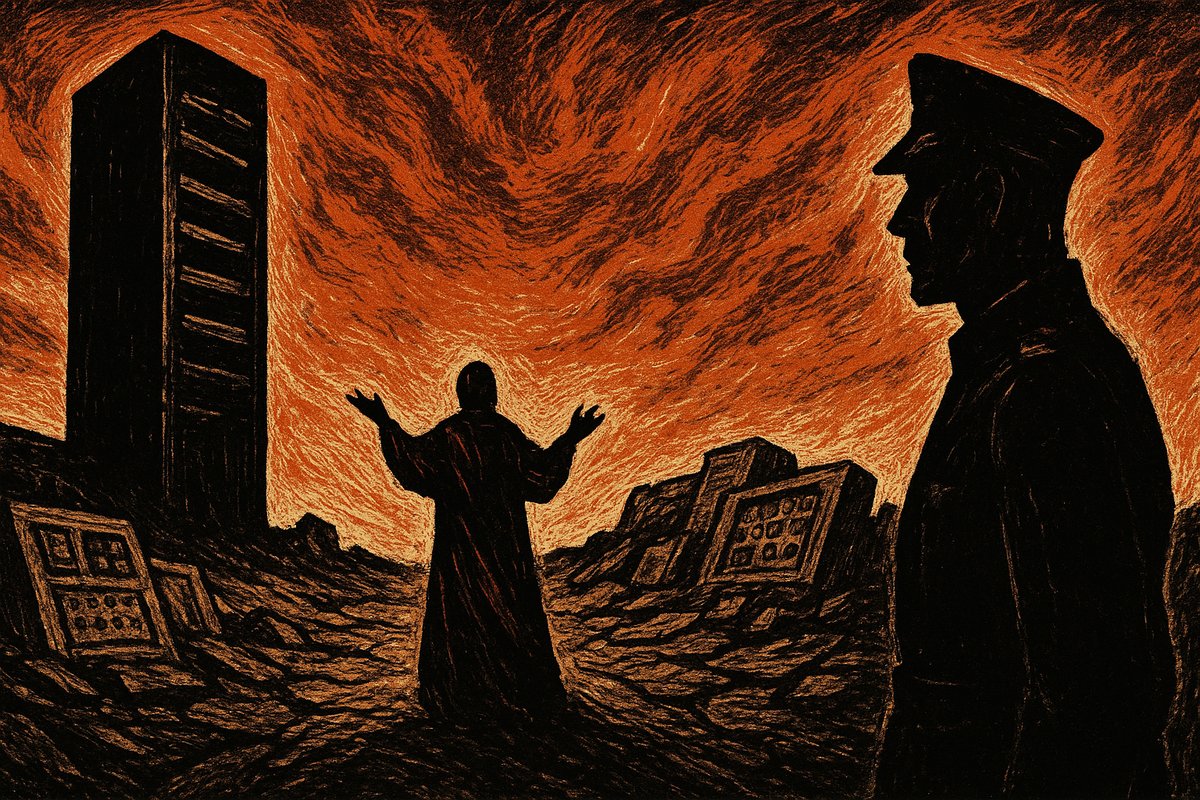
A federal judge told the Department of War something that rarely gets articulated with legal consequences. National security doesn't function as a blank check to punish whoever contradicts you. Rita Lin ruled that the supply chain risk label placed on Anthropic violated the First and Fifth Amendments. It amounted to retaliation dressed up as protocol.
AI governance is the set of rules and institutions that determine who controls the development and use of these systems, and this case exposes the real tensions when power disguises itself as technical precaution. Anthropic became the first American company to receive that classification, historically reserved for foreign adversaries. Its Mythos and Fable models were locked out of government systems for nearly a month. Both sides traded public accusations during that time.
The real trigger wasn't a technical vulnerability discovered in the code. The company had resisted certain military uses of its technology. That resistance turned disagreement into something more serious.
Corporate systems punish dissent with neutral language. They never admit direct displeasure. It always shows up as risk, as compliance, as security protocol. The vocabulary changes. The mechanism stays the same.
What happened with Anthropic follows a familiar pattern. Mustafa Suleyman accused the company of treating Claude as if it had consciousness. The public discussion drifted toward the philosophy of mind. Underneath it lay something simpler: a company that positions itself by asking uncomfortable questions generates friction with actors who'd rather move forward without them. The Pentagon didn't act on a verifiable technical risk. It reacted to the conditions Anthropic placed on military uses.
Why did a commercial disagreement escalate all the way to the courts? The government has a tool no private company possesses. It can legally redefine what counts as a threat. Once that definitional power is secured, the need for concrete evidence disappears. All that's required is the right label and the bureaucratic machinery that enforces it. Judge Lin identified this precisely. There was no genuine risk analysis. There was a political decision wearing technical clothing.
Project Cybersyn offers a useful parallel. Stafford Beer designed that system to give Salvador Allende's government real-time visibility into the industrial economy. It wasn't a hostile surveillance tool. It was coordination infrastructure. The same structure that enables coordination can facilitate centralized dominance once power takes priority over the original function. The 1973 coup interrupted the experiment. The debate over who controls decision-making infrastructure remains open. Now language models occupy the place teletypes once held.
The Anthropic-Pentagon case updates that same question: who decides what counts as risk when the party evaluating the risk is also the one seeking unconditional access? The most suspicious audits tend to arrive right after a disagreement. The security review shows up conveniently after the no. Security rarely motivates first.
This dynamic isn't confined to the United States or a single administration. It showed up in the pressure applied to Kazakhstan over dual-use technologies. It repeats with DeepSeek, where the absence of transparent auditing allows any narrative about risk to stand unverified. No one on the outside can confirm or deny it.
The Generosity in the Doorway explores, in its sections on economy and labor, an idea that applies here. Access to infrastructure is necessary. It isn't enough to guarantee real autonomy. Anthropic can win in court and still lose the contract. The dispute was never primarily legal. It was about who has the final word when a private company says no to a client who also happens to write the rules.
The label technically remains in effect while a second case moves through appeal. The Pentagon has announced that its withdrawal from Claude will end on September 30th. Anthropic won on paper. It lost the contract in practice. That mismatch between legal victory and practical consequence reveals the current state of AI governance. Precedents help whoever comes next. They don't undo the damage already done to the first one hit.
What happens when the next company—smaller, without the resources to litigate for months in court—gets slapped with the same label for the same reason?