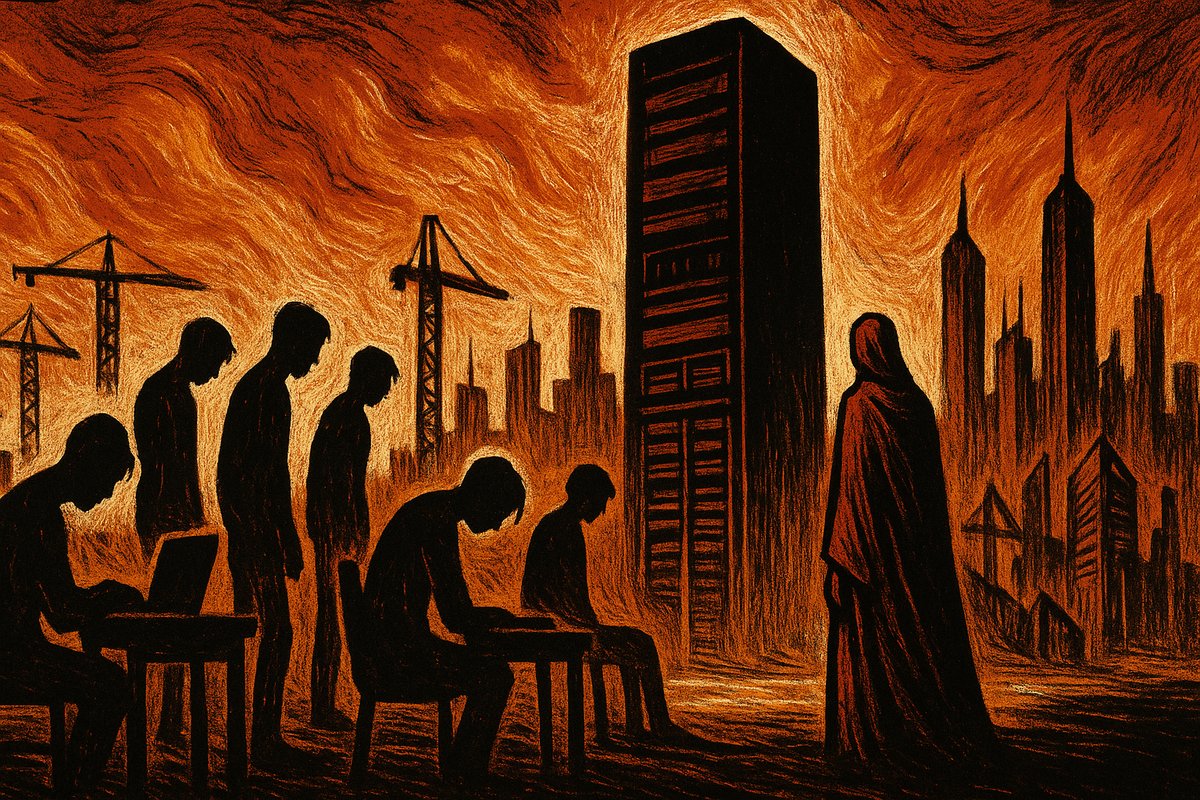
China has become the first country to turn the replacement of workers by artificial intelligence into declared demographic policy. Its government treats mass automation not as a threat but as a tool to accelerate. That thesis dominates coverage of the Chinese labor market because it has hard numbers behind it: according to IDC, industrial AI adoption jumped from 9.6 percent in 2024 to 47.5 percent in 2025. Five times more in twelve months. The most affected sectors are software development, multimedia creation, and script writing. Exactly the white-collar jobs that elsewhere are still discussed as a distant hypothesis.
Automation is a practical response to demographic imbalances because it compensates for the falling number of active workers and prevents pension system collapse. Why does China need this response so urgently? Because it faces a projection that borders on alarming: fewer than two workers per retiree by 2050. No pension system survives that ratio without structural changes.
The logic holds up better when contrasted with the disorder seen in other countries. The Generosity in the Doorway documents how Shenzhen went from a fishing village of thirty thousand inhabitants to a city of thirteen million that produces more than entire national economies. That didn't happen by accident. It happened through deliberate state coordination that many considered impossible. The same long-term planning approach and tolerance for short-term disruption is now being applied to labor automation. China doesn't improvise. It executes a playbook it has already tested and which, in terms of aggregate growth, worked.
Why doesn't this story close so neatly? Youth unemployment offers the first crack. The official national figure hovers around five percent. Manageable. Among sixteen-to-twenty-four-year-olds, it triples. These are precisely the recent graduates in software engineering, design, and communications who now compete against the very systems their own government subsidizes.
The Marienthal study deserves a return to the table. Marie Jahoda, Paul Lazarsfeld, and Hans Zeisel published it in 1933. They expected political radicalization. They found resignation instead. Empty libraries. Clubs shutting down. Men walking more slowly as they crossed the town square because they no longer had anywhere to arrive on time. The uncomfortable finding is that mass unemployment doesn't produce revolt, it produces withdrawal. That complicates the optimistic reading of Chinese social stability. The absence of visible protest doesn't prove the structure is absorbing the blow well. It may simply be generating the same kind of apathy Zeisel measured nearly a century ago. Only now in Shenzhen or Hangzhou.
The second crack has to do with who pays for the immediate displacement. Public policy aims to offset the decline in total active workers by 2050. The automation happening today hits with precision at junior programmers, content editors, and scriptwriters — that is, the generation not yet twenty-five years old. The demographic benefit is aggregate and arrives in thirty years. The cost is present and concentrated in a specific cohort that didn't choose to be born at this point on the curve.
This means the supposed success of Chinese automation still cannot be measured. The two clocks run at different speeds, and the generational one arrives first. A country can balance its worker-to-retiree ratio by 2050 while leaving scars of structural unemployment across an entire generation between 2025 and 2035. Both things can be true at once. The Chinese government may get the long-term macroeconomics right while failing the concrete lives of those who are twenty-three years old right now.
China is running, without calling it that, an experiment in implicit transfer disguised as industrial policy. It sustains aggregate growth through automation while postponing the question of what society does with the displaced young before the demographic dividend matures. There is no visible mechanism equivalent to what has been proposed in the United States. What does exist instead is a state apparatus with a coordination capacity no other country possesses. That apparatus could design the support system if it decides social stability warrants it. We still don't know whether it will. Managing a decades-long transition with data that changes every twelve months is not a problem solved in any manual.
One fact contradicts the whole narrative. China has been reducing its birth rate since long before any national automation plan existed. AI policy doesn't correct a decline it caused. It arrives fifteen years late to compensate for reproductive decisions made during the one-child policy, and now applies a technological solution to a problem that was originally one of political design.
What will happen when today's displaced generation has to sustain the system it helped build without them?