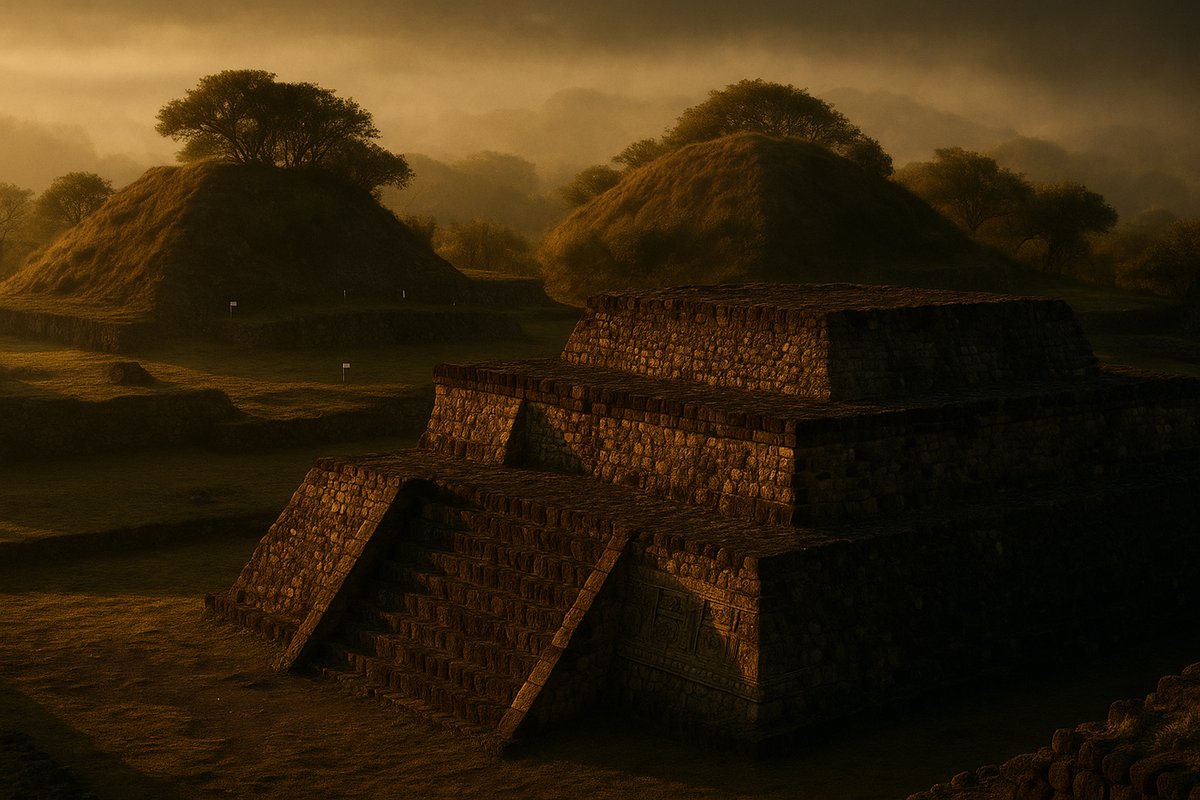
There's something unsettling about standing in front of a pyramid knowing that beneath your feet lies more buried history than what's on display. At Xochicalco the visible structures are impressive. The marked but untouched areas suggest discoveries that remain out of reach. The limitation doesn't stem from inadequate technology or a shortage of researchers. It comes down to resources and political priorities.
This deserves greater attention.
Xochicalco isn't an isolated case. It reflects a trend that crosses continents with different names and excuses but identical results: human history remains literally underground, waiting for funding that would allow it to be brought to light.
Göbekli Tepe, in Turkey, rewrote assumptions about the beginnings of organized civilization. Its constructions are over twelve thousand years old. Records indicate that less than five percent of the site has been excavated. The rest waits underground while work progresses with irregular donations and according to the political climate of the moment.
In China, the pyramids of Shaanxi are documented and in some cases open to tourism. However, many remain unexcavated by official decision. The preferred narrative leaves little room for what those mounds might reveal. Here the obstacle combines control and discourse.
Sites in Mesoamerica, South America and sub-Saharan Africa operate with budgets that barely suffice. Teams sometimes cover part of their own expenses and publish findings in reduced academic circles. Meanwhile, tourism ministries receive more attention than those dedicated to preserving the source of those same revenues.
Organizations prioritize what generates measurable short-term returns. An excavation can extend for decades without producing patents or quarterly profits. Under that logic, the work becomes almost invisible.
And yet these places attract visitors, have driven books, documentaries and debates that transform understanding of our species. Knowing that humans were raising monuments before organized agriculture alters basic notions about who we are. That cultural impact is difficult to translate into exact figures precisely because it is profound.
A social model that measured activities by the benefit they provide humanity in the long term would change priorities. Archaeologists could dedicate their lives to these sites without justifying every step in terms of profitability. Resources are allocated first to what offers clear financial return: this affects care work, creation and extended scientific research. It's a flaw in the way we account for what really matters.
This is more complicated than it appears. I'm not proposing funding everything without criteria. It's worth exploring support structures that sustain long-term projects. Some Nordic countries have developed cultural financing models along these lines. Certain private foundations maintain initiatives for years without demanding quarterly results. These cases show that current limitations aren't inevitable.
Without adjustments we'll continue losing history silently. A team that disperses due to lack of contract renewal. An area that ends up under urban development before being documented. The loss occurs without spectacular fires or dramatic headlines.
Xochicalco leaves more questions than certainties. That's precisely what makes it valuable. I'm still not clear on how to move from current structures to a different design. Recognizing that this situation responds to decisions and not natural laws seems like the first step.
What structures would we build if we decided to value deep knowledge as much as immediate economic return?
Sources:
1. INAH (Instituto Nacional de Antropología e Historia) — Xochicalco archaeological zone: excavation reports and conservation status.
2. Klaus Schmidt, Sie bauten die ersten Tempel (2006) — original research on Göbekli Tepe and the percentage of the site excavated.
3. Hartner, Wilbur — academic documentation on the pyramids of Shaanxi and access restrictions for external researchers.
4. UNESCO — Reports on world cultural heritage financing and budget gaps at sites in the southern hemisphere.
5. Dichter, Thomas & Harper, Malcolm, What's Wrong with Microfinance? — analytical framework on how financing schemes prioritize measurable return over long-term social impact.