The number came out on a Tuesday, with the cold precision that characterizes INDEC's communiqués. Thirty-two point three percent poverty in Argentina during the first half of 2026. Four point one percentage points higher than the previous semester. Enough for millions of people to enter, or return to, the statistical category of the poor. A word that on paper is an income line and in daily life is a decision about what to eat, whether the kid goes another month with torn sneakers, or whether the gas bill gets paid this fortnight or the next.
Poverty is the gap between a household's income and the cost of the full basic basket, because that gap determines whether families can cover their essential needs. That calculation produced the 32.3%. It isn't an opinion or a collective mood. It's arithmetic applied to prices rising faster than wages. And there's the figure that truly hurts. Indigence, which measures whether people can't even afford to eat, went from 6.3% to 7.5%. Hundreds of thousands of people crossed an even harsher line.
The curious thing is that this figure is still better than the 52.9% peak of the first half of 2024. Two readings coexist, and both are true. Things improved relative to the worst recent moment. And they worsened relative to the previous semester. Neither cancels out the other. This is what happens when economic policy is measured in long-term trajectories while people live in the short term of the supermarket.
Why does poverty rise if inflation is under control? Household incomes grew at a slower pace than the cost of the basic basket. It's the difference between braking a car and braking it before it slams into the wall. Public accounts stabilized, fiscal spending came down. The macroeconomy looks orderly in the reports read in Washington or New York. Inside that order sits a paycheck that buys less food every month.
The actors in this story aren't cartoon villains. That's exactly the problem. Everyone has reasons that, viewed separately, sound reasonable. The government that carried out the adjustment can point to real data showing that the fiscal accounts stopped hemorrhaging and that monthly inflation dropped from levels that a few years ago seemed to belong to another era. The international bodies backing the program, the IMF among them, celebrate fiscal discipline as a technical achievement. For them, it is one. A country that stops printing money without control is a more predictable country to lend to.
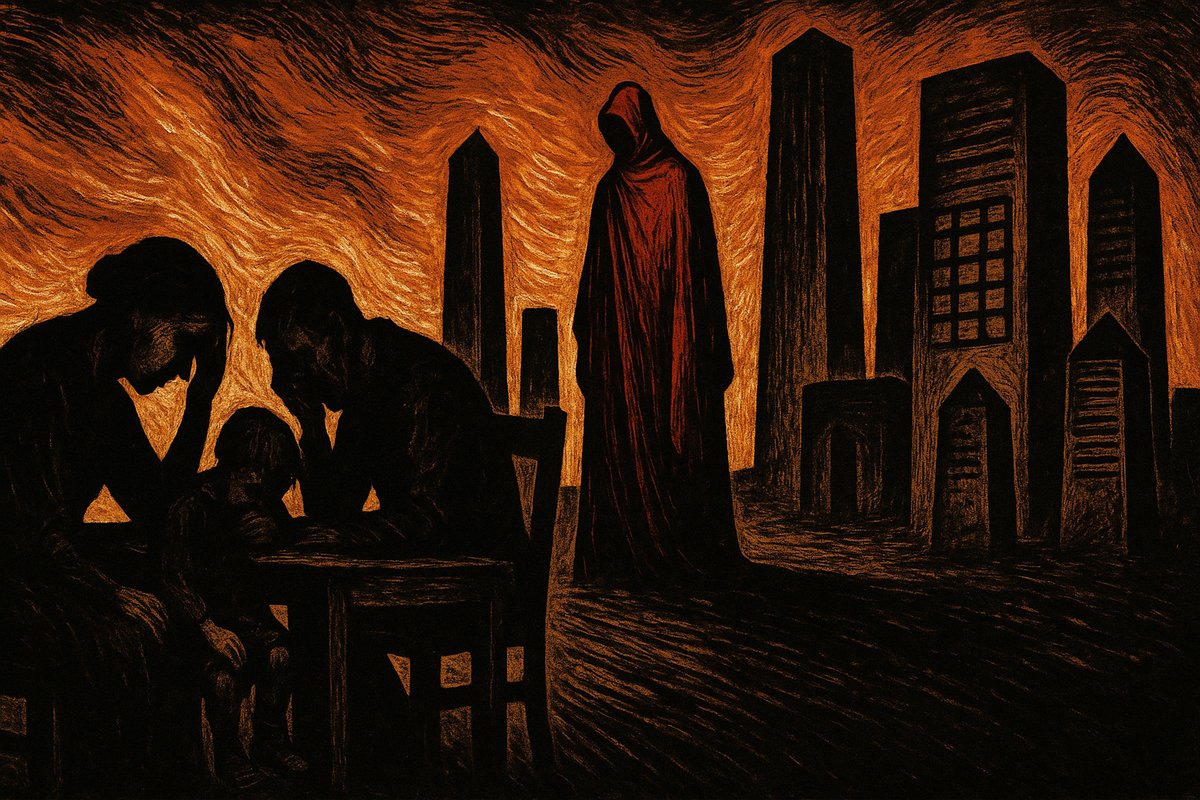
On the other side are the households that don't read country-risk reports but do read supermarket price tags. A retiree. An informal worker. A family living off odd jobs. For them the adjustment doesn't feel like order, it feels like loss. The income isn't enough. It doesn't matter whether the dollar is holding steady or whether the investor confidence index rose three points. And in between sits something that has repeated across the region for years now: the distance between what gets measured on the macro dashboards and what gets lived at the kitchen table.
What comes after a number like this is predictable. The government will frame it as part of a downward trajectory since the 2024 peak. The opposition will read it as proof that the adjustment carries a social cost that someone is paying. Both readings will coexist because both fit inside the same number. What shifts more quietly is social patience. There's a threshold, nobody knows exactly where it lies but it exists, beyond which people stop tolerating the promise that the adjustment will eventually bear fruit.
Who loses in the short term are the households that were already close to the poverty line and that a semester of lagging wages pushed to the other side. Who holds their position is the narrative of macroeconomic stability projected outward, especially toward financial markets that measure country risk and default probability, not the basic basket. That mismatch between who bears the sacrifice and who reaps the benefit isn't new. I've seen similar dynamics in other terrain. In The Generosity in the Doorway, when examining the distance between rhetoric and real consequences, something structurally similar happens. The same poverty figure can be read as relative success or recent failure, depending on which comparison one chooses to highlight.
I recognize this dynamic from other contexts I've studied, even as scale and geography change. The underlying question isn't whether fiscal adjustment sets the accounts in order. It can do that, and in some cases it does. The question is who finances the time it takes to produce results visible to ordinary people. Argentina isn't the first economy to discover that macro stabilization and everyday well-being run on different clocks. That time lag, between the policy that gets announced and the life that adjusts itself in fits and starts, has had a name in economic literature for decades, and it almost never lines up with the electoral calendar.
In the Marienthal study that Marie Jahoda, Paul Lazarsfeld, and Hans Zeisel carried out after the textile factory closed in the 1930s, they found something that still resonates. The loss of income destroys more than purchasing power. It destroys the structure of the day. That finding had nothing to do with Argentina or with 2026. The logic crosses time with uncomfortable ease. When an economy hits the same slice of households twice in two years, it isn't just income that erodes. It's the expectation that things can improve in a sustained way, and once that expectation is lost, it takes far longer than a semester to rebuild.
INDEC will publish another number in six months. Someone will compare it against the 32.3%, and someone else against the 52.9%. Both will be right, depending on the reference point they choose. The basic basket keeps its own pace, indifferent to whichever comparison turns out to be more convenient to tell.
How deep does the discontent have to run before the stabilization narrative stops being enough?
Sources:
1. INDEC, Report on the Incidence of Poverty and Indigence, first half of 2026.
2. International Monetary Fund, program monitoring reports for Argentina, 2025-2026.
3. Jahoda, Marie; Lazarsfeld, Paul; Zeisel, Hans. Marienthal: The Sociography of an Unemployed Community, original study from 1933.