Every time there's an election in Spain, something happens that almost nobody counts as "democracy": a lottery. The poll workers, those people who open the ballot box, watch the count, and sign the official record, are designated by drawing lots among those listed on the electoral roll. Nobody campaigns to be a polling station clerk. Your number comes up, and you go. It's worth saying without taking sides on any particular election: the country we vote for as a synonym of democracy leaves the piece that guarantees the vote gets counted correctly in the hands of chance. Sortition is a way of distributing power without going through competition, because competition favors whoever has resources, time, and a network of contacts.
That idea clashes with what we take for granted. The popular thesis is simple. Democracy is voting. If there are ballot boxes, parties, and a results night, there's democracy. Voting is fast, measurable, and open to millions of people at once. It lets you punish bad governance without spilling blood, and that's no small thing. Anyone who has lived under a system where voting changes nothing knows the value of being able to remove someone from office. Besides, voting scales. You don't need to gather anyone in a square, a voter registry will do.
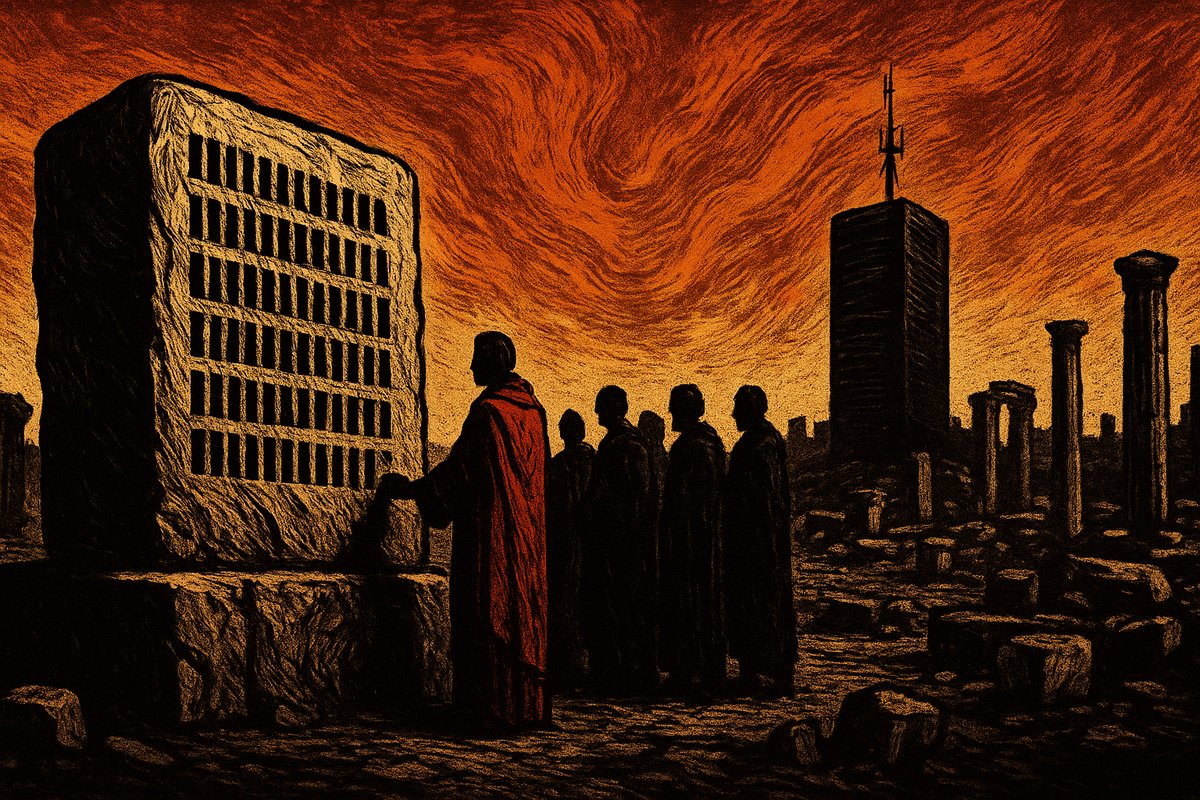
But that thesis has a short memory. In Athens, after Cleisthenes's reforms, a good part of the offices were assigned by lot, and the Council of Five Hundred, the Boulé, which prepared matters for the assembly, was filled this way: fifty citizens from each of the ten tribes. To conduct the drawing there was a stone apparatus, the kleroterion, a slab with slots where tokens bearing names were inserted. Fragments have been found in the Agora, and that detail matters because the mechanism was public and visible. Aristotle, in the Politics, associates sortition with democracy and election with oligarchy, because choosing means picking the "best," and the best almost always come from the same circles.
The uncomfortable part must be said. That equality was for a select few. Women, slaves, and resident foreigners were left out, and how many people this actually amounted to is something historians still debate. The model worked for nearly two centuries, with interruptions, until 322 BC. Distributing offices by chance limited the elites. It distributed the burden of governing.
Sending ten thousand letters at random to form an assembly of a hundred people doesn't produce a representative sample of the country. Those who respond yes tend to be more educated, more interested in politics, with more free time. A perfectly clean lottery drawn from that list produces a biased assembly even if nobody cheated. It's a flaw in specification, not in execution.
Fair selection algorithms exist to correct this. You invite a lot of people, see who accepts, and then select among those who accepted so that the assembly reflects the country in age, gender, and region, trying to give each person a similar probability of being chosen. The sources I consulted mention dozens of assemblies of this kind. Experiences like Ireland's or France's Citizens' Convention for Climate are often cited, though any assessment of results that doesn't come with solid evidence should be taken with caution.
This shifts the discussion. We're no longer talking about chance, we're talking about design. When something is presented as neutral because a machine decides it, the useful question is what function is being optimized and who wrote the constraints. How many categories are used for stratification, and is educational level included or left out? What happens to someone without internet access or who can't leave work? Each of these decisions changes who ends up sitting in the assembly, and almost none of it is visible from the outside. A small adjustment to one parameter can shift the composition more than any campaign could.
The selected citizenry gains power for a few weeks, deciding with information and time that the ordinary voter never has. Power also accrues to whoever controls the algorithm and whoever sets the agenda. An assembly of a hundred honestly selected people can deliberate beautifully on the wrong question. Las Piedras No Mienten insists on this from another angle. Winning the debate over which system is better does little good if you don't know who holds the pen to put it into motion.
A specific sector profits: deliberative facilitation organizations, which charge to organize, moderate, and run the process. Local governments also profit, buying legitimacy and saving themselves costly implementation conflicts, since a decision that "came from the people" draws less criticism, as do parties that use these assemblies as a stamp of approval for what they wanted to do anyway. None of these benefits is illegitimate on its own. The problem arises when they become the goal and deliberation becomes merely the means.
Sortition doesn't replace voting. It complements it. An assembly without binding power risks becoming participatory decoration, a nice photo for the city hall archives. In some jurisdictions there are permanent assemblies. I found no evidence that their recommendations are generally binding. It's also a hypothesis, not a proven result, that sortition reduces capture by lobbyists. It sounds reasonable, since it's harder to pressure someone who didn't know they'd be there, but it remains to be demonstrated.
Treating the selection algorithm as democratic infrastructure seems like the next step. Three things deserve testing. Public auditing of the algorithm, with open source code, published stratification parameters, and a cryptographic fingerprint of the code before the drawing so nobody can tweak it afterward. An agenda not controlled by whoever convenes the assembly, so that the questions are set by an independent body or by the assembly itself. Binding power, or at least a mandatory response, and if the government rejects a recommendation, let it do so in writing and with reasons visible to everyone.
I don't have all the answers. I don't know how to keep open source code that almost nobody can read from becoming just another act of faith, nor how much transparency is compatible with protecting the selected individuals from pressure. These are real problems and remain open. An opaque kleroterion is not democratic, just as in Athens the apparatus had value precisely because anyone could watch it work.
A public apparatus.
And there's a detail left that contradicts the intuition we started with. The Athenians drew lots for most offices but elected the strategoi, the generals, who held the positions of greatest real power. Pericles was reelected strategos year after year, without limit. The thing that best embodies the concentration of power in sortition-era Athens came from the ballot box.
How do we ensure that the design of the lottery itself doesn't concentrate that power in a few hands?
Sources:
1. Aristotle, Politics (Books IV and VI), on sortition and election as democratic and oligarchic traits.
2. Aristotle (attributed), Constitution of the Athenians, on the Council of Five Hundred and Cleisthenes's reforms.
3. Organic Law on the General Electoral Regime (Spain), on the designation of polling station members by lot.
4. Yves Laurent, Las Piedras No Mienten, Chapter 22: rotating committees and auditable sortition.