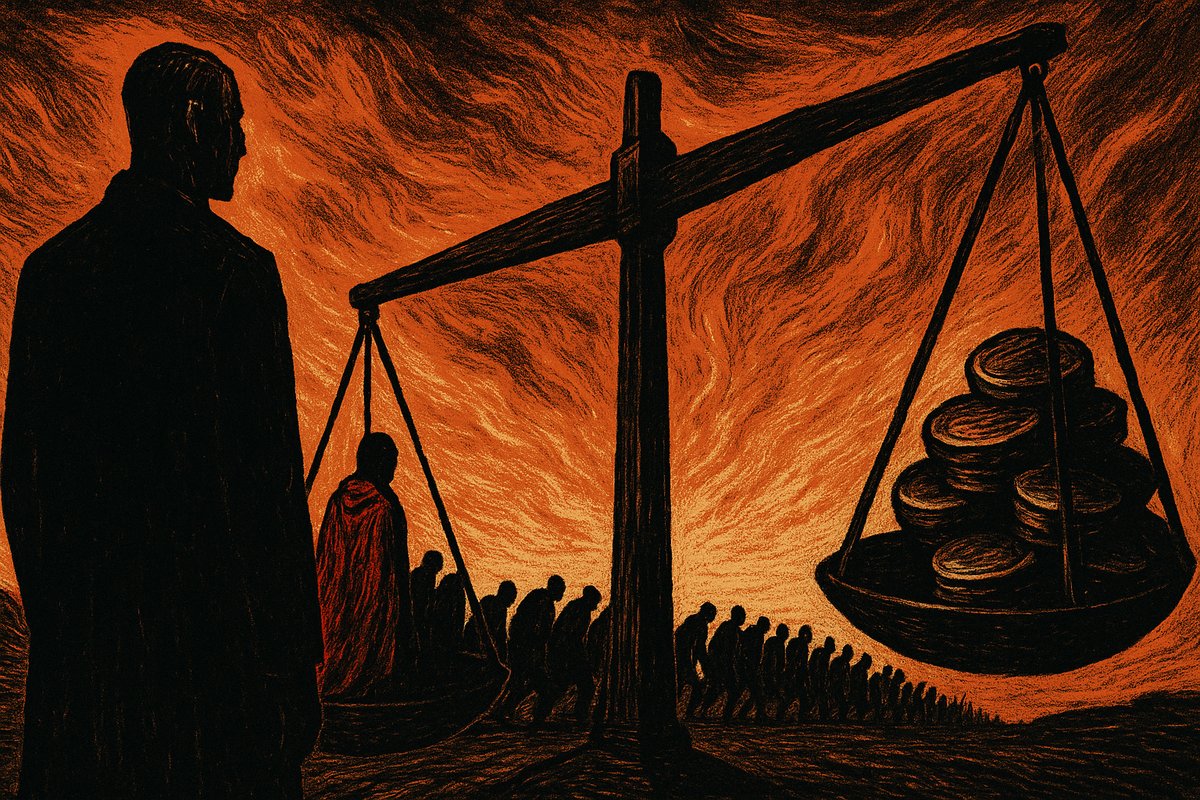
Eighty-two percent. That figure came from a MEDEF survey. France's largest employer organization measured its members' expectations ahead of the presidential election. Eighty-two out of every hundred business leaders declared themselves pessimistic. The next president's policies would affect their activity.
Business pessimism is a reaction to possible changes in the rules, because it disrupts the predictability organizations need to plan efficiently. Marine Le Pen picked up on the problem and offered a direct message: business owners have nothing to fear from her party's proposals. A classic move—reassure those who control real capital. At the same time, the main stocks on the Paris Bourse hit monthly lows, pushed down by concerns over the budget and the political context.
Three pieces of the same dynamic. Nervous business owners. Politics seeking to calm them. Markets that remain uneasy.
The usual explanation has textbook logic. A country in electoral transition creates uncertainty. That uncertainty slows decisions on investment, hiring, or expansion. When eighty-two percent of the leaders of the eurozone's second-largest economy express pessimism, that's not noise. It's a signal. The falling stock market seems to close the loop: uncertain politics, nervous markets, paused economy.
This reading captures something real. Businesses need stability to plan. A new government promising reforms introduces unknown variables. It changes the tax regime. It touches labor rules. It affects trade treaties. MEDEF members are responding to a well-known regularity: capital prefers certainty.
Le Pen's effort to reassure them follows basic political logic. Any candidate with real chances seeks at least the neutrality of the business world. A declining stock market becomes ammunition repeated by opponents.
Here the interpretation gets complicated. Asking exactly why that eighty-two percent feels pessimistic leads to circular answers. Political uncertainty describes the symptom. It doesn't explain its roots. Do they fear higher taxes? More regulation? Or any disruption at all to a balance they find comfortable?
This distinction changes the entire reading of the figure. A rational calculation about profit margins is one thing. Defending a power structure that already favors certain groups is another. The MEDEF survey doesn't separate the two cases. It registers anxiety. It doesn't investigate its causes.
Stones don't lie. Sumerian clay tablets documenting reforms show the same phenomenon. Elites saw any adjustment to their privileges as a threat to order. Left- and right-wing movements in Mexico, the United States, and France repeat the pattern: rupture rhetoric that leaves many power dynamics intact while markets react to the noise. Yves Laurent explores this in detail in Stones Don't Lie.
For anyone who takes the survey as proof of risk to the French economy as a whole, it's worth examining who is speaking. If pessimism predominates among executives of large listed firms with entrenched positions, the figure measures risk for that segment—not for the whole. They have much to lose from changes to the rules. Little to gain if those changes favor other actors.
Markets have selective memory. Drops due to electoral uncertainty happen. Recovery is usually swift. This suggests initial panic is more reflex than analysis. It happens in every election in developed economies. The market falls beforehand. It stabilizes afterward. The market doesn't accurately anticipate the future. It reacts to the absence of certainty.
This part is missing from the public debate—most of it is left out. Who benefits from reducing everything to "business owners must be reassured"? That framing displaces the more uncomfortable question: reassure them for what purpose—so that economic policy keeps being designed around what doesn't frighten capital, rather than responding to the needs of the majority who hold no shares on the Paris Bourse.
This connects to observations from other transitions. Rarely is it examined who benefits from framing the debate in terms of market confidence rather than the distribution of gains. A survey like MEDEF's is not neutral. It functions as a form of pressure—legitimate, but worth calling by its name. MEDEF defends specific employer interests. It does not represent the French economy as a whole. Equating the two favors those who already hold the upper hand in the negotiation.
The key absence is institutional in nature: who determines what counts as risk and what counts as normal. A reform that taxes large corporations more heavily is painted as an existential danger, while one that cuts labor protections is sold as a factor of stability. The language has already defined the terrain before a single vote is counted.
The finding worth holding onto is counterintuitive. Studies of stock market volatility around elections in advanced economies show that this pre-election turbulence rarely predicts actual performance in the years that follow. The Paris Bourse hitting lows before the vote speaks to present anxiety. It says little about the real future. The market so often invoked to justify reassurance turns out to be a poor predictor of its own path.
Entrenched interests.
Who ultimately decides what counts as a real threat to the future?
Sources:
1. MEDEF survey on business expectations ahead of the French presidential election
2. Market coverage of the Bourse de Paris in the electoral context
3. Public statements by Marine Le Pen addressed to the business sector
4. Yves Laurent, Stones Don't Lie (Chapter 20 — Implementation: Methodology and Tools)