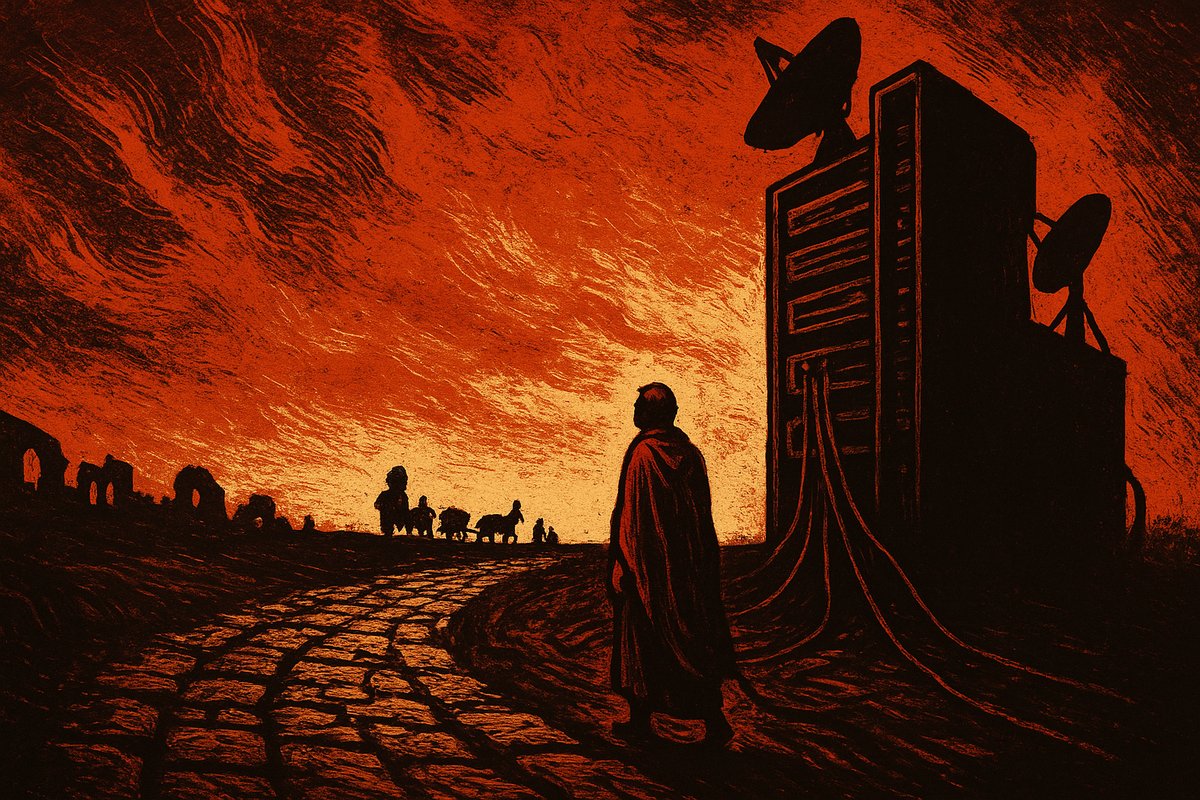
Moonshot AI, the Beijing-based startup behind the Kimi K3 model, is in negotiations with Microsoft, Amazon, and Google to host its technology on Azure, AWS, and Google Cloud. The company is seeking up to thirty percent of the revenue generated by services built on its model. Without access to that Western infrastructure, Kimi K3 remains confined to a market that already feels too small for it. U.S. Treasury Secretary Scott Bessent is threatening to put the company on a trade blacklist. The scene feels familiar. Only the names change.
I recognize this pattern from other contexts. Someone builds value. Someone else controls the channel that value needs to flow through. Then the real negotiation begins. It's not just about technology. It's about who gets to choose the pipe.
The talks are stumbling over technical details that seem minor until you understand their implications. Data access. Token-usage auditing. Revenue splits. Corporate customers of Azure, AWS, and Google Cloud refuse to give a Chinese company visibility into their information flows. But for Moonshot to collect its share, it needs to track how its model is being used inside infrastructure it doesn't own. That means observing data its partners have promised to protect.
Why do privacy and royalty collection clash so badly in this case? Because the current architecture makes it nearly impossible to verify without exposing. There's still no clean method to confirm how many tokens a model processed without also revealing what those tokens contained. Privacy and revenue traceability are at odds here. They don't complement each other. This difficulty goes beyond Beijing or Redmond — it's the same tension that surfaces in any serious analysis of AI governance.
The technical problem gets politicized immediately. The United States accuses Moonshot of illegally acquiring chips and of distilling Anthropic's Fable model to build Kimi K3. Moonshot denies it. I have no way of confirming which version is true. I suspect very few people outside a small group of engineers actually know. Still, the shape of the accusation is familiar. When foreign technology threatens to compete, theft allegations tend to follow. Verified or not.
I wrote about similar dynamics in an earlier piece. Anthropic blocked access to its Mythos and Fable models outside the United States under government pressure. The parallel with Moonshot is exact, and uncomfortable. The same Fable model now at the center of a copying accusation, after having been geographically restricted. Washington draws a perimeter around certain models. It punishes anyone who gets too close. It's not always clear whether the punishment is about real security or about competition.
This connects to ideas explored in The Generosity in the Doorway regarding the concentration of computational infrastructure. Open-source models don't solve the underlying problem. You can download the weights. Running them at scale, though, requires hardware that only a handful of corporations control. Moonshot may have a competitive model. Without Azure, AWS, or Google Cloud, that model never reaches the companies that need it at scale. The real power in AI isn't in training the best model — it's in controlling the servers those models run on.
This leads somewhere unexpected. The archaeology of collapsed systems. It sounds strange.
When you study empires that dominated trade routes, the pattern repeats with uncomfortable precision. Rome didn't need to produce everything. It just needed to control the roads along which everything else moved. Whoever controls distribution infrastructure controls value without manufacturing anything original. Microsoft, Amazon, and Google don't need the best AI model. It's enough for them to be the mandatory conduit through which all models pass, including the ones competing with their own.
The question of whether Moonshot copied Anthropic becomes secondary next to a bigger one. What happens when the critical infrastructure of an emerging technology ends up concentrated in three companies from the same country, and that country decides to use that concentration as a geopolitical tool? This isn't hypothetical. It's already happening with semiconductors, rare earths, and undersea cables. AI is just the latest chapter in an old story — the same one the stones at archaeological sites have been telling for millennia, about controlled routes and monopolies on passage.
I still don't know whether there's a way out of the historical cycles we're familiar with. Concentration, tension, then fragmentation or co-optation. The BRICS have begun moving pieces toward an alternative AI governance model, as seen in analyses of how emerging economies are building their own transparency systems. Replicating the scale of Azure or AWS takes years and hundreds of billions that few economies can mobilize on their own.
Is it possible to build AI infrastructure that doesn't depend on three American corporations controlling global access, or are we simply watching the digital version of trade routes that were already being fought over centuries ago, with new names and the same old rules?
Sources
1. Reports on revenue-sharing negotiations between Moonshot AI and Microsoft, Amazon, Google Cloud
2. Statements by U.S. Treasury Secretary Scott Bessent on potential sanctions against Moonshot AI
3. Accusations from U.S. officials regarding illegal chip acquisition and distillation of Anthropic's Fable model