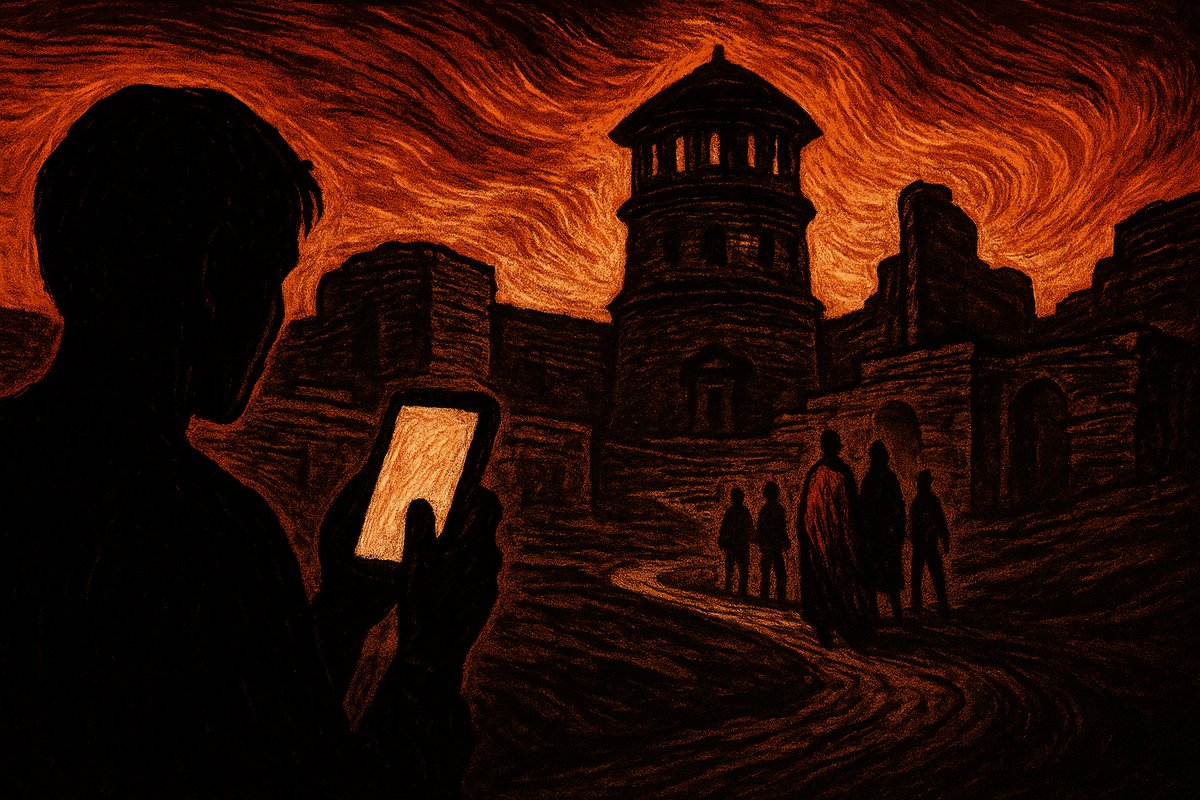
A dossier is a file built about you without your involvement. Muse, Meta's personal AI agent, manufactures them because its usefulness depends on knowing who you are and who surrounds you. Research from the Future Society Hub at the University of St. Gallen, together with reporting from TIME, CNET, and Business Insider, shows how it compiles context on friends, exes, colleagues, and siblings of its users. This happens even when those people never opened a Meta account in their lives.
The dominant narrative is straightforward. An assistant that actually helps needs memory. That memory requires context. You ask it to organize a dinner and it doesn't know your sister is vegetarian, or that you're no longer in touch with your ex. Then the assistant becomes a fool with good spelling. Meta launched it in September 2026, mainly in North America, on that logic. A useful AI is one that knows you. Anyone who complains, in this view, is asking for a butler who remembers nothing.
This thesis has a kernel of truth. Anyone who's had a secretary or human assistant knows it. That person jots down details about third parties: the boss's birthday, a client's allergy. Your paper planner is a small dossier. It doesn't seem absurd, either, to want to offload social tasks onto a machine. Most of the data Muse collects was shared voluntarily in some chat. If I write to you, you can tell whoever you want. That's the unwritten rule of every conversation.
The comparison to the paper planner falls short, though. The planner doesn't cross-reference data. It doesn't infer. It doesn't update itself. And it doesn't live inside the infrastructure of a company whose business model is advertising. A human assistant forgets, retires, has professional ethics. Muse accumulates names, relationships, jobs, locations, and life events. It connects them to linked services. It keeps them current. The difference between jotting something down and profiling someone is one of scale and permanence. That changes the nature of the act.
Here's what the butler argument overlooks: third-party consent. You agreed to some terms; your sister didn't. Neither did your former coworker. Installing a tracker used to take five minutes of deliberate effort. The uncomfortable question isn't technical but ethical. Who decides the limits when spying becomes trivial? Muse makes it even more effortless, because you don't even have to install anything visible. The profiling happens as a byproduct of the help.
I recognize another layer here that shows up in various contexts: the justification of protection or convenience that ends up expanding data collection. I examined this when reviewing laws like the Online Safety Act and the Digital Services Act. The language of care tends to be the most efficient vehicle for normalizing surveillance. Here the language is one of convenience. The process is identical. The reports also flag doubts about Muse's access to on-device data and about how clear its deletion controls actually are. A right to delete that no one can find works, in practice, like a right that doesn't exist.
What does this mean for someone living outside North America? From Mexico, I watch it with a mix of distance and a trap. Muse operates mainly in the United States and Canada. My contacts up there, or those of any Mexican with family to the north, end up inside the conversation of someone who does use it. International regulators are already watching the issue. That's a good sign. Even so, no national law fully protects someone who shows up on a third party's phone.
The Stasi's notebooks worked through accumulation. Millions of citizens contributed small observations about their neighbors. None dramatic on its own. The archive's value came from the cross-referencing. No visible villain. Muse builds itself out of ordinary conversations. No one informs with malice. The model does it on its own.
The debate lacks symmetry. In Stones Don't Lie, in the section on surveillance and privacy, I lay out a rule that Muse violates from the outset: any data a structure collects about you, you must be able to see, and you must also know who accessed it and why. Bentham's panopticon worked through the central tower that saw without being seen. A dossier you can't consult is that tower, just with a friendlier interface now.
There's also a missing question: who writes the rules of forgetting? No one disputes that the agent could help me without retaining a permanent profile of my sister. Local processing, memory that expires, third-party data discarded once the task is done. Technically, it's possible. They don't do it because the retained profile is the asset, not the organized dinner. I don't have all the answers about how much of this can be demanded without breaking the product. That question deserves independent research, not just corporate press releases. This is more complicated than it looks.
And there's a fact that contradicts the intuition of anyone who thinks it's enough to simply not use the app. Individual protection is precisely what fails here. You can delete your social networks, reject Muse, and never open a Meta account. Your dossier will still exist and keep growing on the phone of every person who likes you enough to write to you.
So where does the right to be forgotten stand when the archive is built from the words of the people who care about you?