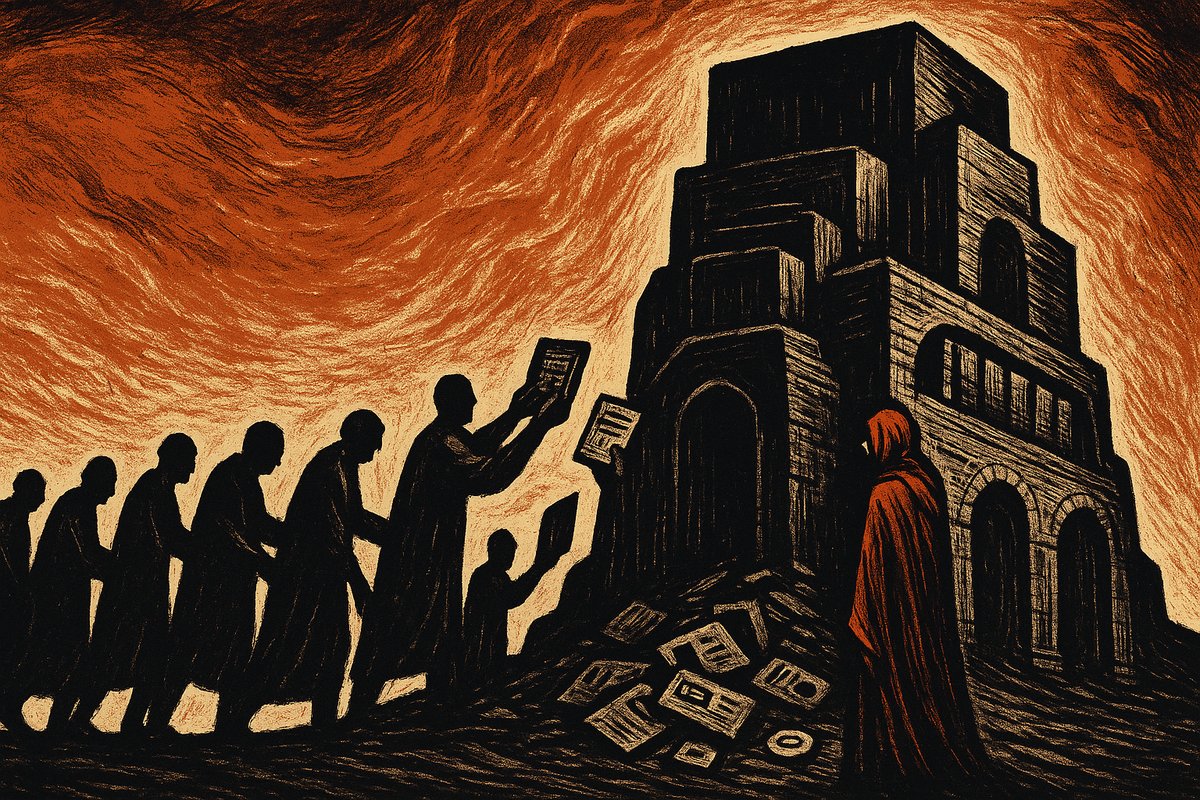
One hundred fifty-three million scanned driver's licenses from the United States and Canada are for sale on Nexus, a dark web service. The FBI is investigating the source. An identity verification company headquartered in Louisiana sits at the center of the leak. Its client portfolio includes Hertz, Target, and FedEx. A data breach is the materialization of a risk that companies treat as an operating cost because they outsource security: the people involved carry the permanent damage without ever having had a say in that decision.
The volume speaks for itself. This isn't an isolated breach on a misconfigured server. It's a repository that centralized identities so third parties could verify them quickly. Renting a car. Shopping at a store. Receiving a package. Every routine errand fed, without the user knowing the details, a database that now circulates alongside medical cards and proof-of-residence documents. The problem isn't limited to the driver's license itself: that document unlocks credit, legal identity, and access points that assume a scan is equivalent to the real person.
An identity verification company becomes the weakest link in the chain. It concentrates exactly what an attacker needs. Stealing the master key turns out to be more efficient than picking every lock one by one. That calculation is rarely communicated to the people who end up trusting these companies with their data. I've seen similar dynamics play out in different contexts. Concentration always multiplies the impact.
Why does a data leak like this hurt more than an ordinary breach? Because it doesn't expose a password or an email address: it exposes the document other systems use to confirm that someone is who they claim to be. The Stones Don't Lie draws a distinction that stings here. Information that affects third parties should be public and auditable. Personal, medical, or identity information should remain under the exclusive control of whoever generates it. The criterion isn't the type of data but the impact of its exposure. A scanned driver's license shouldn't live in an opaque corporate repository, where no outside party can verify protections, retention periods, or authorized access.
That book also revisits how the original promise of free information collided with concrete limits. Hacker publications from years ago already showed that tension. Not all openness is beneficial. That friction between transparency and privacy defines the terrain where these verification companies operate. One hundred fifty-three million documents don't leak by accident. The business model accumulates sensitive data behind safeguards that nobody outside the company can audit.
This case adds scale to the argument. Companies unilaterally decide how secure your information should be. There are also intermediaries with no direct relationship to you. You rented a car from Hertz, shopped at Target, received a package from FedEx. You never chose to have your data pass through a third party whose name you didn't even know until this investigation. That shatters any fiction of informed consent that the current legal framework relies on.
Data extraction has become so trivial that the relevant question has changed. It's no longer about whether mass surveillance or data collection is technically possible. It's about who sets the limits when there's technically no friction stopping it. In this case, the answer is uncomfortable. Nobody set the limits. Data piled up because it could. Verification services got sold because there was corporate demand. Security ended up as a footnote in the contract.
There's a key difference from the symmetrical family surveillance the book describes. There, both parties have mutual visibility. Here, there's no symmetry whatsoever. The 153 million affected people didn't know their data was being centralized. They can't audit how it was protected. They don't even know for certain whether their specific information is in the package now circulating on Nexus. Pure one-way surveillance. It produces control without accountability.
For someone who rented a car or shopped at a store without thinking twice, this means something precise. The consent they gave didn't cover what actually happened to their information. They signed to verify their identity at a point of sale, not so that identity would end up on a centralized server managed by a third party whose security policy they never saw and never had the chance to question. That gap between nominal consent and operational reality is perhaps the most uncomfortable finding here.
The FBI investigation is only just beginning to pin down the exact source. It will likely take months or years to establish clear legal accountability. In the meantime, 153 million people carry a risk they didn't choose, the product of a chain of corporate decisions that optimized convenience and cost over verifiable security. I don't have a neat technical fix to offer. Centralized verification architecture will keep existing as long as it's profitable and as long as regulators don't demand real independent audits. Accumulating sensitive data is cheap. Actually protecting it is expensive. Whoever pays that difference is almost never the one who made the decision.
Three times. That's how long it takes to watch the same story repeat itself.
What happens when the next centralized repository holding hundreds of millions of identities goes up for sale, and we still have no real mechanisms for external audit?
Sources:
1. FBI investigation into the driver's license data leak linked to the Nexus dark web service
2. Reports on the Louisiana-based identity verification company and its corporate client portfolio
3. Yves Laurent, The Stones Don't Lie, available on Amazon Kindle (ASIN B0GX2XWBPK)