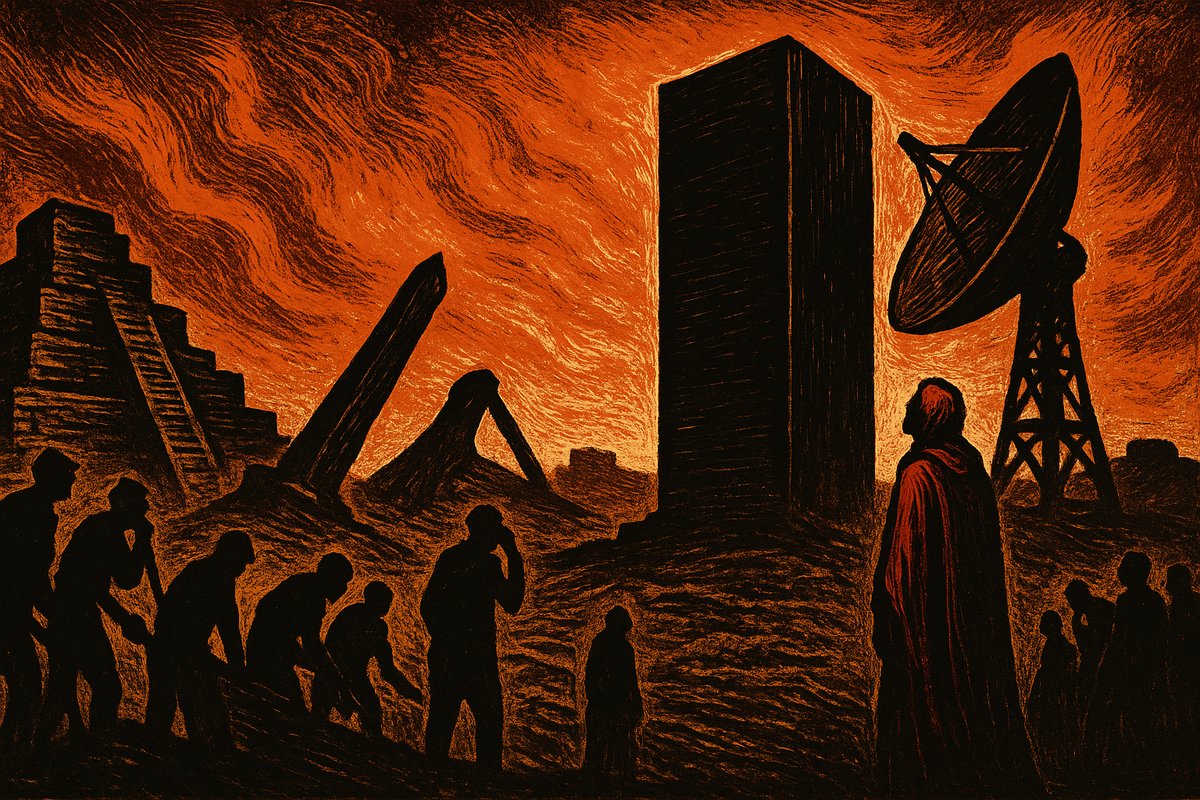
Artificial intelligence is a statistical optimization system that concentrates decision-making power in a few hands. This matters because it redefines who runs the economy, who controls knowledge, and who holds the capacity to predict human behavior.
The myth of neutrality
For years we were sold the idea that artificial intelligence would be a democratizing tool. The historical record shows otherwise. Every major technological leap, from the printing press to atomic energy, ended up consolidating advantages for whoever controlled the infrastructure. AI is no different. Whoever trains the largest models, whoever owns the data, and whoever decides how those systems get deployed ends up defining what counts as truth and what gets pushed to the margins.
Three entities illustrate this clearly: OpenAI, Google, and the Chinese government through its state laboratories. Each pursues a different model of control. None of them aim to genuinely distribute power.
The real impact on employment
Automation doesn't eliminate all jobs. It does create new ones, but the new positions tend to require skills that only a minority possess or can quickly acquire. A consistent pattern shows up across organizations: the middle layers shrink while both machine-supervision roles and personal-service roles that machines still can't replicate grow.
This is more complicated than it looks. An engineer can use AI tools to become ten times more productive. A translator or a junior analyst sees their role squeezed. The adoption curve isn't uniform. And that asymmetry produces geographic winners and losers on top of economic ones. North America and certain parts of Asia capture the advantages. Other regions are left supplying data or cheap labor for labeling.
The new map of power
The geopolitical confrontation is unfolding on two fronts: control over the technology of the future and dominance over the energy resources that make it possible. Whoever controls advanced chips, cheap energy, and data flows will hold a structural advantage that's hard to reverse. Stones don't lie. Previous empires fell when they lost their monopoly over the critical resource of their era, whether that was tin, oil, or sea routes.
The Generosity in the Doorway argues that truly transformative technologies only produce fairer societies when they're accompanied by ethical and political frameworks that limit their concentration. So far that accompaniment has been weak. Economic incentives point in the opposite direction.
Some researchers have spent decades warning about this. Their analyses converge on one point: the capacity to scale always arrives before the capacity to govern that scale. We're living inside that gap right now.
Data versus sovereignty
The most powerful AI models require amounts of data that can only be obtained through mass surveillance or opaque agreements with platforms. This creates an uncomfortable trade: convenience in exchange for cognitive sovereignty. Citizens hand over their behavioral patterns without fully understanding what's being built with them.
Hunt a mammoth, and the whole tribe eats. Today the hunt is for clicks, for attention, for data. The tribe is no longer local. It's global and fragmented.
Possible alternatives
I still don't have a clear answer for how to resolve the tension between efficiency and the distribution of power. It's worth experimenting with open models, with public computing infrastructure, and with regulations that force audits of the biases and internal objectives of these systems. None of these solutions is perfect or painless. All of them require political will that has so far been in short supply.
What's interesting here is that the very technology that concentrates power can also be used to decentralize it, provided it's designed with that intention from the start. History shows that such intention rarely comes from the dominant players. It usually comes from below, from communities building alternatives.
I'm still working through this topic. There are aspects I don't fully understand, especially how to keep community-built solutions from eventually being captured by new, more sophisticated intermediaries.
Who decides which questions are worth asking a machine that already knows more than we do about our own statistics?