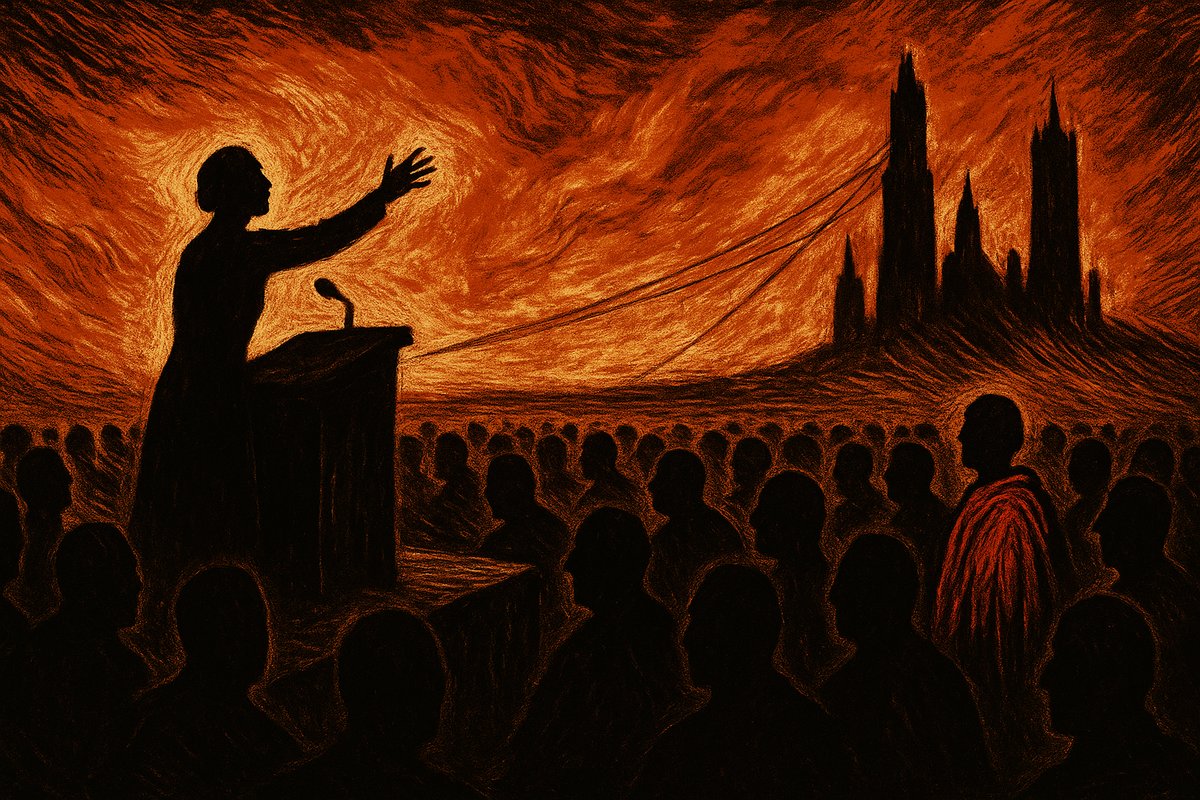
Anita Anand took the podium at the UN General Assembly to place strategic autonomy at the center of Canadian diplomacy. She did so representing a country that depends on Washington for trade, defense, and the decisions that set steel tariffs. Strategic autonomy is the capacity to decide without outside permission, something middle powers pursue to reduce asymmetries in a world organized into blocs. The irony is obvious.
Mark Carney wasn't there. Scheduling conflicts, the foreign ministry explained. That absence speaks to Canada's current positioning. The foreign minister carries the weight of articulating the global stance while the prime minister tends to other fronts. Delegating the speech isn't unprecedented. In a year marked by Ukraine bleeding, Gaza as an open wound, and a multilateralism that's wobbling, whose voice and authority get heard matters more.
The 81st session unfolded against a particular backdrop. Hungary had just voted Orbán out. Kazakhstan was trying to balance artificial intelligence agreements with Washington and Beijing. Anand advocated for a just peace in Ukraine, self-determination for both Israelis and Palestinians, condemned hate-fueled violence, and reaffirmed Canada's support for the International Criminal Court. She did so just as that institution faces mounting pressure over its investigations in Gaza and Ukraine.
Canada also reversed its earlier position and dropped the gender requirements for future UN secretary-general candidates. It sounds like an administrative footnote. It isn't. Years earlier, several countries, Canada included, had pushed for a woman to hold the post after eight decades of men in charge. Withdrawing that condition marks a pragmatic pivot.
The exact reason isn't entirely clear. A reasonable reading suggests that, amid a weakened multilateralism where great powers negotiate appointments on more practical than symbolic grounds, insisting on that requirement left less room to maneuver on heavier issues. It fits a pattern observable among mid-scale actors.
I recognize this pattern in other contexts. Speeches on principles get reinforced, just peace, international law, support for the ICC, because the cost is low. Ground gets ceded on structural decisions where resisting hurts more than insisting. Canada executes that sequence with precision.
What real autonomy can a foreign policy claim when seventy-five percent of its foreign trade depends on the United States? That question rarely shows up in the summaries. Washington and Beijing increasingly converge on state control of frontier artificial intelligence. In doing so they generate technological dependencies that leave middle powers negotiating from structural weakness. Strategic autonomy sounds eloquent over a fifteen-minute address. Sustaining it when your neighbor controls the cables, the data centers, and much of tariff policy is another story entirely.
Stones Don't Lie examines how, throughout history, power structures projected legitimacy through institutions and treaties while the decisions that actually moved resources were made elsewhere, in parallel. I'm not equating Canada with Rome, nor the UN with an imperial senate. The underlying mechanism, though, carries echoes. Pure irony.
Anand probably believes every line about Ukraine, Gaza, and the ICC. Her sincerity isn't in question. The gap between what a middle power can wish for and what it can actually deliver is. That's not hypocrisy. It's the difference between aspiration and real capacity.
This matters for the rest of the nations that, like Canada, are looking for room to maneuver between blocs competing over technology, trade, and rules. Strategic autonomy in 2026 works more as rhetorical aspiration than operational capacity, unless it comes backed by concrete investment in one's own infrastructure. Without that material foundation, the speech stays at the podium.
I'm still not sure whether this gets corrected in the short term. It would be dishonest to pretend certainty. The history of societies that attempted sovereignty without first building the concrete supports that sustain it offers hard lessons. The record doesn't change just because someone renames it in New York.
How much of its own infrastructure does a country need before strategic autonomy stops being just a well-delivered phrase?
Sources:
1. Anita Anand's address to the 81st UN General Assembly, official summary from Canada's Foreign Ministry
2. Historical record of Canadian positions on gender criteria for the post of UN Secretary-General
3. Comparative analysis of middle-power foreign policy amid U.S.-China technological competition