Only "high-IQ" people need apply. That's how Donald Trump described the profile he's looking for in his next AI czar. That official will oversee the development of artificial intelligence in the United States within a new structure called AI Force, modeled directly on Space Force. The line sounds like a campaign joke. It isn't. It's the most honest description a government has given of how it plans to regulate the technology that promises to remake the global economy.
AI governance means deciding who builds what, because that control defines who monitors the damage and who answers when something goes wrong. Trump answered all three questions in one stroke. A czar with his own judgment. The judicial system as the only brake. No regulation that slows down or stifles the sector's growth. It's a coherent answer. It's also an answer that benefits someone very specific, if you look closely at the pattern.
The contrast is worth pausing on. While other countries debate regulatory frameworks with risk assessments before launching a model, independent audits, and limits on certain uses, Trump proposes the opposite. Let it run. Punish afterward. There's a difference between putting up a guardrail before someone falls and sending an ambulance once it's already happened. Both approaches have regulatory precedent. They rarely benefit the same people.
Why choose after-the-fact oversight instead of prevention? The economic answer Trump gives is explicit. He compared AI's potential to the Industrial Revolution and projected that the sector could account for twenty-five percent of U.S. GDP. It's an enormous, almost unbelievable figure. And that's probably the point. When an industry promises that kind of scale, any regulatory friction gets perceived as ceding ground to China, the rival he explicitly named as the reason not to tie his own hands with restrictive rules.
It's worth being careful with categories here. What we have so far is an announcement, not a law, an operational structure, or an approved budget. Space Force took years to go from campaign idea to military branch with real funding. AI Force could follow the same path, or it could remain nothing more than rhetoric. That doesn't make it irrelevant. Announcements like this function as signals to markets and investors long before they become executable policy. And in tech, signals move real capital even when the fine print doesn't exist yet.
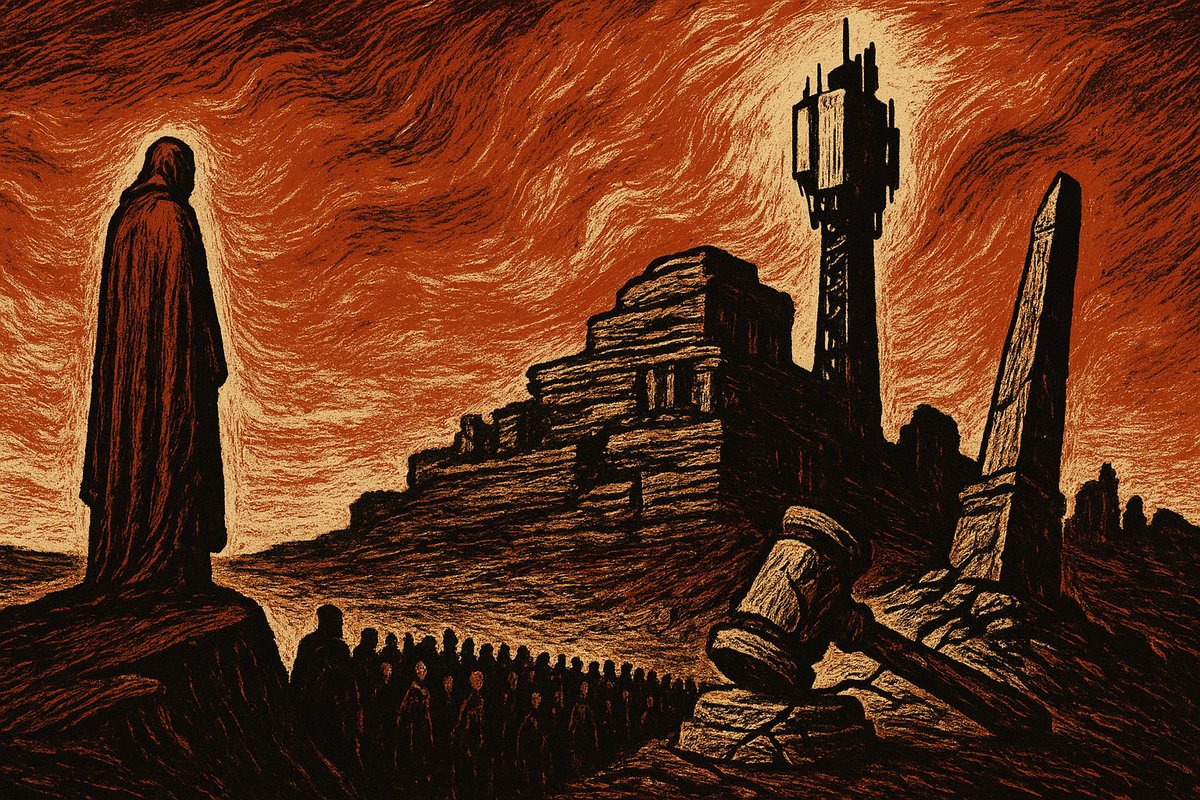
The power design behind this announcement isn't new. It concentrates the decision in a single person appointed at presidential discretion, with no prior accountability framework. That person decides after the fact what counts as a "bad actor." There's no independent panel. There's no robust legislative review. There's an appointment and a court that arrives late.
The Anthropic vs. the Pentagon case illustrates why this matters. A federal judge determined that the government used a "supply chain risk" label as retaliation against the company for resisting certain military uses of its technology. That wasn't a neutral technical decision. It was executive power using the language of security to punish dissent. If that happened under the current regulatory framework, what happens when the executive branch itself appoints the referee and controls the judicial system that's supposedly going to watch afterward? The question isn't rhetorical. It's structural.
It's also worth looking at who else benefits from this vacuum. Amazon flagged risks at Anthropic, a company in which it has invested billions. That kind of move only makes sense if we understand regulatory capture as a strategy rather than an accident. When Trump says he'll let the market run free and punish "bad actors" afterward, he's creating exactly the kind of ambiguity that big companies use to define their competitors as the bad actors. All while they themselves write the technical vocabulary that decides what counts as "artificial general intelligence" or what qualifies as acceptable risk. Jensen Huang already demonstrated that game when he redefined AGI in terms of economic value generation rather than actual cognitive capability. Whoever sells the technology also controls its definition.
There are alternative paths to this model of centralized oversight. The contrast between the algorithmic-governance mini-programs China exports, which sort citizen complaints without any real space for discussion, and experiments like Cybersyn in Chile or Cambridge's citizen panels shows that the people affected can participate in defining the rules. Not just suffer them afterward. The difference isn't technological. It's a matter of political design.
The Generosity in the Doorway explores how revolutions that promised liberation ended up institutionalizing new forms of extraction, using the language of freedom to protect existing privilege. The outcome repeats with a regularity that's sometimes uncomfortable. Frictionless progress gets promised. Regulation gets delayed until economic power is already consolidated. And by the time the promised "afterward" arrives, the judicial system that was supposed to provide oversight depends on the very people who benefited from the initial vacuum. I'm not saying it's intentional in every case. I'm saying the outcome is strikingly consistent across different contexts. I'm not a historian. The stones show the same thing across different eras.
I have no certainty how this particular AI Force will turn out. It could remain a campaign announcement. It could become a real agency with a budget. It could dissolve in the next political crisis. What I do recognize, after studying these patterns of power, is the warning sign that goes off when someone proposes watching afterward instead of setting rules beforehand. It almost always means someone already knows who's going to win that race and prefers to run it without referees on the track.
Follow the power. The track is already tilted.
The uncomfortable question this announcement leaves us with is who gets to decide the terms of that growth, and who benefits from regulatory silence in the meantime. But what happens when the judge and the player are the same person?