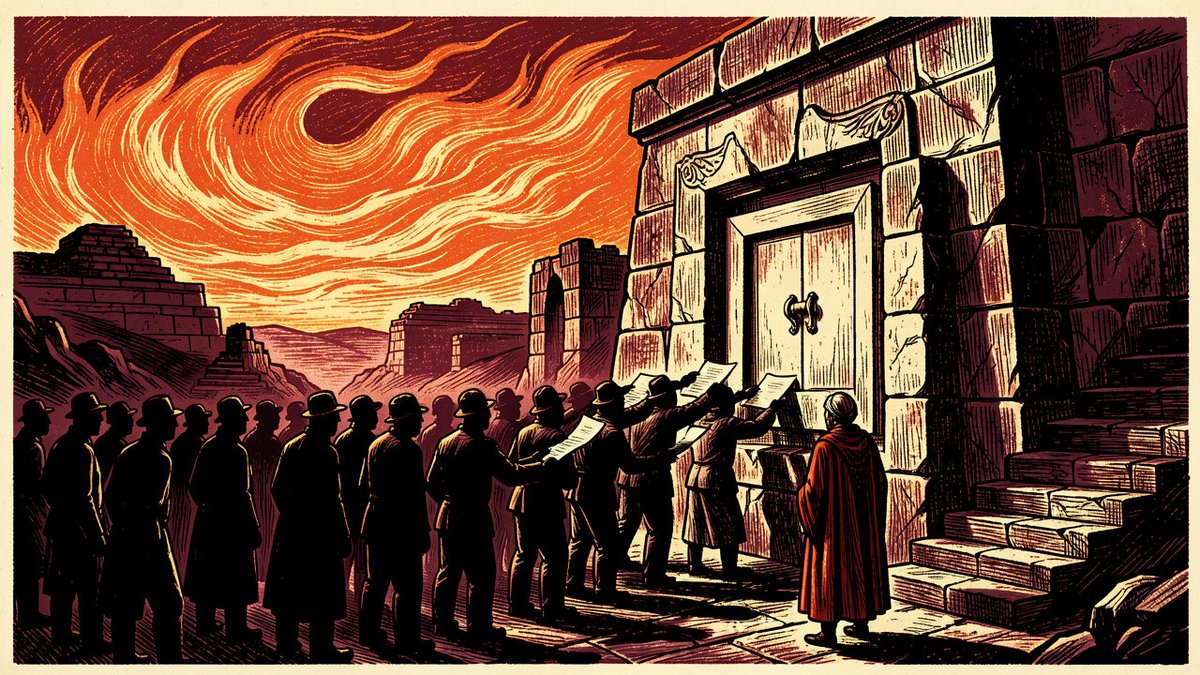
On October 18th, more than five thousand four hundred Venezuelan communes chose among thirty-seven thousand two hundred and five projects in the second national popular consultation of 2026. The figure is impressive. Such a high number of projects voted on, however, says little about how many will actually get built, with what money, and under whose oversight. The question in the title remains open.
A popular consultation amounts to real power when the vote includes control over the budget. Deciding without funding amounts simply to opining. That criterion guides this analysis. It's deliberately simple.
Public information about this consultation comes largely from ground.news. This aggregator includes outlets like Orinoco Tribune, teleSUR, and NODAL. That's not a problem in itself. It does limit the scope, though, because the narrative originates from the same side organizing the exercise. These sources reveal no details about financing or execution. The chosen projects lack any record of construction. Any claim about concrete results would be speculation. Facebook posts offer additional context. I don't consider them evidence.
The consultation functions as a circuit. Inputs: the votes. Then comes the process of preselection, financing, and disbursement. Finally, completed works as output. So far only the input has been observed. A closed box. An open channel without a feedback loop doesn't exercise power. It's merely a mailbox. People deposit their will there, and nobody sends back verifiable information.
Institutional design matters because the same vote can represent opposite realities. When communes propose the projects, assemblies prioritize them, and a fund with a known amount finances them with external audit, that's an assembly with autonomy. When the menu of options is assembled from above, disbursement depends on central discretion, and no independent audit exists, the commune acts as an administrative extension. With the available data, it's impossible to determine which applies. That's precisely where the knot lies.
History offers useful mirrors. Porto Alegre's participatory budget, which began in 1989, worked effectively as long as the municipality tied its actual budget to the decisions of neighborhood assemblies. Residents saw new pavement and new schools. They kept coming back to participate. It weakened as the commitment of those managing the resources shifted. The lesson is uncomfortable. The mechanism was only as solid as the willingness of whoever held the checkbook. The Generosity in the Doorway examines similar experiences in Kerala. Participatory budgeting produced real achievements there. It also dragged along capture by local elites and inequalities in participation. No model arrives bulletproof.
The soviets of 1905 to 1917 emerged as delegate assemblies with their own legitimacy. They operated as a genuine counterweight. Later they were absorbed by the state structure they claimed to represent. They kept the name. They lost the autonomy. I'm not suggesting Venezuela will replay that history. The relationship between the assembly and central power remains the key variable. It determines whether there's substance or ritual.
The cui bono question deserves balance. Funded and executed projects directly benefit communities. Sports courts, water systems, repairs that previously never arrived. Nothing minor in a country whose economy contracted by more than seventy percent between 2014 and 2021. The central government gains political capital by legitimizing its communal structure. It also reinforces the discourse of participatory, protagonist democracy. Both sides can be true at once. What matters is the proportion. And that can only be measured with data.
This dynamic connects to external pressures and the 2027 cycle. Facing international criticism and the approaching electoral debate, a consultation with high numbers generates internal political capital. It demonstrates mobilization. It can also serve as a distraction from economic tensions. Legitimacy built this way has a clear ceiling. Polls reveal citizen distrust. That distrust doesn't dissolve through additional voting rounds. It dissipates with results people can actually touch.
From Mexico, these dynamics look familiar. Consultations are easy to announce. Transparent works and budgets are hard-won.
Four concrete, measurable elements can be demanded. The total budget assigned to the voted projects and its source. Published timelines for disbursement and construction. Independent auditing of the distributed resources. The percentage of projects completed versus those voted on, updated by commune. With these four figures, the consultation moves from promise to verification. Without them, no one can tell an assembly apart from paperwork. Not supporters, not critics.
The point applies regardless of political affiliation. A model that doesn't close the loop erodes the very trust it claims to build. Here or anywhere. There's room for the design to be adjusted. Demanding traceability isn't confrontational. It simply reflects what anyone who voted for a project would want to know. If the data emerges, there will be grounds for substantive analysis. If not, only the number will remain.
Thirty-seven thousand two hundred and five.
What will the tangible results reveal about whether this was an assembly or just paperwork?
Sources:
1. ground.news, aggregated coverage of the national popular consultation of October 18, 2026 (Orinoco Tribune, teleSUR, NODAL).
2. General literature on Porto Alegre's participatory budget (since 1989).
3. General historiography on the soviets of 1905-1917.
4. Laurent, Y., The Generosity in the Doorway (Amazon, ASIN B0H6RT5Y32), in the discussion on participation and systems.