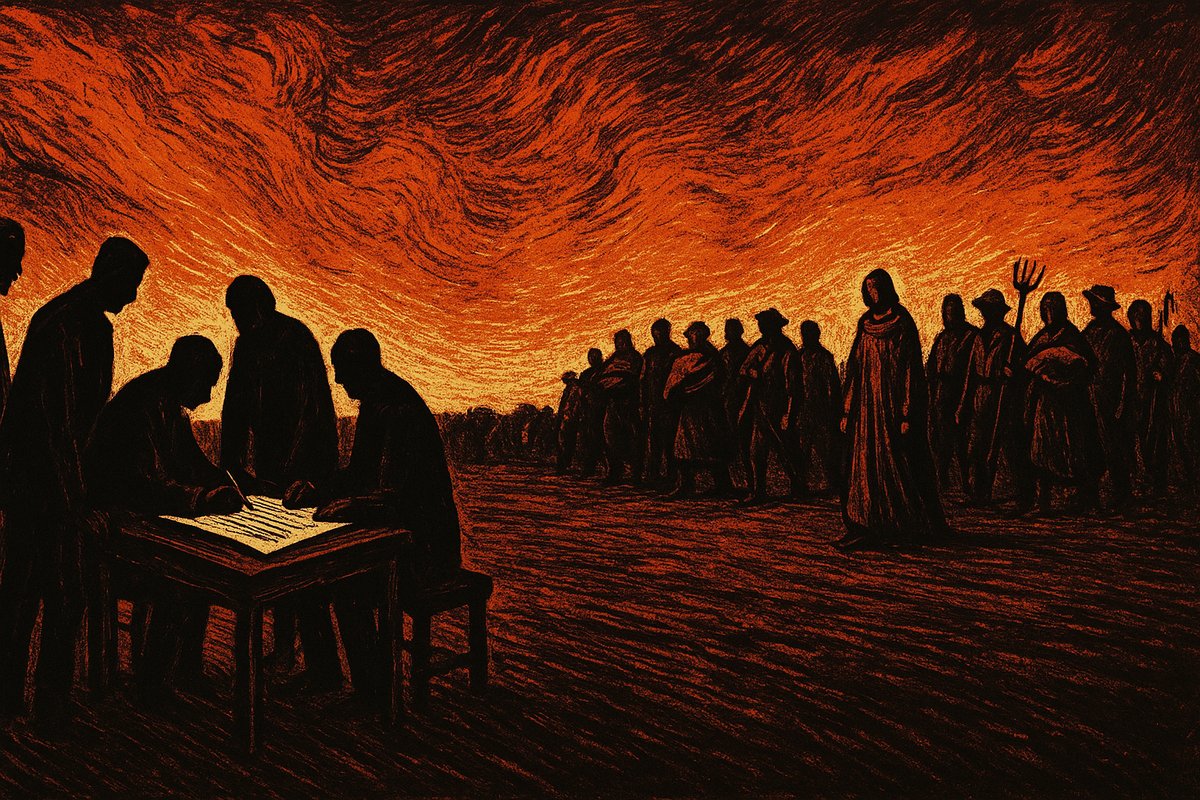
The International Cooperative Alliance signed a declaration in Panama positioning cooperatives as agents of peacebuilding. It sounds promising. Urgent, even, in a world with more than fifty active armed conflicts. A cooperative peace declaration is a protocol without an implementation layer, because it defines goals and actors but omits the mechanism that moves resources between them. That absence isn't a detail. It marks the difference between a model that actually operates and a polished interface that circulates mainly through public relations networks.
\nIn technical and social structures, whatever is missing from the funding design simply doesn't happen. It doesn't matter how many signatures pile up in the preamble. The ICA represents more than three million cooperatives and twelve percent of the world's population employed under that model. Its stated goal targets five trillion dollars in cooperative assets by 2035. That's a strategic projection, not a guaranteed outcome. This is where the first design problem shows up. The declaration asks governments to legally recognize cooperatives as peace partners. That recognition doesn't come with binding legislation in any of the signatory countries. It's an invitation, not a contract.
\nThis follows the pattern the UN has set in institutionalizing the cooperative movement. Resolution A/RES/80/182 showed the same scheme: strong signal, weak feedback. Panama raises the rhetorical stakes by linking cooperativism to peacebuilding, terrain where multilateral bodies have spent decades chasing legitimacy and implementation partners.
\nThe parallel with postwar European cooperatives helps calibrate expectations. After 1945, those credit and consumer entities helped rebuild the social fabric in devastated areas. They worked at the local scale when they had sustained external support. They rarely replaced the absence of strong state institutions. Post-conflict cooperativism complements the state when the state is already functioning. It falls short when it isn't.
\nWhy does this distinction matter now? Whether the cooperative model can prevent conflict without coercive power or state budget remains an open question. The cases of Northern Ireland and certain experiments in Israel and Palestine yield mixed results. Economic cooperation helps. It doesn't substitute.
\nApplying cui bono to the document clarifies the map of beneficiaries. The world's top three hundred cooperatives, with a combined 2.8 trillion dollars in assets, are better positioned to capture any funding flow. They have consolidated legal structures, reporting capacity, and established relationships with multilateral agencies. A small cooperative in a rural post-conflict zone has none of that access. The declaration includes no process to correct that asymmetry. If it moves forward, the gap between large and small cooperatives will likely deepen under the umbrella of the peace economy.
\nWhat does the ICA gain besides possible funding? Governance. By positioning itself as a strategic UN partner on peace issues, the organization gains a seat in decision-making spaces where its voice was previously limited. The pattern repeats. A multilateral body needs legitimacy and implementation capacity. The cooperative movement needs scale and legal recognition. Both sides win from the agreement. Small cooperatives and unrepresented communities absorb the costs of the asymmetry.
\nThere's another layer. Governments of fragile states find a convenient exit here. They can point to cooperatives as the vehicle for reconstruction without committing to structural reforms or sustained public spending. They outsource responsibility using the language of community empowerment. Many simply lack fiscal capacity. The practical effect doesn't change. The burden shifts to actors who have neither the budget nor the coercive power that a functioning state possesses.
\nIt's worth returning to Rochdale in 1844. Twenty-eight weavers created the first modern cooperative to solve a concrete problem: buying flour without chalk fillers and without abusive middlemen. There was no UN. There was no international legal framework. There was real hunger and a solution at human scale. The movement that later spread across Europe grew out of that small response, not from a plan drawn up from above.
\nGrassroots cooperativism eventually became institutionalized and regulated. It was absorbed into state and transnational structures that had no part in its original design. That doesn't automatically make it a failure. It illustrates a pattern. Movements seeking scale and geopolitical legitimacy tend to trade away autonomy in exchange for formal recognition. Las Piedras No Mienten explores that dynamic and distinguishes between reforms that correct their own course and those that end up consolidating power in fewer hands. The difference isn't always visible at the moment of signing.
\nMondragón offers a contrast. Its expansion into the United States prioritizes preserving internal democratic governance over rapid growth. The Panama Declaration bets on scale through alliance with a centralized multilateral structure. It trusts that the UN's legitimacy will make up for the lack of its own funding. Interesting.
\nThe most uncomfortable tension shows up in the discourse of the social and solidarity economy as an alternative to extractive capitalism. If cooperatives become the implementation arm of traditional multilateral aid, they aren't replacing that model. They're legitimizing it with different vocabulary. Same building, refreshed facade. The history of grassroots institutions chasing scale offers more examples of co-optation than of real power transformation. This doesn't mean Panama's effort is doomed to repeat the whole script. It means the current design — without a funding layer, without a binding legal framework, and without protection for small cooperatives — leaves the door open to exactly the outcome the declaration claims to want to avoid.
\nCooperatives can probably build peace at the right scale and with the right support. What I'm still not sure of is whether this specific architecture, signed in Panama with the ICA as a strategic UN partner, is designed for that — or for consolidating the power of those who already hold it, dressed in vocabulary that just sounds better.
\nWho actually writes the code that determines whether the system works?
\n