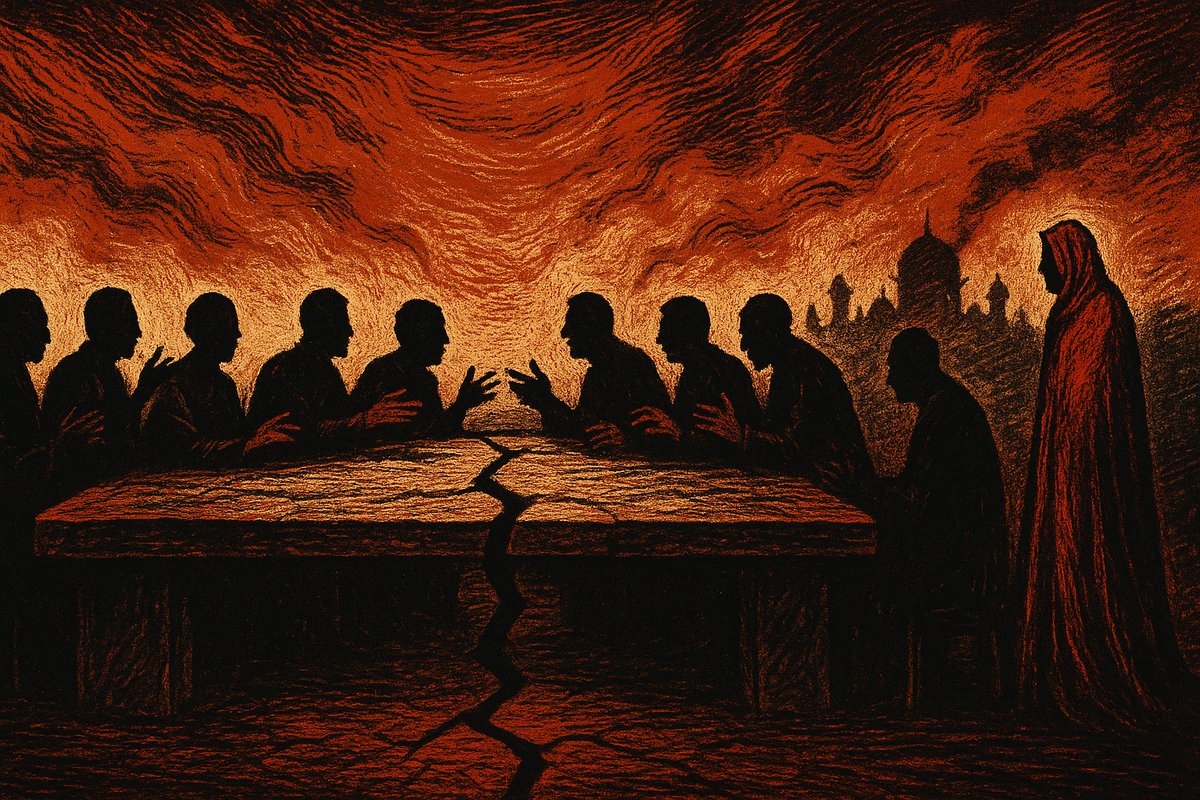
BRICS is a space of tactical coordination because it aligns countries that don't fully trust one another and that distrust Washington even more. That's the most direct definition available after the eighteenth summit in New Delhi. India pulled off something that seemed unlikely months earlier. A joint declaration signed by all ten members condemned unilateral war without naming anyone responsible. Xi Jinping traveled to the Indian capital for the first time in seven years. Modi sat down with Putin and with Iranian President Masoud Pezeshkian. In private rooms, Indian diplomats convinced Iran and the United Arab Emirates to turn down the volume on their differences enough to sign a document together.
The version most analysis will repeat this week holds that emerging economies finally found their collective voice. After years of sanctions, tariffs, and Western pressure, a group representing more than forty percent of the world's population sat at the same table and manufactured consensus where before there was only friction. India, as a skillful host, showed that you can be Russia's ally and America's trading partner without breaking apart. It's an appealing story. Some of it is true.
Worth acknowledging before we complicate it. Getting Iran and the United Arab Emirates to sign the same document is no small detail. Their tensions are real, not summit rhetoric. That India mediated between them while holding bilateral talks with Russia on energy and with Iran on trade corridors speaks to a diplomatic capacity that deserves credit. The context adds urgency to the effort: Donald Trump has threatened punitive tariffs against India precisely over its trade relationship with Russia. Every gesture of BRICS unity thus becomes a calculated response to concrete pressure.
The bloc has spent years building parallel financial infrastructure, not just rhetoric. China's five-year plan for the yuan, with Shanghai and Hong Kong as nodes, opens real cracks in dollar dominance even without replacing it. BRICS fits that same logic. Less dependence on Western institutions. More alternatives of its own. The New Development Bank exists. Local-currency trade mechanisms exist. This isn't pure geopolitical fantasy.
So why does this coverage fall short? A declaration that avoids naming countries is not consensus. It's the calculated absence of consensus dressed up as unity. Russia reads it as implicit criticism of NATO. India reads it in a way that doesn't compromise its ties with Washington. China reads it without any mention of Taiwan or the South China Sea. The text is designed to say nothing specific, because any specificity would have shattered the bloc into visible pieces.
What does this mean for BRICS's future as a real alternative to the Western order? It works better as a space for tactical coordination than as a coherent ideological project. India didn't come to New Delhi out of multipolar conviction. It manages risk. Modi needs Russia for cheap energy and historic weaponry. He needs the United States for tech investment and for the market that absorbs India's exports. He needs to avoid open confrontation with China, which is different from needing China as an ally. The summit doesn't resolve that tension. It contains it.
There's another fact that deserves more weight than it usually gets. Economic interests within BRICS diverge more than they converge. China wants markets for its industrial overcapacity. India wants to protect its nascent industry from that same overcapacity. Russia wants buyers for its sanctioned energy. Brazil sometimes competes directly with Russia for the same customers as a commodities exporter. Reducing all this to resistance against the West oversimplifies a relationship that's really a collection of bilateral transactions wearing a shared label. Conflicting interests. Always.
Mechanisms that align actors with opposing incentives rarely depend on shared ideology. They depend on structures that make breaking the agreement costly. The annals of ancient diplomacy show that such arrangements rarely survive without some form of enforcement. China's five-year plan works internally because it has that enforcement. A voluntary bloc like BRICS doesn't — there's something else going on: India can sign the declaration on Monday and announce a preferential trade deal with the United States on Friday. No one in the bloc can stop it. That asymmetry of commitment tends to get overlooked.
Who benefits, narratively, from BRICS presenting itself as a unified bloc even when real unity is limited? It benefits China, because it normalizes its economic leadership without it looking like imposition. It benefits Russia, because it dilutes its isolation in a group photo with powers that retain international legitimacy. Paradoxically, it even benefits Trump's domestic politics, because every signal that "they're ganging up on us" reinforces the protectionist, tariff-driven argument. The summit serves opposing agendas simultaneously. That alone should make us suspicious of any reading that treats it as a bloc moving in a single direction.
In The Generosity in the Doorway, while exploring who gets left out of the room where proposals get designed, a similar structure appears, but inverted. The document formally includes everyone. Precisely because of that, it can't commit to anything concrete. Ten voices with ten agendas produce empty diplomatic prose. Not by accident. By design.
There's no certainty about how this tension resolves in the long run. It would be dishonest to pretend otherwise. The agreements that survive aren't the ones that achieve broad rhetorical consensus. They're the ones that build infrastructure that's hard to undo: banks, payment systems, alternative supply chains. That's where BRICS is quietly advancing while its summits produce declarations nobody will remember a year from now.
The counterintuitive fact worth putting on the table is this. Intra-BRICS trade among the original members remains proportionally smaller than each member's trade with the United States or the European Union. India trades more with Washington than with Beijing. Brazil depends more on China as a buyer than on its BRICS partners as a whole. The bloc that presents itself as an alternative to the Western order remains tethered to that same order. The New Delhi declaration condemns unilateral war without naming countries.
How long can that double omission hold?