A farmers' cooperative in Ghana registers its domain under .coop. Suddenly it has a verifiable name that no government office can strip away with an administrative order. That is, in essence, what the alliance between FORUS Digital and DotCooperation offers. It sounds like technical liberation. And in part, it is.
\nDigital identity via the .coop domain is a naming system that grants cooperatives a namespace verified and governed by rules specific to the cooperative movement. Unlike a generic .com or .org, .coop requires the organization to demonstrate genuine cooperative membership before registering. That verification requirement turns the domain into something more than a web address. It becomes a mechanism of distributed trust encoded directly into the infrastructure.
\nFORUS Digital promotes digital literacy and tech cooperativism in emerging economies. It partnered with DotCooperation, the registrar that has managed .coop since 2001 under mandate from the International Cooperative Alliance. The goal is for these organizations to have verifiable digital presence without relying exclusively on platforms whose root servers answer to United States or Chinese jurisdictions.
\nEvery time you type a web address, your device queries a hierarchical system of root servers. Those servers — thirteen clusters operated by different entities, with a strong historical US presence via ICANN — determine which extensions exist and who can assign them. .coop is a sponsored generic domain. No one can register it without passing a verification process confirming operation under recognized cooperative principles. That filter is the technically interesting part of the story.
\nA domain verified by cooperative membership reduces dependence on commercial intermediaries that prioritize traffic or advertising over democratic governance. A dairy cooperative in Kenya using .coop isn't subject to the shifting terms of service of Big Tech, nor to unilateral moderation decisions. Its digital identity is anchored to a structure that answers, at least in theory, to cooperative rules rather than shareholder interests.
\nThe Rochdale weavers founded a consumer cooperative in 1844 on one simple rule. Collective ownership of the means of distribution would prevent middlemen from capturing the value generated by workers. They were responding to a concrete problem: who controls the warehouse, who sets prices, who decides what gets sold. They solved it through democratic governance over shared physical infrastructure.
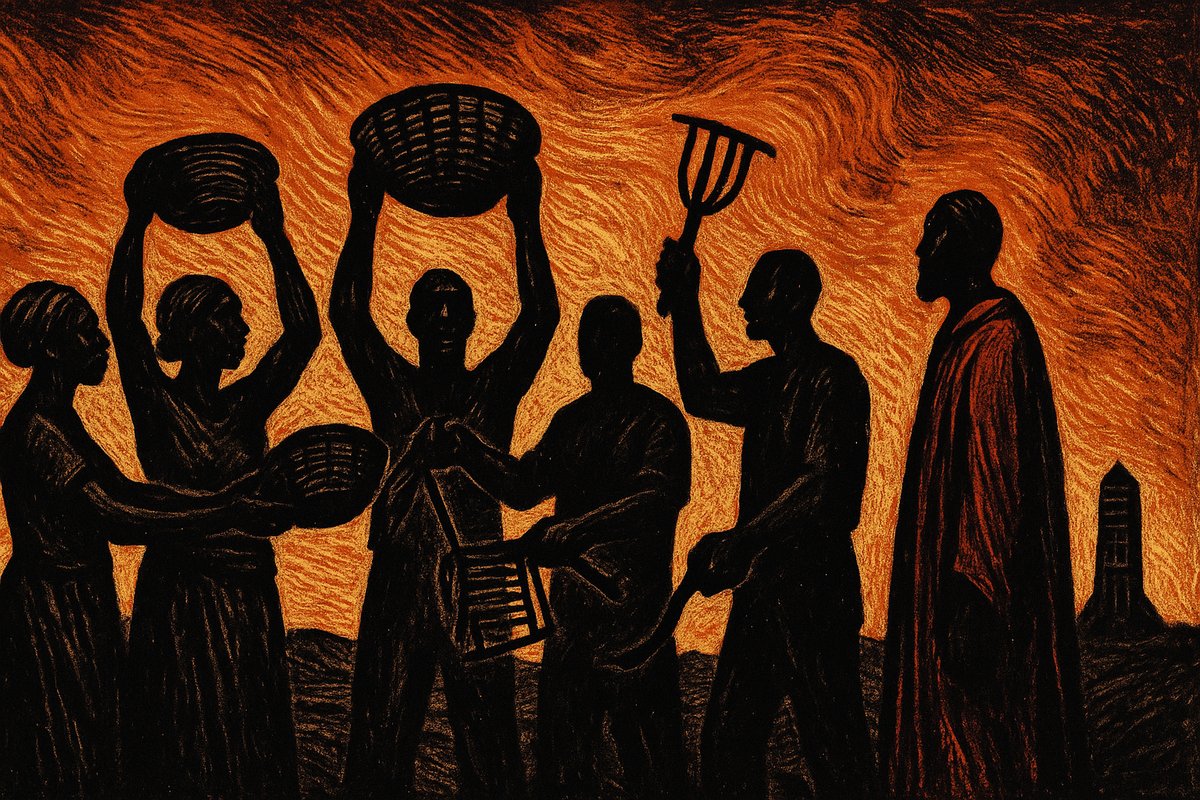
\nAfrica had developed its own systems of distributed trust over centuries. The susu in Ghana, the tontine in Francophone Africa, the esusu among the Yoruba of Nigeria. A group contributes a fixed amount periodically, and each member takes turns receiving the full pot. There's no central bank. No intermediary skimming a commission. Trust is sustained through social reputation and reciprocity verified by the community.
\nThe logic lines up. Both systems distribute control of critical infrastructure among participants rather than delegating it to a third party with different incentives. Rochdale answered with bylaws and open ledgers. Susu systems answered with oral reputation and social pressure. Neither needed a state to guarantee the transaction.
\nWho controls the critical infrastructure when no African cooperative fully trusts Google, Amazon, or Chinese registry authorities to protect its interests? .coop presents itself as the digital version of the Rochdale warehouse or the susu rotating fund. The question is whether it really is.
\nDotCooperation, an entity created and governed by the ICA, controls the central .coop registry. This is not a decentralized registry. It is a single registrar administering the authoritative database. If DotCooperation revokes a domain, if its servers go down, or if its governance changes, African cooperatives end up in the same structural position as with any commercial registrar. Only the rhetoric speaks of no single owner. Single point of failure. Same problem, always.
\nThis is not a jab at FORUS or DotCooperation. It's the governance question any systems engineer would ask before trusting an architecture. The ICA gains expanded digital footprint and relevance as a representative body right when it needs to prove its usefulness following resolution A/RES/80/182. DotCooperation consolidates its position as a necessary intermediary. Nobody does this out of pure altruism. That doesn't make it bad. It makes it partial.
\nThe island.is case offers a contrast. The code is open and auditable. The domain stays within the borders of the country that operates it. With .coop, governance regulation — who verifies membership, who resolves disputes, who decides geographic expansion — sits with an organization headquartered outside Africa. It's an improvement over a purely commercial registrar. It is not the same as African control over African infrastructure.
\nExternally funded biometric identity systems promised inclusion and produced new dependencies instead. I'm not claiming .coop follows that same path. The distance between infrastructure that strengthens and infrastructure that merely relocates dependency lies in governance details that rarely make it into press releases. In The Generosity in the Doorway I develop this idea: a dependency structure doesn't need to be oppressive by design to produce oppression as a cumulative effect. All it takes is for the control node to change its name without changing its structural position.
\nThe gesture strengthens South-South ties at a moment when that kind of cooperation is scarce. Digital cooperatives in Nigeria, India, and Vietnam share a correct intuition with this African case. Infrastructure matters as much as rhetoric. It's not enough to be a cooperative in legal form if the platform underneath answers to a distant server with foreign rules.
\nThe vigilance called for here isn't paranoia. It's the same scrutiny any cooperative would apply to its own bank. Ask who audits the books, who can freeze the account, who decides the rules in a conflict. Susu and tontine survived for centuries because trust was verified face to face. Face-to-face trust. .coop needs to build its digital equivalent of that community verification, or it risks becoming just a more elegant extension of the very problem it claims to solve.
\nI still don't have a clear answer for how that gets done technically without replicating hierarchies. I'm still working through this. What I do know, from patterns observed in other systems that promise decentralization, is that the right question is never who says so, but who can turn it off. Rochdale survived because its members kept democratic control over the warehouse.
\nWill African cooperatives ever have that same level of real control over the registry that today administers their name?
\nSources
\n\n1. International Cooperative Alliance (ICA) — public documentation on DotCooperation and .coop domain governance
\n2. ICANN — technical structure of sponsored generic domains (sponsored gTLD)
\n3. Historical records on the founding of the Rochdale Society of Equitable Pioneers (1844)
\n4. Ethnographic studies on susu, tontine, and esusu rotating savings systems in West Africa
\n