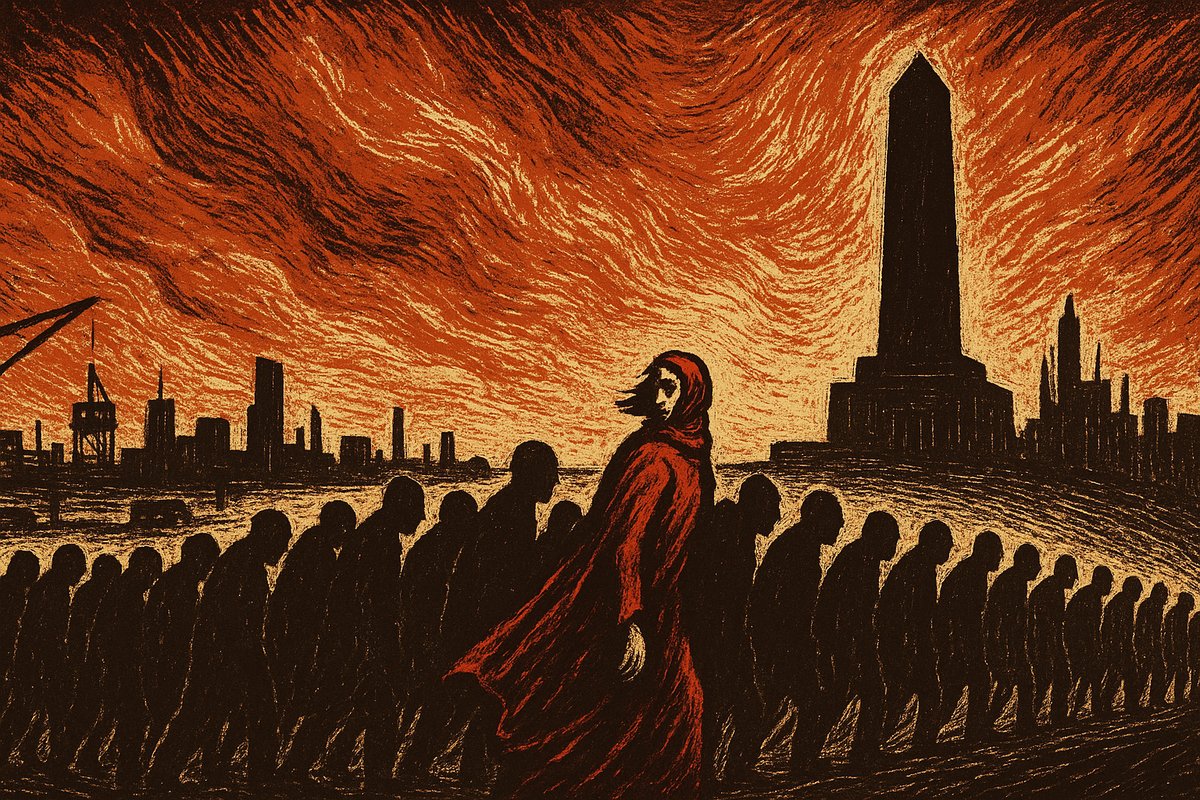
John Lee claims his five-year plan represents the most significant economic roadmap for Hong Kong in years. Thirty thousand hectares. Three university towns. An explicit alignment with Beijing's industrial guidelines. The document sets binding indicators, concrete deadlines, and targets refined through public consultations. It all projects seriousness and long-term vision.
\nA five-year plan is a political statement because it turns a choice of economic subordination into a list of quantifiable objectives that few dare to question. When a government quantifies every aspect, it projects transparency. What it actually does is delimit the playing field before uncomfortable questions arise about whether that field should have been defined this way at all.
\nHong Kong operated for a long time under a different model. An open port, a financial services economy with its own rules within \"one country, two systems.\" This plan marks the first formal integration of local industrial policy with mainland China's. It represents a structural shift.
\nThe Northern Metropolis, that thirty-thousand-hectare project incorporating three university towns, has been discussed for some time. Now it's tied to a precise calendar and to language reminiscent of China's five-year plans, those documents Beijing has used since 1953 to set national priorities. Lee aims to deliver visible results before June 2027. Why that particular year? Because it marks the end of his term, and that political calendar clarifies the urgency behind the plan.
\nContext matters. Hong Kong has been undergoing institutional reconfiguration since the 2020 national security law. Autonomy has eroded step by step, first politically, then judicially, and now economically. This plan fits as a natural continuation of a larger process.
\nThe public consultations the government celebrates deserve close scrutiny. The document claims to have incorporated binding and forward-looking measures based on them. It sounds inclusive. But a question arises: did participants weigh in on the merits of the plan itself, or only on implementation details? That distinction separates real governance from something that merely resembles it.
\nI've seen how certain participation models process concerns without opening up the underlying debate. This five-year plan follows that logic. The consultations legitimize what has already been decided. Here, the process is particularly refined.
\nBeijing gains a more formal economic integration of a territory that once served as a bridge to the West. Universities and tech firms that set up in the Northern Metropolis gain access to preferential support. John Lee builds a concrete legacy before 2027, something tangible to set him apart from those who merely talked about integration.
\nAnd Hong Kong's autonomy dissolves further. There's another, less obvious loss. Optionality disappears. Aligning industrial policy in such detail reduces the ability to change course if the global landscape shifts. Hong Kong is betting heavily on a single path.
\nTechnological competition between blocs is intensifying. The United States and its partners on one side. China and its alliances, including projects in places like Kazakhstan, on the other. In The Generosity in the Doorway I explore how technological infrastructure can shape future conversations about costs and benefits. Argentina saw massive investment in AI capacity without real room to define how the gains would be shared. Hong Kong is moving forward with this industrial integration. The terms appear to have been set from above.
\nFrom Mexico, I see these dynamics differently. Emerging economies that receive capital for infrastructure face the same dilemma. It's not about rejecting integration, that's rarely viable. The key lies in how the terms are negotiated, with a real voice rather than through processes that merely ratify what's already been agreed.
\nI'm still not sure how reversible this path is. Deep economic integration processes rarely get undone through technical adjustments. They usually require a crisis. And a crisis is not a desirable scenario.
\nWhat we're witnessing is an experiment in progress. A city with a history of autonomy is being reshaped under structural pressures. The language of economic planning wraps a fundamentally political decision. John Lee's plan doesn't answer what Hong Kong will be in ten years. It only sets the conditions under which that question will be asked, with less and less independence each time.
\nWhat real room is left for a distinct Hong Kong voice within this framework?
\nSources
\n\n1. Government of the Hong Kong Special Administrative Region, official announcement of the five-year plan (2026)
\n2. South China Morning Post, coverage of the Northern Metropolis and Hong Kong's industrial policy
\n3. Hong Kong National Security Law, official text (2020)
\n4. Yves Laurent, The Generosity in the Doorway (ASIN B0H6RT5Y32)
\n