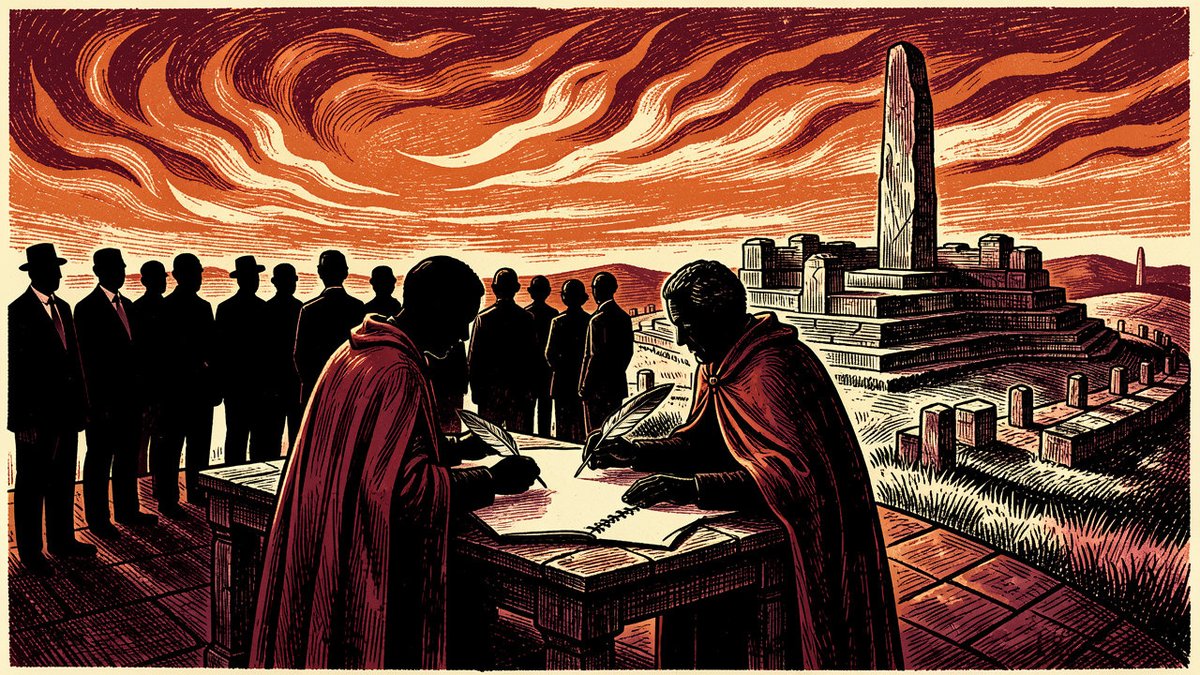
COP17 of the Convention on Biological Diversity in Yerevan agreed on operational arrangements for the Subsidiary Body on Article 8(j). Two co-chairs, one nominated by the Parties and another by Indigenous representatives. A co-chairship is a formal power-sharing arrangement because two people share the authority to convene, set the agenda, and run the sessions. Its real scope depends on who controls the budget and what happens afterward with what gets decided.
It's a genuine institutional advance. That needs to be said plainly. What I don't know, and what IISD and Islands Business reports don't quite clarify either, is the fine print of the agreement. I don't have confirmation of each co-chair's exact mandate, how their work will be funded, or what real capacity they'll have to influence the decisions the Parties later make. That remains pending. That's where everything gets decided.
I read this as a problem of institutional architecture. The useful question isn't who appears out front but who has write permissions and who only has read access. An Indigenous co-chairship can grant real control over the agenda. Or it can be limited to voice without effective weight. From the outside these look identical. In practice they produce different structures.
Why does funding matter so much in a subsidiary body? Because this one doesn't decide in the final instance, it prepares and recommends. Whoever pays for the secretariat, the travel, the interpretation, and the technical preparation determines what reaches the table and with what quality. A committee with an impeccable name but no resources of its own ends up rubber-stamping what someone else already drafted. I've seen this repeat itself in different contexts.
This connects to Target 3 of the Global Biodiversity Framework, the 30x30, which seeks to protect thirty percent of lands and seas. Here's where cui bono comes in. If 30x30 advances without firm rights guarantees, the first winners will be conservation funds and those designing biodiversity credit markets. They need protected, countable, verifiable surface area. The communities already living in and caring for those territories can end up turned into catalogued scenery.
I'm not claiming that's happening. I'm pointing out the structural incentive.
The counterweight lies in the recognition of Indigenous territories and OECMs, other effective area-based conservation measures. If those territories count as conservation under their own governance, the 30x30 tally runs through communities rather than around them. That's why the co-chairship matters more as leverage over definitions and counting than as a symbol. Whoever controls the definition controls the registry.
So who gains real power? Indigenous representatives, in principle. Also the Pacific Island states, whose voice appears in Islands Business as part of the push for a rights-based approach. Who loses ground from the start are the proponents of biodiversity credit schemes. They'd prefer the conversation stay on how much surface area gets protected rather than on who governs it. This is a reading of incentives, not an accusation.
Indigenous peoples don't form a homogeneous bloc. Inuit and Sámi peoples have urged different protections. That matters. A single seat, however solid, can't translate such different regional interests without robust internal consultation processes. How is the co-chair selected? With what rotation? The report doesn't detail this. I leave it as a question.
The historical analogy requires caution. The Haudenosaunee Confederacy united nations through a council system. It's cited as an example of enduring shared governance, and the treaties they signed with crowns and states show how the letter agreed upon and the practice that followed diverge again and again. I'm not equating COP17 with those pacts. The lesson I'm holding onto is more modest: in many co-management arrangements for protected areas, voice remained at the consultation stage. Compliance defined the real scope.
The Generosity in the Doorway explores how debating which arrangement is best avoids the underlying question. Who holds the pen and who can say no. Applied to Yerevan, the co-chairship answers the what. The who is revealed in the budget, agenda control, and verification.
What verification mechanisms exist? None that I know of in detail. A protocol without verification isn't a protocol. It's an intention. Implementation and financing remain pending. That's where this advance will be won or lost. It's worth demanding those answers before celebrating.
No verification. Just promises on paper.
How real will this power-sharing arrangement prove to be once structural incentives collide with the hard decisions on 30x30?
Sources:
1. IISD, coverage of CBD COP17 in Yerevan (Subsidiary Body arrangements under Article 8(j)).
2. Islands Business, coverage of COP17 and the Pacific Island states.