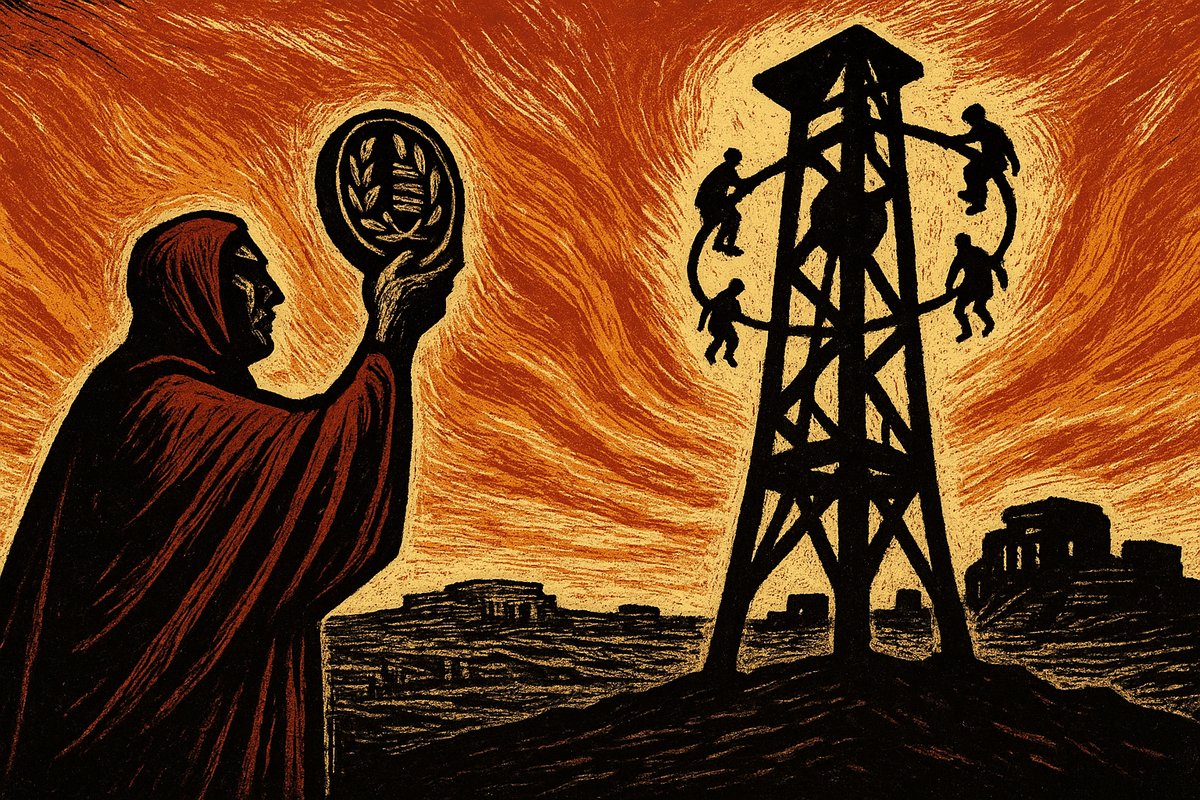
On July 30, 2026, Brazil enacted Law 15.433. It declares cooperativism a national cultural heritage. A hundred years of cooperative history received this symbolic recognition. Communities had already earned it in practice, generations ago. That same month in Chile, the Uber Law remained stuck in Congress. Years of debate. Going nowhere.
Legislating symbols costs the establishment nothing. Legislating systems of value extraction costs plenty. Especially to those who benefit from the absence of rules.
Law 15.433 officially names as culture what millions live as everyday economy. It reinforces Brazil's narrative as a benchmark for participatory economics. It opens the door to tax incentives or recognition in public policy, though that remains to be seen. It consolidates the standing of bodies like the International Cooperative Alliance. What it does not do is automatically guarantee real economic protection for cooperatives now competing against digital platforms backed by venture capital. Legislating culture is declaring a symbol, because it touches few interests. Legislating systems means touching the extraction model, because it alters margins.
This pattern of belated recognition has appeared before. UNESCO inscribed cooperative artisanal practices in 2016. United Nations resolution A/RES/80/182 institutionalizes cooperative years every decade. In Kenya, the government scrutinized transport cooperatives under a magnifying glass. Uber and Bolt kept operating with far less oversight. The same thing happened in New York in the 1930s. Cooperative taxis faced controls that corporate fleets managed to dodge.
What does this mean for someone driving Uber in São Paulo or Santiago? They keep operating in a legal vacuum. There's no clarity on whether they're an employee, a contractor, or some third category that no Latin American labor code has finished defining.
The Uber Law seeks to establish a minimum regulatory framework for transport and delivery platforms. It has spent more than half a decade in parliamentary discussion in Chile. There's broad agreement that precarization through platforms is real, measurable, and growing. What's missing is the will to touch a business model that structurally depends on that legal ambiguity persisting.
Cooperatives and platforms answer to different designs. That difference explains why one gets legislated quickly and the other doesn't. A cooperative is optimized for permanence. It distributes surplus among its members, decides by consensus or vote. Its structural goal is for the organization to keep existing in twenty, fifty, or a hundred years. A gig platform is optimized for extraction. The algorithm that assigns rides, calculates dynamic fares, and decides which driver sees which request is maximizing the platform's margin. Precarity is intentional.
Platform algorithms design precarity as part of the model. Not as an error. Risk gets shifted onto drivers. Actual people with rent to pay. The code only measures margin and adjusts variables. It doesn't need to hate anyone.
Regulating a platform requires understanding its algorithmic architecture. Culturally recognizing cooperativism only requires a declarative act. No friction with any powerful economic interest.
The Rochdale Society of Equitable Pioneers was founded in England in 1844 by twenty-eight weavers. It arose from real necessity. Only after years of demonstrated operation did the British state end up legally recognizing the cooperative model. In Mexico, the hospital-towns organized by Vasco de Quiroga in Michoacán during the sixteenth century functioned as self-managed communities with collective land ownership and equitable distribution of labor. They proved their viability long before any formal legal recognition. The weavers and the townspeople weren't asking for a stamp. Just to survive. That changed everything.
The community builds the system first, makes it work. It proves its viability over years or decades. Only then, once it no longer poses any threat to the established order, does the state arrive to put a stamp on it.
Regulating platforms means directly confronting a business model backed by capital investment, active lobbying, and the ability to threaten to pull out of a market. Legislating cooperative culture confronts no one. Established cooperatives benefit, gaining access to new tax incentives and institutional recognition. Global cooperative bodies benefit, strengthening their relevance. Gig platforms benefit by omission.
I'm not certain this is deliberate in the sense of a coordinated strategy. It's more likely simply how power naturally works. The easy thing gets done first. The hard thing gets postponed. The postponement benefits whoever is already winning under the status quo. I still don't have a clear answer for how to break that cycle.
Nor do I think cooperativism is an immediate solution to the platform problem. The Generosity in the Doorway explores the real tensions between democratic participation and the capacity to grow without becoming bureaucratic. Those tensions don't disappear just because a law declares them cultural heritage. This is more complicated than it looks.
Legal formalization signals that something has already stopped being dangerous to the power that legislates it. While Brazil celebrates its century-old cooperativism, a delivery worker in São Paulo still doesn't know whether their next delivery will be covered by any insurance. A driver in Santiago is still waiting for a law that's been under discussion longer than he's been driving. This gap between legislative speeds reveals real priorities. It shows who the law protects when it decides to move fast, and who it abandons when it decides to take its time.
Who does the law actually abandon when it decides to take its time?
Sources:
1. Law 15.433/2026, National Congress of Brazil — declaration of cooperativism as cultural heritage
2. Resolution A/RES/80/182, United Nations General Assembly — institutionalization of cooperative years
3. Uber Law Bill, National Congress of Chile — regulation of transport platforms
4. UNESCO, Intangible Cultural Heritage List (2016) — cooperative artisanal practices
5. Yves Laurent, Stones Don't Lie and The Generosity in the Doorway