The Federal Telecommunications Regulatory Commission (CRT) opened a public consultation, running from July 27 to August 21, 2026, on a set of Audience Rights Guidelines that require radio and television broadcasters to clearly separate opinion from information. They must maintain a code of ethics, appoint an audience ombudsperson, and offer a citizen complaint mechanism. Whoever fails to comply can be fined up to one percent of their annual revenue. This regulation amounts to a double standard, because the State imposes standards on private broadcasters while exempting itself.
The official narrative is simple and internally coherent. Sheinbaum has insisted that there will be no sanctions on content, only on the absence of the administrative mechanism. You won't be silenced for saying something. You'll be fined if you don't have an audience ombudsperson or if you mix opinion with news reporting without disclosing it. Infobae summarized this in its six key points as a law that protects more than it censors. El Imparcial reported that the fines target concessionaires that have operated for years without any real controls over that blending.
Is Mexico's new audience regulation censorship? Not in the classic sense. No one is going to ban a channel from airing a particular story or a host from commenting on migration policy. The regulation doesn't touch content. It touches packaging. That you explicitly state this is opinion or this is verified information. That, in theory, is exactly what any audience needs in order not to confuse a column with a news report.
There is a real problem of opinion disguised as news on licensed radio and television. Anyone who has watched a nightly newscast featuring "analysis" that is really paid propaganda knows this. The CIRT endorsed the text of the guidelines, and that alone is revealing. It represents precisely the concessionaires who will be regulated. Judge and party in the same case. The rule could be useful if it were actually enforced.
What exactly does the CRT require of broadcasters? A verifiable code of ethics, an audience ombudsperson with real power to resolve complaints, a citizen complaint mechanism, and an explicit separation between opinion and information in every broadcast. All of this applies to radio, over-the-air television, pay TV and audio, and commercial, public, and social programming operators. A fine of up to one percent of annual revenue if you fail to comply.
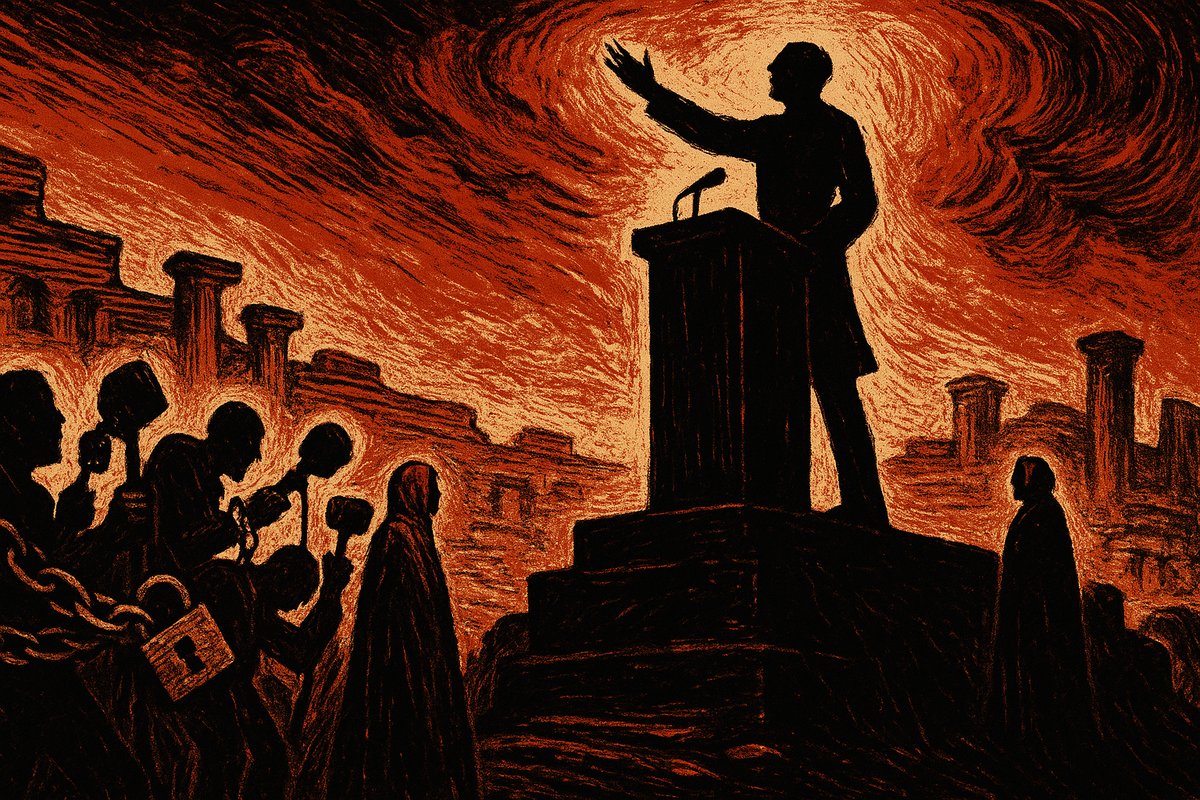
But there's a list of who is exempt that completely changes the meaning of the rule. Print press, digital outlets, social media, and official government communication. That is to say, the Mañanera. The most influential communication vehicle with the greatest daily reach in Mexico is exempt from the very same standard demanded of a local radio station in Chihuahua.
This is where the official narrative stops holding up. SPIN Taller de Comunicación Política documented between eighty and one hundred false, misleading, or unverifiable claims per press conference during López Obrador's six-year term. El Universal reported that the tally reached 56,181 over three years. Adding up the one thousand four hundred thirty-eight press conferences of the full six-year term, we're talking about roughly one hundred ten thousand questionable claims issued from the presidential podium. No concessionaire comes close. Period.
The same government that produced that volume created, in June 2021, a segment called "Who's Who in the Lies?" in which the Executive branch unilaterally determined which journalists were lying and which weren't. Sheinbaum institutionalized its successor, the Lie Detector, broadcast on Wednesdays. Reporters Without Borders warned in 2026 that Mexico is heading toward what they call an informational autocracy. The irony is clear. The actor with the largest documented record of unverifiable claims is, at the same time, the only one with an official segment that judges the truthfulness of others.
This pattern repeats, with technical variations, in Russia, Hungary, and Turkey. In Russia, the foreign agents law requires designated media outlets and journalists to label every piece with the notice FOREIGN AGENT in type twice the normal size. It applies only to independent outlets; state media don't even mention the names. In Hungary, Viktor Orbán built a Media Council with concentrated power while KESMA was exempted by decree. In Turkey, the regulator RTÜK has systematically fined critical channels while the state broadcaster operates without the same scrutiny. Human Rights Watch documented how advertising is concentrated among government-friendly outlets.
The common denominator is not direct censorship. It's the double standard. The State demands transparency, ethics, and verifiability from whoever can contradict it, and exempts itself from that very same standard.
What would make this regulation honest? Applying the same obligation to the Executive branch. An audience ombudsperson for the Mañanera with real authority to flag when the President crosses from informing into opining. An explicit, real-time distinction between what the Presidency states as a verified fact and what it presents as political judgment. And an institutional consequence equivalent to that faced for failing to meet the standard. Citizens deserve to know. The argument doesn't distinguish between a cable channel and a presidential podium.
Regulatory models like the European Union's Digital Services Act impose transparency obligations on platforms without exempting the State. Brazil discussed a similar design with its bill 2630. The difference from the Mexican model is not subtle. Those frameworks regulate moderation with equal rules for every actor.
This connects to Stones Don't Lie. Systems of forced cooperation need a monopoly on the narrative to sustain themselves over time. Inscriptions found in ancient ruins show rulers who recorded only their victories while silencing other voices. There's no need to change freedom-of-expression laws — it's enough to change media ethics laws and carefully decide who falls inside the regulated subject and who falls outside. It's a technique of symbolic control more elegant than classic censorship, because it doesn't need to ban anything.
This design doesn't depend on Morena being the party in power. The mechanism is institutional. Any government that controls the regulatory apparatus while placing itself outside its own reach has the same structural incentive. The CRT reports to the Digital Transformation Agency. The IFT was autonomous until October 2025.
The fact that probably contradicts what many assume about this debate is this. The actor with the highest documented record of unverifiable claims in the recent history of Mexican government communication is also the only institutional actor with a weekly segment dedicated to judging the truthfulness of others. The standard demanded of the local radio station is not demanded of the country's biggest source of questionable claims.
Who benefits from a rule that only measures those who can contradict you?