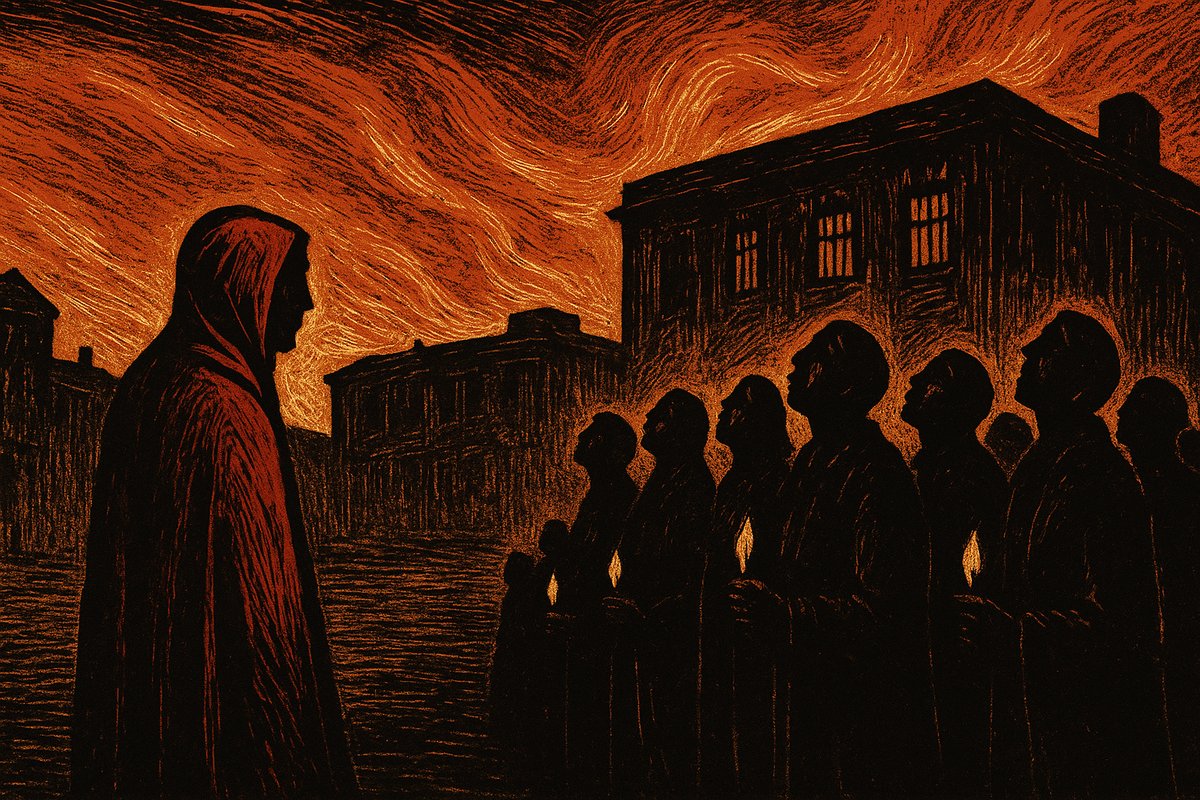
A Hong Kong court found Lee Cheuk-yan, sixty-nine, and Chow Hang-tung, forty-one, guilty of incitement to subvert state power. Their crime was organizing vigils to remember the victims of the 1989 Tiananmen massacre. They face up to ten years in prison. Albert Ho, the third co-defendant, pleaded guilty before the trial.
Freedom of expression is the ability to say something that makes power uncomfortable without that costing you your physical freedom. Expression that is only permitted when it bothers no one isn't freedom. It's conditional courtesy. This case demonstrates that with surgical precision: Lee and Chow did not call for violence or organize a coup. They lit candles. They asked that China stop being ruled by a single party. That was enough.
The official version from Beijing and the Hong Kong government holds that no country tolerates open calls to overthrow its political system. The United States has sedition laws. France punishes the glorification of terrorism. Every state reserves the right to protect its constitutional order. Under that logic, calling for the end of one-party dictatorship crosses the line between opinion and subversion.
The argument has a consistent internal logic. The National Security Law imposed after the 2019 protests responded to months of real unrest, blockades, and clashes. Hong Kong experienced a collapse of public order. Any government would have sought tools to restore control. This is where the argument gains traction: 2019 was a genuine crisis, and crises tend to leave behind legislation that sticks around afterward.
Why, then, does the international human rights community see this as a blow to judicial independence? The law wasn't applied against those who smashed windows or set stations on fire in 2019. It was applied years later against organizers of peaceful vigils for events that occurred in 1989, in another country, more than three decades ago. The temporal and geographic distance reveals that this isn't about punishing imminent violence. It's about punishing memory.
Here the argument falls apart. A law designed to prevent active subversion is deployed against people who had been lighting candles every June fourth for a long time. The Hong Kong Alliance led those vigils for decades without anyone viewing them as a constitutional threat. What changed wasn't the act. What changed was who gets to decide what counts as subversion. That power now resides in Beijing.
This connects to a trend already mapped out in The Generosity in the Doorway. Power redefines legal categories until they capture what was once mere dissent. Beijing imposes the National Security Law, and the same apparatus decides case by case which acts of collective mourning now threaten the state.
What does this mean for those who believed Hong Kong's judicial institutions retained real independence? The question was already answered. When a law allows collective acts of memory to be retroactively tried as crimes against the state, judicial independence becomes a fiction that props up the system for as long as it's convenient.
The Tiananmen vigil wasn't dangerous for what it demanded going forward. It was unbearable for what it refused to forget from the past. Chow Hang-tung, a lawyer, understood this better than anyone. Keeping alive the memory of a massacre that the Chinese government has erased from its official history is an intolerable political act for a regime that needs total control over the narrative. This isn't about future subversion. It's about the administration of the past. And administering the past — deciding what gets remembered and what remembering gets criminalized — remains one of the oldest forms of power.
The systems that most fear collective memory tend to be the ones least confident in their own present-day legitimacy. A government secure in its narrative doesn't need to imprison people for lighting candles, does it? There are aspects I still don't have clear. The exact line between security and control of the narrative shifts depending on who draws it.
International pressure will probably not change the sentence. Precedents since 2020 suggest as much. But the diplomatic reaction and the response from human rights organizations document, with dates and names, that the world saw what happened. That documentation frees no one today. Still, it builds the record against which someone will eventually have to be held accountable.
For decades, Hong Kong was the only place under Chinese sovereignty where the Tiananmen massacre was legally commemorated in public every year. That vigil proved that "one country, two systems" had some real substance. The conviction of Lee Cheuk-yan and Chow Hang-tung doesn't just affect two lives. It closes the last crack through which the memory of 1989 could still breathe freely on Chinese territory.
Candles lit. Memory alive. That was enough.
What happens when control of the past becomes the most effective way of controlling the future?
Sources:
1. Court coverage of the Lee Cheuk-yan and Chow Hang-tung case, Hong Kong Alliance in Support of Patriotic Democratic Movements of China
2. Hong Kong National Security Law (2020), text and implementation
3. Reports from international human rights organizations on judicial independence in Hong Kong post-2019