Meta: A University of Arts Belgrade project tried to revive New Belgrade's mesne zajednice. Is there real power here, or just a symbolic gesture?
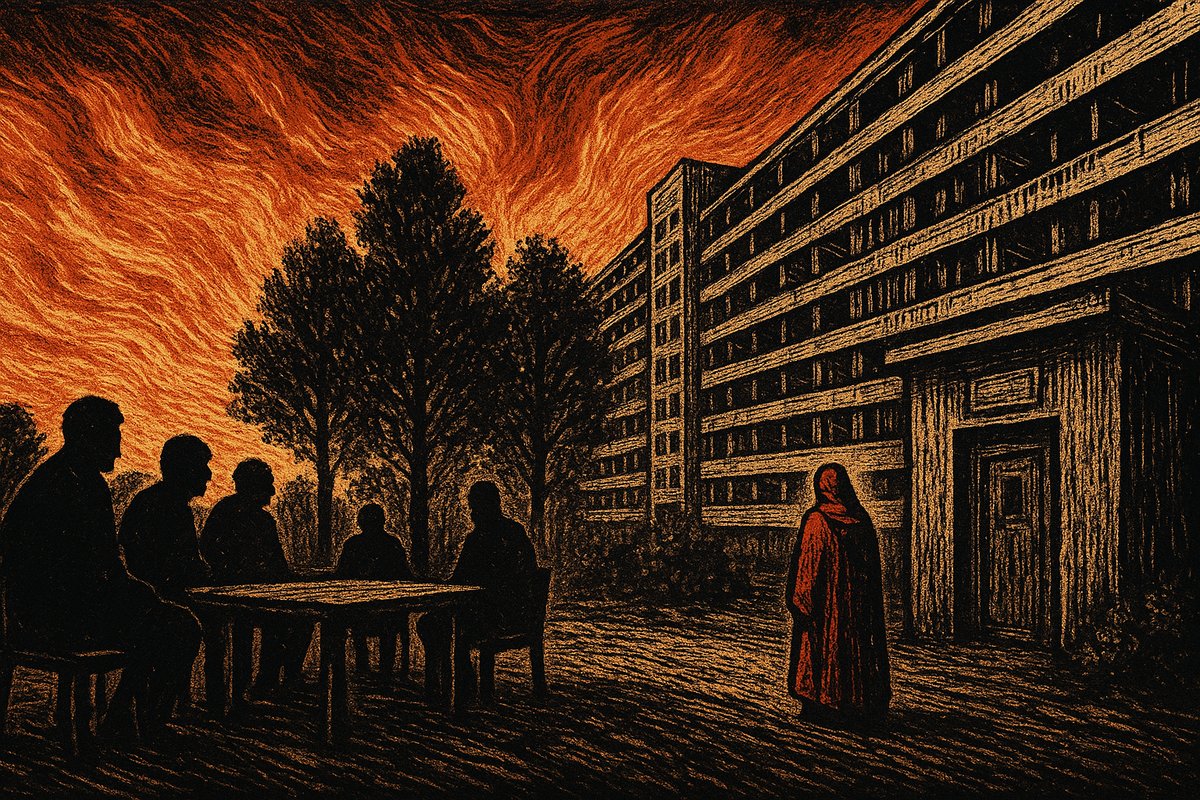
A residential block in New Belgrade. Long, pale concrete, interior courtyards with trees that now tower over the buildings. There, not in a gallery, the University of Arts Belgrade staged the exhibition Life in the Block. That was the visible milestone of a three-year project that attempted something far from glamorous: reviving the neighborhood's community councils, the mesne zajednice.
A mesna zajednica is the smallest unit of territorial organization, designed so residents could decide on services, housing, and communal spending within the framework of Yugoslav self-management, which began around 1950 and spread from factories to neighborhoods. That's the theory. Its historical record is mixed. These were institutions designed from above, with genuine participation in some places and mere formality in others.
The project followed a participatory action-research approach. It didn't measure the neighborhood from the outside. It worked with residents, asking them what they remembered of these councils, what was left of them, and what they would do with them today. The exhibition was the moment when that work became visible to the neighbors themselves.
So what remains of self-management in these blocks? One has to be precise here. The answer is uncomfortable. The councils were never fully shut down. They exist as a legal structure and as a physical space, with their name, their offices, and their place on the administrative map. But without effective powers. After the 1990s, amid crisis, wars, and privatization, they gradually lost their functions until they became an empty shell. No one abolished them. They simply stopped deciding anything.
I recognize similar patterns in other contexts. Participatory institutions designed from above that get hollowed out through lack of resources and party co-optation. You don't need to ban them. Just don't fund them. The same thing happened with the rural cooperatives of 19th-century Germany. I see it today in DAOs with weighted voting, where a distributed decision-making structure ends up concentrated in a few hands.
I want to be clear about what the sources actually allow me to claim. There's no data showing that these councils have regained formal decision-making power. What the project shows is something else: residents willing to participate, which contradicts the narrative of civic apathy. But participating is not the same as deciding. That gap is the problem.
Who wins and who loses here? Following the cui bono logic, there are no obvious financial beneficiaries. The project is academic and community-based, with no business interest behind it. The power at stake lies elsewhere. Residents would win if the councils gained real powers, above all over budget. Local parties would win if they co-opted the councils, because a council with an office, a name, and historical legitimacy but no autonomy is an excellent clientelist outlet. Authorities who prefer symbolic councils benefit from keeping things exactly as they are. People gathered, nothing decided.
From a cybernetic standpoint, I read this as a feedback loop. A neighborhood council detects a problem, discusses it, decides, and corrects course. That cycle needs gain — meaning what's decided actually has an effect. A circuit that's connected but has no gain is still there. All its wiring intact. And it transmits no signal. That's what the mesna zajednica is today. A distributed decision-making architecture surviving as an empty shell. The technical question is whether it can be re-energized from below without someone above plugging in the power source.
This contrasts with the contemporary trend, which runs in the opposite direction. Decisions centralized in platforms, algorithms, and state apparatuses, far removed from those who live with the consequences. A block council is slow, noisy, and deeply imperfect. It's also within reach. In Las Piedras No Mienten, currently in preparation, I explore the idea that human scale and distributed decision-making are not nostalgia but design conditions. The Belgrade experience is a modest laboratory for that hypothesis, though the evidence isn't in yet.
So what might happen now? Without budgetary power, these councils could remain stuck in symbolic participation — and that's the most likely outcome, one I shouldn't gloss over. The alternative scenario requires someone to cede powers, and there's no sign that's happening. There's also a broader European conversation about youth mobilization, which I mention only as context and with caution. Interest in participation isn't unique to Serbia, but that doesn't prove anything about these particular councils either.
There's a parallel I'd rather leave unstated. The communities that sustained a shared undertaking across generations, like the builders of Göbekli Tepe, didn't do it because someone handed them a rulebook. Their coordination had visible, shared consequences. The formal structure mattered less than the fact that what was decided became stone, raised and standing.
In New Belgrade the structure still stands, with its seal and its office. The neighbors have sat back down together. What's missing is the one thing that turns a meeting into governance.
If people participate and nothing they decide ever gets carried out, is that democracy — or just its dress rehearsal?