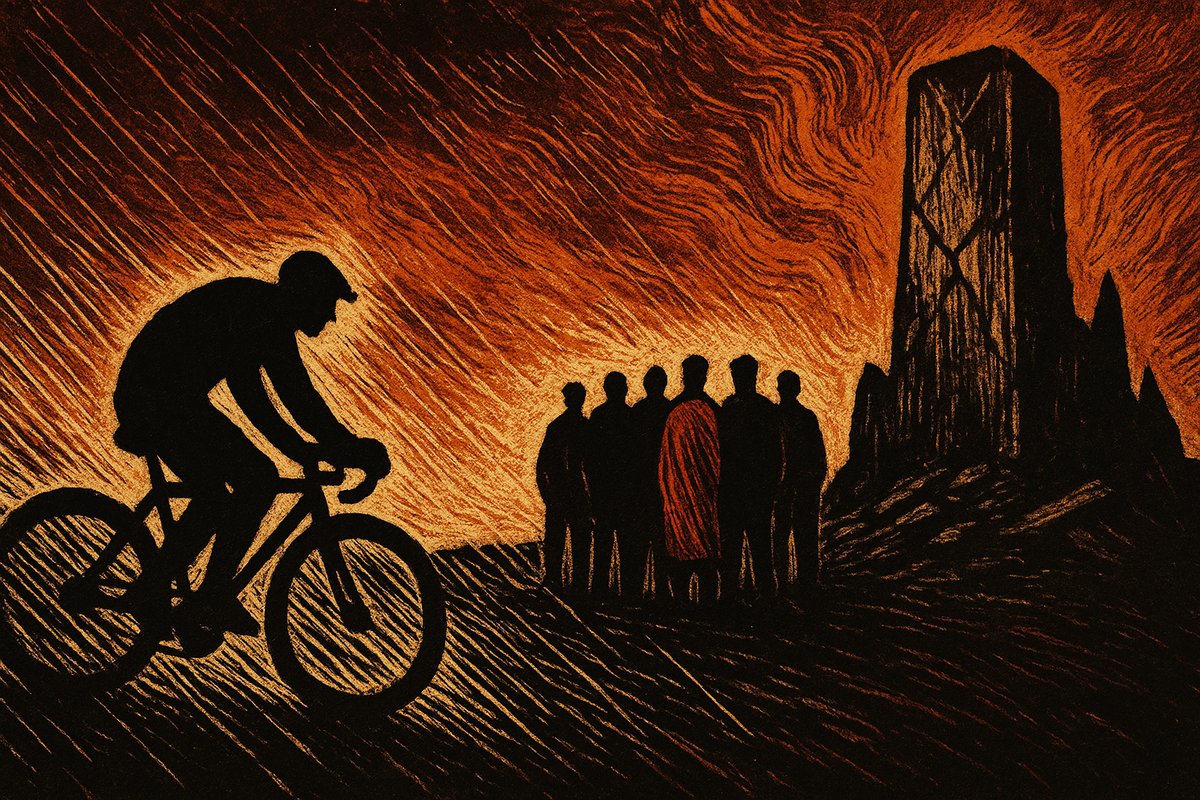
It's raining in La Plata. For a Rappi delivery worker that means the algorithm will raise the delivery fee. That increase almost never reaches the pocket of the person pedaling through the rain. For a Mi Ciudad delivery worker, rain triggers an additional payment already agreed upon in advance. Not a promise contingent on the demand of the moment. This difference condenses the entire argument of this article.
Mi Ciudad is a worker cooperative that organizes deliveries in La Plata and it differs from Rappi because its own workers own the tool they use to work. It was born because a group of delivery workers decided that collective ownership of their tool was preferable to renting out their time to an app with no local accountability. The same workers are the owners. They decide the payment rules. They split the surplus among themselves instead of sending it off to distant investors. Why isn't this the norm if it's clearly better for the person pedaling? The answer has to do with who designs the model, and for whom.
The contrast with Rappi and PedidosYa doesn't stay at the level of words. In the cooperative, hazardous-weather pay is agreed upon in advance and applied automatically when it rains or when there's extreme heat. It doesn't depend on an algorithm deciding case by case whether an incentive is worthwhile. Earnings are adjusted for inflation by contract. The traditional platforms rarely guarantee this. The cooperative also offers social security coverage. In the apps' scheme, that's left entirely in the worker's hands, who is classified as a "partner" precisely to avoid any employer obligation.
The people who built this scheme are delivery workers who previously worked for the big platforms. They know the system from the inside. They aren't outside activists importing a theory from an office. They spent years watching how the algorithm assigns orders. How it penalizes rejecting unprofitable trips. How the rating system operates as silent discipline. That direct experience shaped every rule at Mi Ciudad. Every norm answers to a problem they lived through firsthand.
The technical design of an app like Rappi is not neutral. It's an architecture built to extract the maximum possible value while hiding the risk. The algorithm keeps the delivery worker connected as long as possible without guaranteeing a minimum income. Risks externalized. Profits concentrated. The variables of weather, traffic, and actual distance fall almost entirely on whoever is riding the motorbike. The cooperative inverts that logic. Payment rules are negotiated collectively. Risks are internalized into the shared budget. This isn't about goodwill — it's a difference in incentive architecture. This matters because it shows who decides what information is visible and who bears the cost of what stays hidden.
The losers under this model are the platforms that depended on an abundant supply of delivery workers willing to assume all the risk. Rappi and PedidosYa have no structural incentive for cooperatives like Mi Ciudad to thrive or become widely known. Every delivery worker who migrates stops generating extractable value without proportional compensation. No conspiracy is needed. A simple business calculation that prefers silence to competition is enough.
What comes next for Mi Ciudad is the hardest question facing any cooperative that actually works: whether it can grow without losing what makes it different. I still don't have a clear answer to that tension in general terms, because growth brings more members, more capital, and with that, more opportunities for someone to accumulate disproportionate power. It's the same question Mondragón faced as it expanded, and the one DAOs face today when capital-weighted voting starts to look a little too much like the corporate boards they claimed to be replacing.
There's a hundred-and-eighty-two-year-old precedent that illuminates this without straining the metaphor. In December 1844, twenty-eight weavers in Rochdale opened a ten-square-meter shop on Toad Lane with four products: flour, oats, sugar, and butter. It wasn't a master plan against industrial capitalism. It was a concrete solution to shopkeepers who sold flour mixed with plaster. They bought wholesale, sold at a fair price, and split the profits according to how much each person bought, not according to capital contributed. Within six months they had a hundred members. The cooperative movement that later swept across Europe emerged from people tired of being cheated by the middleman who controlled the coordination. Stones don't lie.
In Stones Don't Lie I devote an entire chapter to that episode precisely because it dismantles the idea that cooperativism needs a revolution to emerge. It emerges when enough people get fed up with the middleman controlling the infrastructure. In 1844 that infrastructure was the village shop. In 2026 it's the order-assignment algorithm. The pattern repeats.
The United Nations and the International Labour Organization have long been pushing the social and solidarity economy, with resolutions recognizing the cooperative model every decade or so. Mi Ciudad didn't need to wait for those resolutions. It implemented weather pay, inflation-adjusted wages, and real social security, decided by the people who make the deliveries, not by those collecting a commission from another country. We'll see whether the UN finds out that the theory it promotes is already working, rain and all, in a city of under a million people in the south of the continent.
Will Mi Ciudad be able to scale while keeping its internal logic intact, or does growth always end up reproducing the same concentrations of power it set out to avoid?