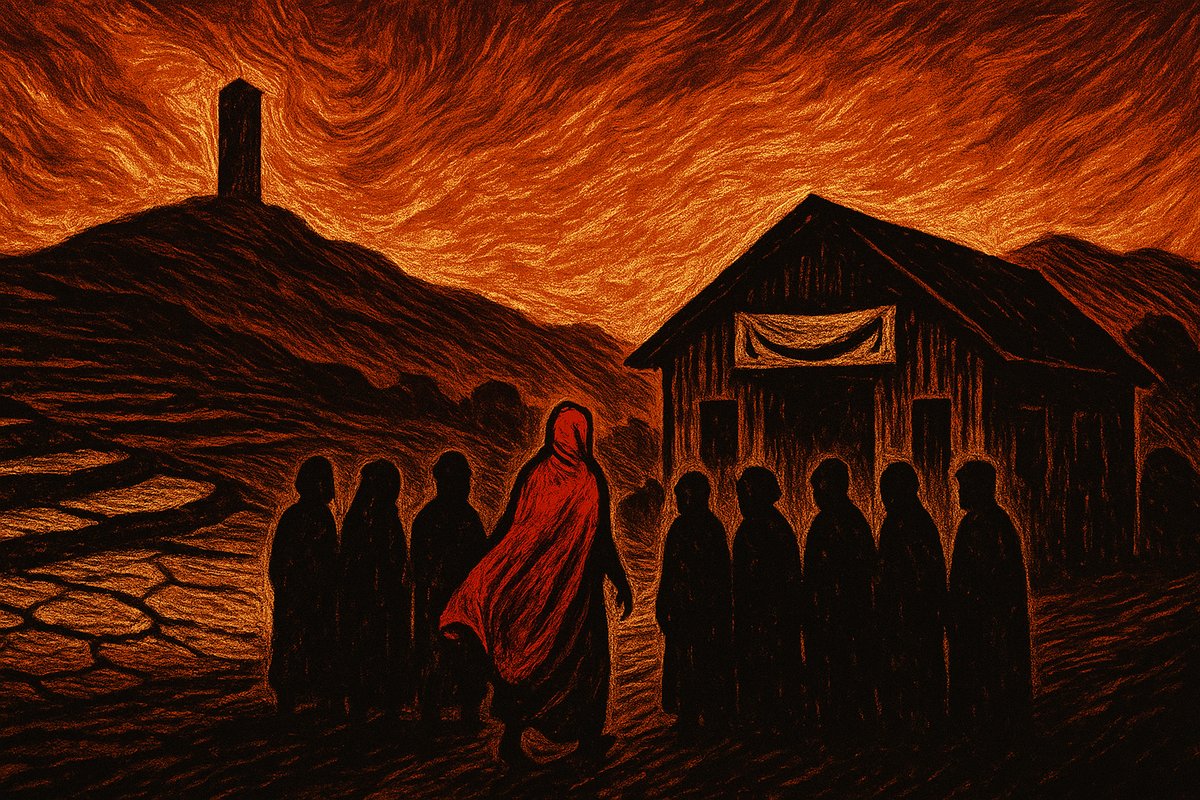
Eighty thousand cooperatives. That's the figure the Prabowo Subianto government presented for its Red and White program, a network of village cooperatives promising participatory economic development in every corner of Indonesia. The name evokes the colors of the national flag. The message goes beyond economics. It seeks to forge identity.
From Gadjah Mada University, the warning came quickly. Researcher Suyatna and his team point out that this program risks repeating a pattern Indonesia has already lived through twice: imposing cooperative structures from the center without the local social capital needed to sustain them. Red and White functions as vertical control disguised as decentralization. The historical data allows us to verify this hypothesis.
A politically captured cooperative is one that maintains the form of collective ownership on paper because real decision-making power migrates toward local intermediaries aligned with the center in exchange for subsidies or electoral legitimacy. That's exactly what happened with the KUD during the Suharto regime. UGM academics fear the same thing will happen here.
The Koperasi Unit Desa emerged in the seventies as part of the modernization project. The idea seemed solid: cooperatives that would aggregate agricultural production, facilitate credit, and strengthen the rural economy. In practice they became a channel for state subsidies and a method of control over the peasantry. When the regime needed votes or loyalty, the KUD delivered. Once the subsidy and the political apparatus sustaining them were withdrawn, most simply evaporated. There was no dramatic collapse. Just a silent disappearance.
That pattern didn't end with Suharto. It reappeared with the BUMDes, driven since 2014 by the Village Law. The stated goal was to give rural communities genuine economic autonomy. Subsequent studies revealed the same structural problem. Where prior social capital existed, some BUMDes operated with acceptable results. Where the structure was imposed without that foundation, they ended up under the control of local elites or clientelist networks. Village chiefs used the infrastructure to consolidate power rather than distribute it.
The numbers get decided in Jakarta. Success is measured by the number of units created. Records show this approach lacks genuine feedback from the ground up. That's the difference between a structure that listens to its components and one that only issues orders.
Why does this distinction between listening and ordering matter? Because it connects directly to the analysis of the UN resolution institutionalizing cooperative years: a signal without internal correction ends up as institutional noise even when the intentions are good. With budget and state apparatus behind it, Red and White could accelerate precisely the problems it seeks to solve.
Applying cui bono reveals who benefits. The government gains political legitimacy by showcasing a flagship program in eighty thousand villages. Local actors gain new infrastructure to redistribute favors and reinforce networks. The center gains administrative presence in territories where it was previously more limited. Rural communities don't necessarily benefit, unless specific safeguards against capture are incorporated—something the announced design has yet to address.
The difference between nominal ownership and real control depends on who audits the structure. Red and White requires independent auditing mechanisms and real exit options. Otherwise it becomes a cooperative letterhead over an organization of political power. This constant repeats across very different contexts.
The cases that do endure offer a contrast. German credit cooperatives coordinate more than thirty million members through local federations with real autonomy. Mondragón sets size limits and federates the rest. The key isn't numerical ambition. It's whether the structure arises from local need or is imposed from above on political timelines.
The Environment Minister proposed integrating these cooperatives into the international carbon market. The idea is still just a proposal, but if it materializes, eighty thousand structures—many of them newly formed—would begin certifying carbon credits sellable to international investors. The governance problem UGM points to doesn't disappear. It multiplies. Poorly designed intermediation has already shown elsewhere how only a fraction of promised financing actually reaches communities. Credits issued under these cooperatives could be challenged by international auditors. What would happen then to Indonesia's credibility? It would be directly affected in markets where institutional reputation weighs as much as the certified ton.
I still don't have a clear picture of how Indonesia will resolve this dilemma. It would be dishonest to pretend otherwise. What the historical record shows is that the solution doesn't lie in the scale of the announcement but in the design of the feedback process. In The Stones Don't Lie, I explore how the cooperative structures that survive generations align the individual incentives of their members with the collective outcome.
The real risk is that all this ends up serving as a distraction from more uncomfortable questions about effective enforcement of forestry law and containment of deforestation. A cooperative with a good name and the national flag looks better in a sustainability report. High targets. Fragile foundations. Stones don't lie, but historians sometimes do.
What mechanisms for genuine listening from the villages would be needed to finally break this pattern?
Sources
1. Gadjah Mada University (UGM) — academic analysis of the Red and White cooperative program (Koperasi Merah Putih)
2. Historical research on Koperasi Unit Desa (KUD) during the Suharto regime
3. Studies on BUMDes implementation under Indonesia's Village Law (2014)
4. Statements from Indonesia's Ministry of Environment on cooperative integration into carbon markets
5. Yves Laurent, The Stones Don't Lie (Amazon Kindle, ASIN B0GX2XWBPK)