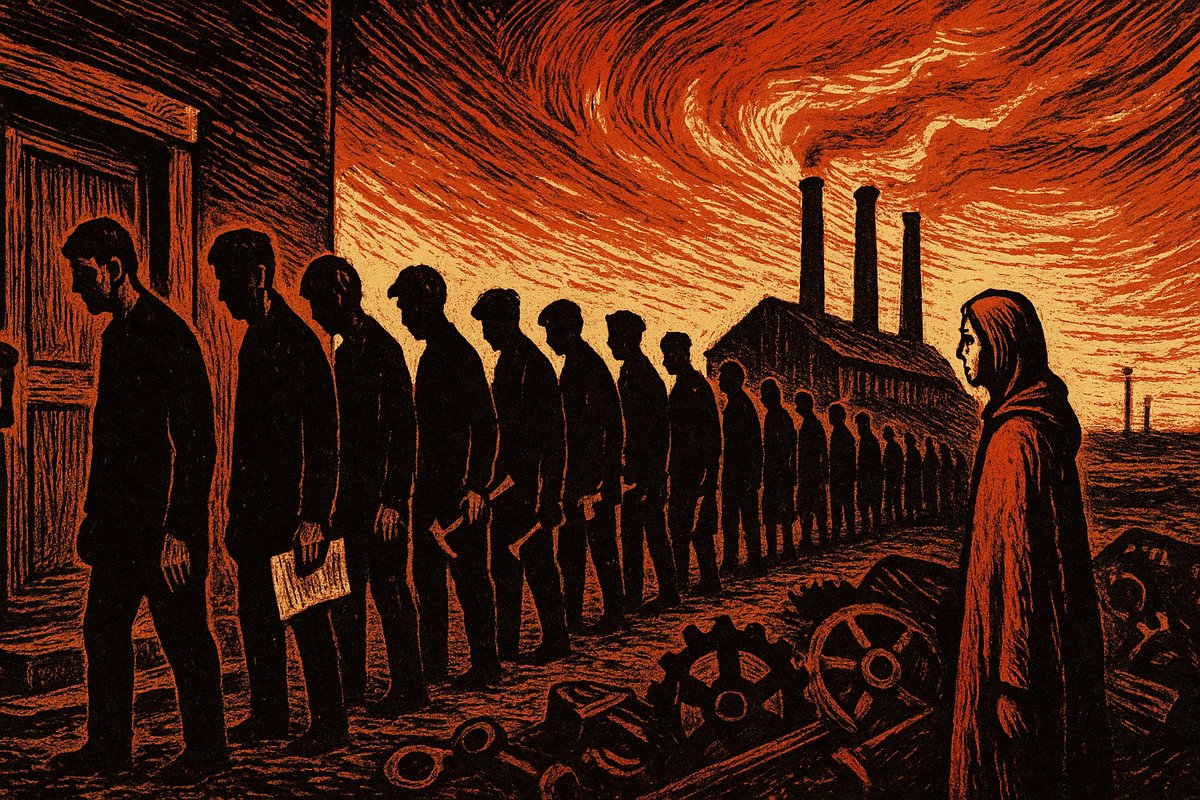
Fourteen point nine million young Mexicans, nearly half the population between fifteen and twenty-nine, are living today in poverty, precarious work, or outside the education and labor system entirely. That figure sits at the heart of the report the Alianza Jóvenes con Trabajo Digno published in August 2026, and it's uncomfortable for one direct reason. The Mexican government has been running one of the largest youth employment programs in Latin America since 2018. Jóvenes Construyendo el Futuro was supposed to solve exactly this.
Youth exclusion is structural because it doesn't stem from a lack of programs: it stems from the absence of real demand for formal work in the Mexican economy. That's the definition worth having clear before entering the debate. Current policies treat a symptom, the lack of work experience, when the actual disease is an economy that doesn't generate enough formal jobs to absorb everyone entering the labor market.
The official narrative sounds reasonable, and it deserves to be recognized as such. The program offers a monthly stipend of 9,582 pesos in 2026 to young people who neither study nor work, placing them as apprentices in companies or institutions for a year. The government touts millions of beneficiaries placed and trained since launch. Compared to inaction, putting money in the pocket of someone without a steady income is progress. Critics like Simón Levy question the scheme's cost and effectiveness. Even so, they acknowledge that pulling the stipend without a replacement would cause immediate harm to millions of families.
Direct cash transfers reduce extreme poverty in the short term. Placement data from the Labor Secretariat shows that a percentage of stipend recipients land formal employment after finishing their year. Does this help anyone today? Yes. That's not in question.
Measuring immediate placement is not the same as measuring underlying transformation. Why does a program that trains millions of young people fail to meaningfully reduce the 14.9 million in exclusion? It trains someone for a job. It doesn't create the job that person needs. Jóvenes Construyendo el Futuro addresses the supply side, young people with skills, but never touches the demand side. When the year of apprenticeship ends and the company doesn't hire because there's no real vacancy, that young person goes back to the same informal economy they came from. Now carrying one more line on their résumé, and without the stipend income.
This pattern repeats outside Mexico. Programs like Job Corps and YouthBuild in the United States, the European Union's Youth Guarantee since 2013, and Kenya's National Youth Service share similar long-term evaluations. Temporary gains erode within two to five years. In Spain, Greece, and Italy, roughly a third of the young people who went through the Youth Guarantee remain in precarious employment. The underlying economic structure didn't change at the same pace as the public policy. The International Labour Organization has documented this same trend across more than forty countries. These programs function as palliatives when they aren't paired with real transformation in the productive structure that generates jobs in the first place.
These limits show up again and again. The technical solution is elegant. The implementation, flawless. The structural problem remains untouched. Nobody addressed the root cause. This connects to what was explored in The Generosity in the Doorway about unemployment driven by automation. Transferring money, whether as a stipend or a basic income, resolves the symptom of monetary poverty at the moment it's handed over. It doesn't answer what economic structure produces that exclusion in the first place. The book documents how both Milton Friedman in the seventies and today's basic income pilots share this same limitation. Money without transformation of the productive structure is a painkiller. Not surgery.
There's another angle almost nobody mentions in the Mexican debate. The economy needs to create around 1.2 million formal jobs annually just to keep pace with population growth. In the best recent years, the formal economy has generated less than half that figure. No stipend program closes that gap because it isn't designed to create employment. It only redistributes training among people who are already jobless.
What's missing from Mexico's public debate isn't a bigger budget for Jóvenes Construyendo el Futuro, nor its outright cancellation. What's needed is an honest conversation about which models have worked elsewhere in the world when direct transfers are combined with the deliberate creation of demand. Worker cooperatives backed by guaranteed public procurement, like the Mondragón model in the Basque Country, generate stable employment after decades precisely because the cooperative owns its value chain. Or the public job guarantee model that Argentina partially tested with the Programa Jefes y Jefas de Hogar in 2002. The state didn't just train people, it generated paid work through community projects. Mixed results. But there, at least, real economic activity was created.
The Marienthal study, from 1930s Austria. Marie Jahoda, Paul Lazarsfeld, and Hans Zeisel documented it with a rigor that remains a reference point nearly a century later. Prolonged unemployment destroys a person's structure of time and identity in ways no monthly check can repair. The young Mexicans receiving the Jóvenes Construyendo el Futuro stipend today don't just need the income. They need a credible path toward something stable. When that path doesn't exist because there's no job waiting at the end of the tunnel either, the stipend becomes a year of dignified waiting.
I don't have a settled answer about exactly what should replace the Mexican program. It would be dishonest to pretend otherwise. Data from Europe, Kenya, and Argentina indicate that no country has solved mass youth exclusion through training transfers alone. The cases showing sustained improvement combine transfers with the direct creation of economic demand, something Jóvenes Construyendo el Futuro never included among its design goals.
Mexico currently spends more, as a share of its social spending, on youth employment programs than most OECD countries, including ones with youth unemployment rates less than half of Mexico's. The problem, then, isn't how much is spent. It's on what.
What economic structure do we need to build so these paths stop being just a year of dignified waiting?