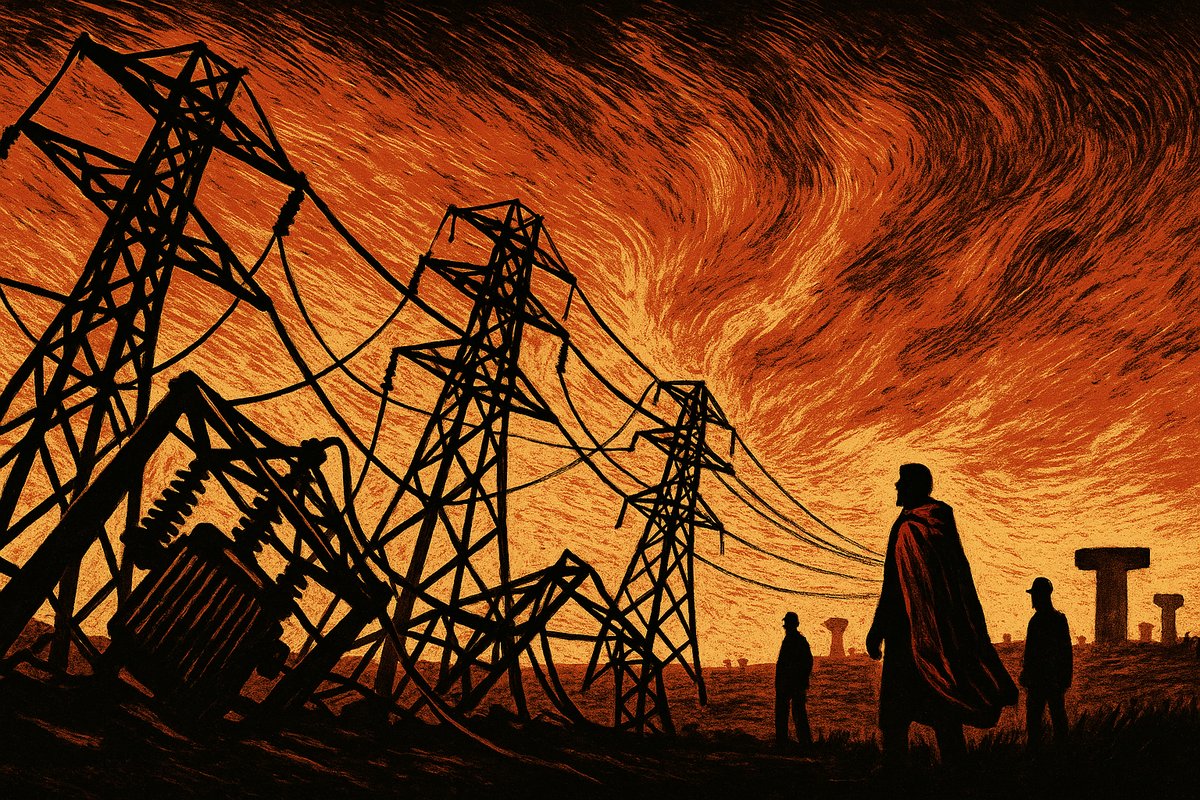
A blackout at a German defense facility doesn't make headlines. Three defense facilities, two regional power grids, and an airport affected in the same season reveal a pattern. European intelligence services have documented this for months, and now it's leaking out through four balanced sources. Two left-leaning, two right-leaning, and they agree on the alarm.
Hybrid sabotage is a confrontation strategy precisely because it allows damage without triggering NATO's Article 5. A compromised router. A cut cable that coincides with scheduled maintenance. A drone flying over restricted airspace. Each incident looks ambiguous on its own. Together they form a narrative that analysts are already linking to a possible next phase: operations targeting European officials.
The known details paint an uncomfortable picture. German defense facilities compromised, power grids suffering failures that operators can't fully explain, government systems breached and detected late. Airports where the technical and the suspicious blur together. Germany concentrates these signals because of its industrial weight and its role as NATO's logistical hinge. Its dual-use critical infrastructure, civilian and military intertwined on the same territory, makes it a logical target.
Sabotaging a power substation there doesn't just turn off the lights. It can disrupt supply chains feeding defense production for half of Europe. Why would Russia choose this path now instead of open confrontation? The answer most analysts offer is uncomfortable in its implications, though simple in its logic: hybrid warfare is cheaper, more deniable, and doesn't automatically trigger a collective response.
A missile builds a coalition. A compromised server, a gas leak classified as accidental, does not. European states are left on strange ground. They know something is happening, they suspect the source, but they lack a clear threshold for responding without looking like they're manufacturing a pretext. There's something else here too, Yves Laurent has spent time observing power dynamics among great powers. Rome, London, and Washington rarely chose direct confrontation when cheaper alternatives existed.
The digital dimension adds a new scale. Power grids and government systems that didn't even exist in their current form decades ago turn out to be as vulnerable as physical trenches, perhaps more so. This matters because it shows how efficiency was pursued at the expense of redundancy. The Generosity in the Doorway explores precisely this concentration of power and infrastructure. The underlying logic transfers here without much effort: centralized structures lacking distributed layers can be destabilized with minimal effort.
No single explanation excludes the others. NATO governments find budgetary justification. The cybersecurity and defense industry sees contracts. Russia, if it's behind this, sows enough uncertainty to erode European cohesion without crossing the red line. Multiple actors can benefit from the same narrative without any need for coordinated conspiracy.
For an ordinary European citizen with no ties to government or defense, this means security is no longer measured only at borders. A regional blackout, a payments glitch, a paralyzed airport now enter the vocabulary of conflict. Citizens absorb the immediate cost without ever having been consulted about the risk. Complex structures almost always fail through the accumulation of small failures that, viewed separately, look like coincidences.
Resilience gets built before incident number one. Three times over, that's what the communities who raised Göbekli Tepe more than eleven thousand years ago show us. They coordinated massive efforts without a central state or a standing army. There's no evidence they faced modern sabotage, and forcing that parallel would be absurd. What they do show, though, is that cooperation at scale can rest on distributed networks of trust, which are harder to sabotage than a centralized bottleneck.
It's still not clear exactly how NATO should respond. That's beyond the actual authority of this analysis, and pretending otherwise would be dishonest. From a systems perspective, the more useful question may not be how to respond militarily to each incident, but why critical infrastructure remains so fragile against a single type of threat. That second question generates fewer headlines, doesn't it?
If the escalation were to reach targeted assassination operations, Europe's calculus would shift at the root. Even short of that, the current pattern already reveals just how much we depend on designs optimized for efficiency rather than resilience. That lesson outlasts Russia, NATO, and this particular crisis.
So how do we build real redundancy before the accumulation of small outages becomes irreversible?