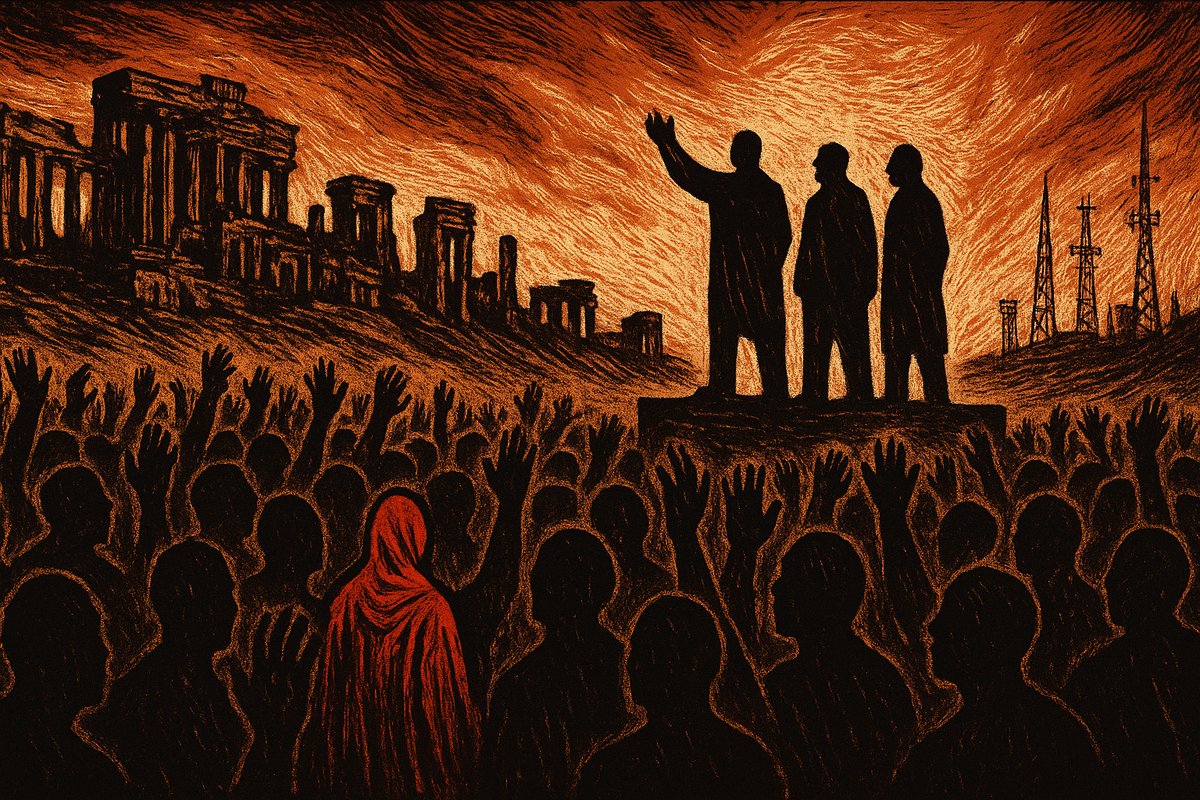
Modi raised an observation in New Delhi that deserved closer scrutiny. Weaponizing technology and critical minerals damages global progress and shared prosperity. He said this flanked by Xi Jinping and Vladimir Putin inside the Bharat Mandapam, before representatives of a group of countries that together account for more population than any other registered bloc. The statement has the appearance of routine diplomacy. It is not.
A geopolitical bloc is an alliance of states that coordinate policies to reduce their dependence on a dominant power because it aspires to reshape the existing order. BRICS was born with that explicit purpose: it offers alternatives to institutions forged in Washington and at Bretton Woods eighty years ago. The summit did not amount to a mere photo op. It announced tangible infrastructure. A logistics cooperation framework. A network of tech incubators. An early-warning system for infectious diseases. A digital agriculture network. Four pillars: resilience, innovation, cooperation, and sustainability. They sound like institutional rhetoric. If they actually materialize, they will alter who controls the decisive flows of the coming decade.
Why should anyone outside diplomatic circles care about this? Because Modi's warning points to a dynamic that is already at work. Economies like India, Kenya, or Argentina receive infrastructure for the next technological wave. Yet they remain on the margins of the conversations that decide how benefits and costs get divided. The same pattern appears in The Generosity in the Doorway: twenty-five billion dollars in data centers for Argentine Patagonia, and the host country is conspicuously absent when compensation or governance is discussed. Modi, without naming anyone, describes that asymmetry with precision.
Critical minerals offer a clear-cut case. Lithium, cobalt, rare earths, and nickel make batteries, chips, and solar panels possible. These elements are concentrated in territories that have historically not controlled their own extractive destiny. The Congo produces over seventy percent of the world's cobalt. It remains among the poorest countries on the planet. That gap did not arise by chance. It comes from decades of economic sovereignty experiments that ended in mixed results. The patterns become clear over time: whoever holds the technical and fiscal capacity tends to set the terms. Whoever provides the natural resource stays out of the room where the contracts get signed.
The simultaneous presence of Xi Jinping and Putin responds to urgent needs. China is looking for markets and routes that don't depend on the dollar. Russia needs them even more urgently after the sanctions that isolated it from traditional partners. India plays a different role. It wants to lead without fully aligning with either. It positions itself as the bloc's responsible voice vis-à-vis the West. This choreography reveals objectives that don't always coincide, even though the final communiqué insists on unity.
Governments of emerging economies gain room to maneuver against unilateral sanctions and tariffs. Local tech companies gain access to markets more shielded from dominant competition. Ordinary citizens face a murkier picture. The history of economic sovereignty movements shows that outcomes rarely benefit everyday people equally. There's something else: these dynamics repeat themselves under different flags, again and again.
The mechanism Modi criticizes didn't emerge yesterday. Rome already practiced it with its provinces. It controlled strategic resources, induced dependency, and then narrated the relationship as mutual cooperation. Today's difference lies in speed and scale. A chip embargo can paralyze entire industries within weeks. No ancient siege achieved effects that fast. Ambitious in theory.
Kazakhstan signed AI agreements with both the United States and China at the same time. It now faces pressure to pick a side. Does a genuine third way outside the technological poles actually exist, or does BRICS end up being just another enclosure under a different banner? I still don't have full clarity. The four announced pillars could generate real cooperation among emerging economies that have depended for decades on external designs. It deserves sustained attention.
There's an uncomfortable tendency worth acknowledging. Blocs born promising to break hierarchies tend to reproduce them internally over time. India leads with rhetoric of unity. Its tensions with Pakistan and the border dispute with China reveal the cracks, you can see them clearly. This doesn't disqualify the project. It only demands that we look at it with the same critical rigor we'd apply to any institution that promises to redistribute power.
The real challenge isn't displacing Western institutions. It's not repeating the same scheme under new names: decisions made wherever fiscal capacity and political weight exist, while the countries that supply resources or infrastructure are once again left out of the room. Modi warned against weaponizing technology.
The question that remains is whether this new board will manage to distribute power differently.