Sixty-five billion barrels of oil under majority US control. That's already happened. The conversation in Washington is moving to gold, and the figure everyone cites, six hundred forty-four metric tons, comes from 2018 data. That was before the Orinoco Mining Arc filled up with illegal mining that no one has managed to measure with any precision. The US Treasury Department authorized Venezuelan gold transactions in March, barely weeks after Nicolás Maduro's exit in January.
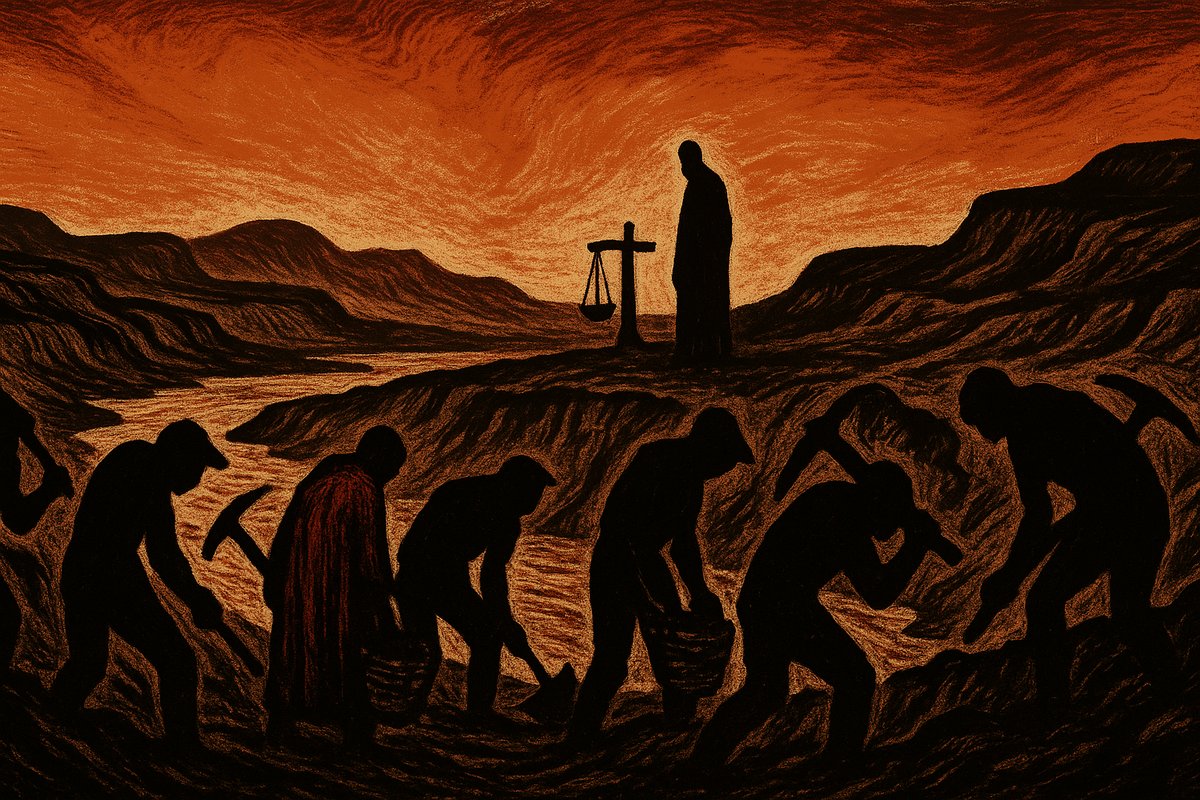
Mining extractivism is when an outside power organizes access to another territory's natural resources on its own financial terms, disregarding the needs and sovereignty of the people who actually live there. That, in essence, is what's happening in Venezuela right now.
The White House describes it as renewed cooperation, mutual benefit, a new diplomatic phase after years of sanctions. Local critics use a different word. Colony. Why does gold, specifically, generate more uncertainty than oil when it comes to economic evaluation? Oil is measured in barrels verifiable through visible infrastructure. Wells. Refineries. Pipelines. The gold from the Mining Arc, by contrast, has been extracted for years through informal and semi-legal operations that never reported their volumes to anyone. There is no reliable inventory. The investors now weighing whether to enter Venezuela are, quite literally, buying an incomplete map.
In "Rome, London, Washington: The Same Game, Different Names," this space analyzed how imperial expansion trends repeat an almost identical structure across centuries. First you secure the extractive resource with the most immediate liquidity, wheat, silver, oil. Then you organize the surrounding territory so that flow continues without political friction. Venezuela today fits that pattern with almost uncomfortable precision. Oil first, minerals second, and in between, a change of government that smoothed the whole process along.
Stones Don't Lie devotes a good part of its central argument to an idea that becomes directly relevant here. Systems of human cooperation, from Göbekli Tepe to modern institutions, function when the people doing the work also get a say in deciding what happens to the results. The book documents how building Göbekli Tepe's enclosures required tens of thousands of coordinated man-hours across generations, without a central state forcing the labor. The coordination worked because there was recognizable reciprocity. Who hosted the feast. Who ate first. Imperfect structures. But the benefit circulated back to those who put in the effort.
The Venezuelan case inverts that logic almost entirely. The extraction work, the informal mining in the Mining Arc, the communities that have already spent years operating there under precarious conditions, is left out of the conversation about who benefits from the newly authorized access from Washington. The reciprocity that sustained Göbekli Tepe, or that sustains any lasting cooperative organization according to the book, is absent from this scheme. What exists instead is a transaction authorization designed in Washington, executed by private companies, over a resource whose real extraction happens through networks that not even the Venezuelan government itself can quantify with any certainty.
What does this mean for those analyzing power from outside the decision-making center? The Venezuelan case adds nuance to something already discussed in this space regarding the Stargate consortium and the design of AI infrastructure: the structural exclusion of those who don't get to help design the proposal that affects them. In Venezuela the dynamic is even more raw. Caracas didn't design the terms of the US Treasury authorization. There isn't even a reliable inventory of the resource being negotiated. A market is being built on data more than seven years old, while illegal mining keeps generating flows that no official figure captures.
How do you negotiate a resource whose real magnitude is unknown, and what happens when measurement is left pending until after political control is secured? Washington is moving forward on an asset whose real magnitude it doesn't know. It's betting that political control, Maduro's exit, the institutional reorganization that follows, will later solve the measurement problem. That's a bet. Not a closed plan. Poorly calibrated models tend to produce unpredictable results for everyone involved, not just for the weaker party.
This strongly confirms the book's argument about institutional capture. Whoever controls the narrative of mutual benefit also controls which questions get asked publicly. The White House talks about diplomatic and private cooperation. The critics talk about modern colony. Both narratives are competing to define the same fact, gold transactions authorized on outdated data, and whoever wins that battle will determine whether the public conversation centers on investment and development or on extraction and dispossession.
It's not clear there's any way out of repeating that imperial playbook. The historical record suggests, and Stones Don't Lie explores without offering easy solutions, that cooperative organizations which endure, the ones that genuinely benefit those who do the work, depend on visible, verifiable mechanisms of reciprocity. Not on authorizations designed thousands of miles away using data from seven years ago. Venezuela doesn't have that mechanism yet. It might build one. It might not.
Stones don't lie, but transaction ledgers authorized without a reliable inventory don't tell the whole story either. When the resource being negotiated can't be measured with any precision, who really benefits from the uncertainty?