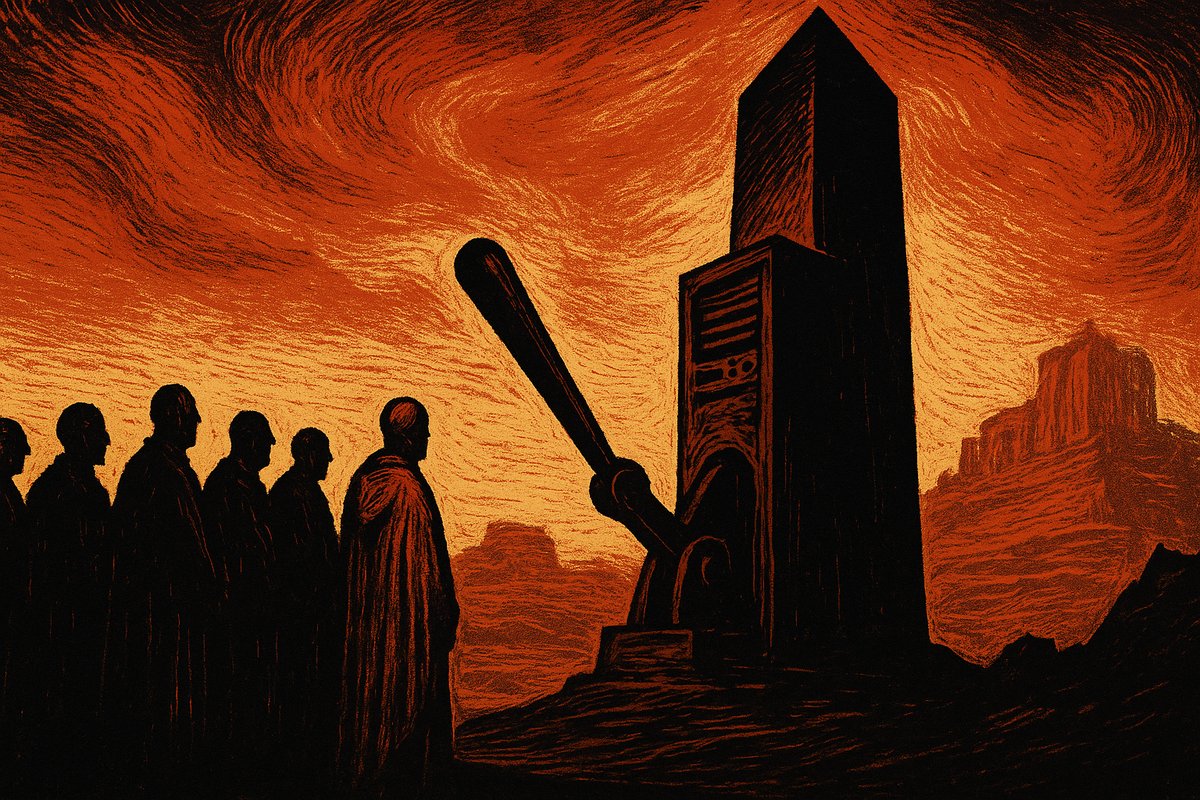
A kill switch for artificial intelligence is a legal mechanism that would allow the state to intervene directly on a malfunctioning AI model. The United Kingdom decided it doesn't want one. The House of Lords debated an amendment to the Cyber Security and Resilience Bill that would have granted regulators that emergency capability. The government rejected it. Not for lack of concern, but because shutting down local access doesn't stop progress in other jurisdictions.
Lord Clement-Jones, of the Liberal Democrat Party, introduced the amendment with serious failures in mind. An institutional brake for extreme scenarios. Officials responded with a long-term, science-led approach focused on strengthening the cyber defense of public and digital services rather than touching the models directly. The difference sounds technical. In reality it determines who controls what.
Evan Hubinger, a researcher at Anthropic, put a figure on the table that deserves serious consideration: more than ten percent probability that AI causes human extinction within the next decade through unaligned superintelligence. That number ran through the parliamentary debate. Ten percent. Hard to file away.
Why would a government worried about that risk reject precisely the tool designed to stop it? Experts from within the industry itself talk about double-digit risks while a government chooses not to build the most direct emergency switch. The British justification isn't without logic. Daniel Kokotajilo, a former OpenAI researcher, points to something anyone who has studied complex systems recognizes immediately: unilateral rules lose force when international regulation remains uncertain.
If the UK halts a model while labs in the United States, China, or anywhere else keep operating, what exactly is gained? It's the same dilemma faced by anyone trying to regulate carbon emissions alone. Unilateral action can feel like progress. It ends up looking more like a gesture than actual control.
In the United States the debate runs in parallel, with lawmakers discussing similar measures without reaching consensus. This isn't a problem exclusive to Britain. It's the picture of a world where no single government has the real capacity to contain a technological development advancing faster than any national legal framework. If no country can act alone, then who can?
The Generosity in the Doorway draws a historical parallel that proves useful here. It examines how revolutions that promised liberation ended up turning the protection of private property into a supreme right, shielding deeper structural changes from ever occurring. The pattern reappears here with unsettling precision. An existential threat is identified, a radical tool is proposed, and the system adopts the version that least disturbs the existing distribution of power.
AI labs gain time to keep scaling capabilities. Governments retain the ability to claim they're acting without taking on verifiable obligations, because "strengthening cyber defense" is a phrase that fits into any press release without generating concrete commitments. No one wants to be first to impose real restrictions. That would mean ceding competitive advantage to more permissive jurisdictions. A race to the bottom dressed up as scientific prudence.
Even the technical vocabulary is contested. Who defines superintelligence, who decides what level of risk is acceptable. The state arrives at the negotiating table from a position of structural weakness. This isn't naivety on the part of officials. The ground is already tilted before any parliamentary discussion even begins.
It's still unclear whether a national kill switch would have been more effective than the path chosen. Kokotajilo's logic carries weight—a unilateral mechanism can turn into regulatory theater while actual development continues elsewhere. At the same time, the figure Hubinger cites doesn't dissolve so easily. It demands something more than the hope of a perfect international coordination that may never arrive.
An emergency switch built by governments that maintain close relationships with the very companies they're supposed to regulate doesn't solve the powerlessness, it just changes its shape. Genuine international coordination sounds good on paper and has repeatedly run into obstacles in other domains of global risk, from climate to nuclear proliferation.
Who would have the legitimate authority to press it, if such a mechanism ever existed?
Sources:
1. Parliamentary coverage of Lord Clement-Jones's amendment to the Cyber Security and Resilience Bill, UK House of Lords.
2. Public statements by Evan Hubinger (Anthropic) on existential risk from unaligned superintelligence.
3. Analysis by Daniel Kokotajilo (former OpenAI) on the limitations of unilateral AI regulation.
4. Laurent, Yves. The Generosity in the Doorway. Amazon Kindle, ASIN B0H6RT5Y32.