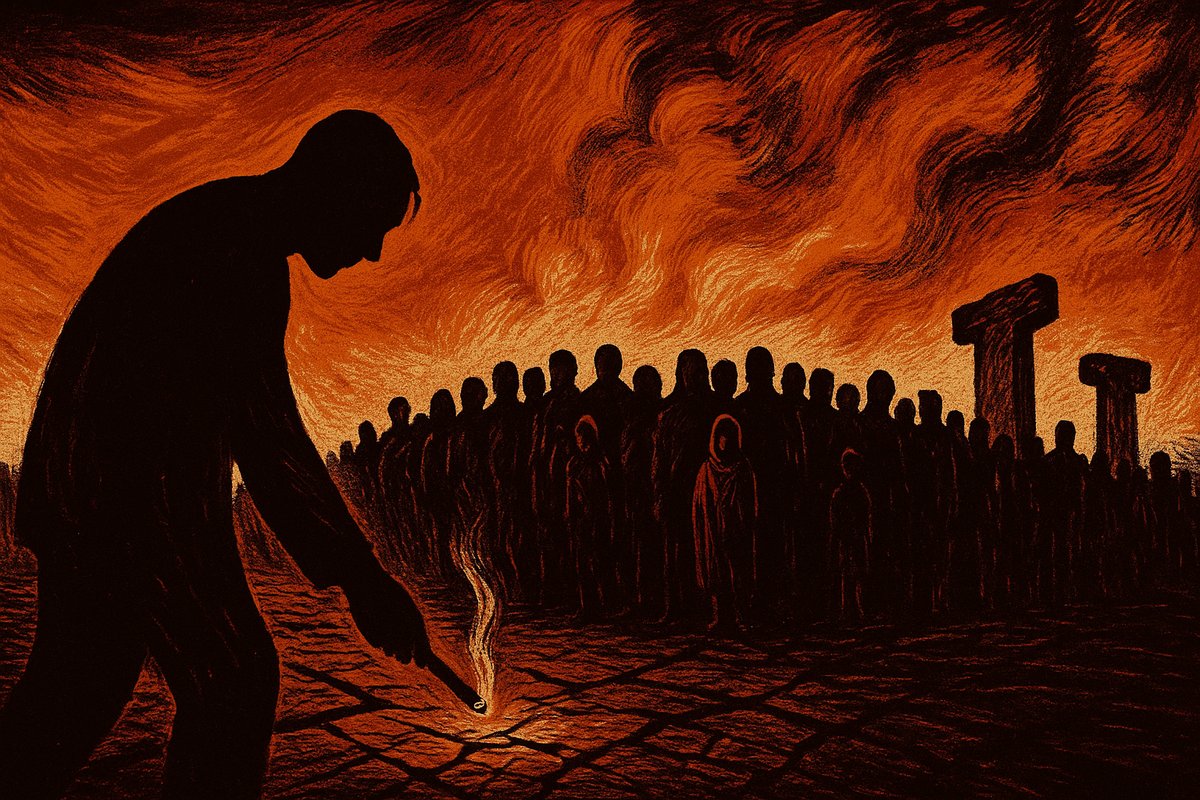
A cigarette butt seems like a small object. Whoever throws it away assumes its impact is small too. That's the original flaw, confusing the size of the gesture with the size of its consequences. A study published in The Lancet in 2023 calculated that 2.71 billion people were exposed to secondhand smoke that year. That exposure caused 1.66 million deaths and 44.8 million years of life lost to disability or premature death. Of those cases, 767 million were children between zero and fourteen years old, with around 5.2 million respiratory infections attributable to smoke that others exhaled near them.
What's uncomfortable about this figure isn't just its scale. It's that it happens even though smoking rates have been falling since 1990. The reason the total number of people exposed doesn't drop at the same pace is demographic: population growth in Africa and the Middle East offsets the relative decline. Fewer people smoke proportionally, but more people are breathing that smoke. Add direct consumption to the mix, and tobacco caused eight million deaths globally in 2023. Most people who smoke aren't trying to hurt anyone. They simply don't see the line connecting their cigarette to someone else's lungs.
Throwing away a cigarette butt is a mechanical act because it's repeated so many times that it no longer passes through consciousness. Stones Don't Lie explores exactly this kind of behavior. There the example isn't smoke but the butt itself, the object people leave on the street, on the beach, in the park. Göbekli Tepe appears as a contrast: its builders sustained monumental projects for centuries without a state or writing, just shared meals and common symbols. Today we can barely manage to coordinate something as basic as not throwing toxic waste into shared spaces.
Why does someone who would never litter in their own home do it without hesitation on the street? The line dividing what we consider "our environment" explains the difference. The house is mine. The street belongs to no one. What belongs to no one doesn't trigger the same internal alarm. That same perceptual error allows someone to smoke on a shared balcony without thinking about the baby in the next apartment. Or a factory to dump waste into a river its executives never see from the office. Physical distance acts as moral anesthesia.
Here the butterfly effect stops being a metaphor. A cigarette butt thrown onto dry pavement during hot season isn't just any flap of a wing. In Greece, Australia, or Chile, improperly extinguished butts have sparked wildfires that destroy thousands of hectares. One person's mechanical gesture, repeated by millions, becomes a planetary public health problem. No single individual caused 1.66 million deaths. And yet they happened.
The Lancet data adds a structural layer to the book's argument. The problem is no longer purely behavioral. Regions with higher secondhand smoke exposure tend to have younger populations and less regulation of enclosed spaces. The solution, then, can't depend solely on every smoker developing spontaneous empathy. It requires rules. Smoke-free public spaces, penalties for discarding cigarette butts, campaigns that make the invisible visible.
One cigarette butt. Nothing more. And yet the chain extends outward. High taxes and plain packaging have reduced direct consumption since 1990 with reasonable results. They haven't solved secondhand smoke or waste. Those harms occur outside the act of smoking itself, in the margin where the smoker no longer feels responsible. Each link in the chain needs its own intervention, and that's exhausting to legislate and even more exhausting to enforce.
Rules that work make the consequence visible at the moment of decision. A trash can five meters away changes more behavior than an environmental awareness campaign. A sign announcing a 500-peso fine changes more than one that says "protect your planet." Not because people are bad. The brain prioritizes immediate, concrete consequences over diffuse, distant harm. That same logic of visible feedback shows up in other contexts, in how to make the social impact of every action legible in real time instead of hiding it behind abstractions like "the environment" or "public health."
The mechanism, not the specific substance, is what matters. That same disconnect explains why someone leaves the water running, why they don't sort their trash, why they drive distracted near a cyclist. Civic unawareness isn't a moral defect of smokers. It's a design flaw in how we process scale. We understand the harm done to the person standing in front of us. We barely register the harm done to person number 1.66 million, whom we'll never meet.
The Lancet numbers make clear that 2.71 billion people breathing someone else's smoke isn't bad luck. It's the sum of millions of mechanical gestures. Each one too small to feel guilty about. Each one large enough, multiplied, to kill. What structures of collective coordination would make those consequences visible before they accumulate?