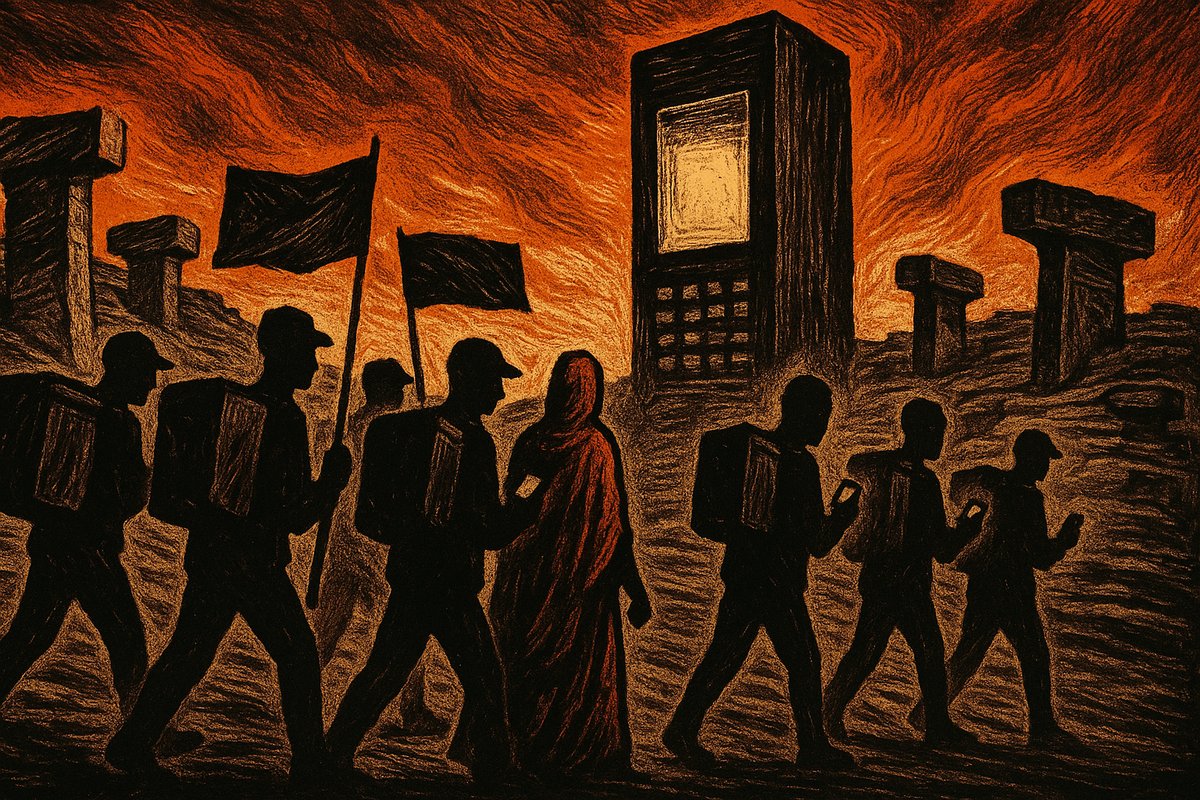
Between October 12 and 20, 2026, the Latin American networks of the ITF, the International Transport Workers' Federation, mobilized to demand that their governments ratify the first ILO convention on decent work in the platform economy. Delivery riders, drivers, and couriers handed out flyers, rallied, and made noise, with Mexico City as one of the squares where the campaign became visible. The scoreboard is on record: 406 votes in favor, 8 against, and 36 abstentions. An overwhelming majority. According to the sources consulted, no country has ratified it yet.
A clarification on the number. The original title of this piece referred to Convention 193. That 193 corresponds to the 2002 Recommendation on the Promotion of Cooperatives, a subject I've already covered separately. There is no confirmation of the number assigned to the new platform convention. Better not to state it without the official ILO reference.
An ILO convention is an international treaty that only binds a State once it ratifies it. That's why 406 votes in Geneva don't change anyone's life in Iztapalapa. The vote measures consensus. Ratification measures power.
Why would unions that already won the vote now run a regional campaign? The battle has moved location. At the international conference, negotiations happen among tripartite delegations under known rules. In each country, ratification depends on an Executive branch, a Senate, and a balance of forces that the platforms know very well and to which they devote resources. The October campaign is an acknowledgment that the easy part is over.
The actors hold no mystery, though they do hold asymmetries. On one side are the ITF's union networks, which bring together platform workers' organizations and warn of precarization and a lack of algorithmic transparency. On the other, the companies, whose central narrative is that someone delivering with their phone is an independent worker, a partner who chooses when to log on. That version is worth a lot of money. If the delivery worker is independent, there are no benefits, no contributions, no liability for the workday.
Here the cui bono applies without much effort. As long as there's no ratification, the convention is just a nice piece of text, and the platforms keep operating under rules they themselves wrote. Every month of delay comes free of charge and lets them keep sustaining the independent-contractor narrative. Unions, by contrast, only gain power if they manage to turn the text into a national obligation. Whoever benefits from the status quo doesn't need to oppose the convention. All they need to do is wait. Slow ratification functions as a mechanism of power, not simple bureaucratic delay. It's a policy, even if no one announces it as such.
What this convention adds, compared to what came before, is the algorithm as an object of negotiation. The discussion is no longer just about how much one gets paid, but about who sees the data, who decides task and payment assignment, and how a decision gets challenged.
A labor-management algorithm is a feedback control model. It measures variables — order acceptance, delivery time, ratings, location. It compares them against a target and adjusts the output: which order reaches you, how much you get paid, whether you get deactivated. Like any control loop, it behaves according to its parameters. How much weight a cancellation carries, how harshly a low rating is penalized, what threshold triggers a suspension — all of that is numbers in a configuration file. Demanding algorithmic transparency is equivalent to demanding access to the parameters of the model that governs the work. If the worker can't see them, they can't contest them. And if they can't challenge a decision, the control loop operates without anyone being held accountable for it.
Data flows up. Decisions come down faceless. Chile's Project Cybersyn aimed to manage the economy with real-time feedback but with workers inside the loop. Today we have the same scaffolding with the polarity reversed. Skepticism cuts both ways here. A transparent algorithm is not, by itself, a fair one. An opaque one prevents even formulating the complaint.
What does all this mean for a delivery worker in Mexico? If the convention is ratified and applied, it opens up, in principle, the possibility of demanding explanations, of knowing what data is collected about oneself, and of appealing a deactivation. If it isn't ratified, it stays a symbol. The text alone isn't enough. It remains to be seen how each country translates it into its own legislation and who enforces it. That part remains open, and there's no data to fill it in. The Group of Friends of the SSE that others have invoked in neighboring discussions falls outside the scope of this analysis.
The parallel goes back to 1919. That year the first ILO conference adopted the convention on the eight-hour workday in industry, one of the labor movement's historic demands. On paper, the matter was settled. In practice, ratifications took years and varied widely between countries, and the actual workday depended on union pressure in each place. States and companies postponed what had formally already been agreed. That wasn't negligence. It was the strategy of whoever profited from the previous arrangement. Adopting a standard is not the same as enforcing it, and power gets decided in the aftermath.
That lesson underlies what I explore in The Generosity in the Doorway: whoever controls the infrastructure usually also controls the pace at which its effects get corrected. And in Las Piedras No Mienten, a work in progress, I keep returning to the idea that coordination models have owners even when they present themselves as neutral. It's not a new argument. Archaeologists would make the same point with different materials. At Göbekli Tepe, whoever organized the feasts also organized the obligations. Who invites and who eats first has always been politics.
In 1919, workers knew exactly who they were campaigning against. The boss had a name and a factory. Today the counterpart is a model that decides in milliseconds and whose parameters appear in no contract. Unions are asking for a convention to be ratified. The platforms, meanwhile, can wait comfortably. Waiting is what a well-configured structure does best, and they know every parameter.
How do you build accountability when the parameters governing daily life remain off the table?