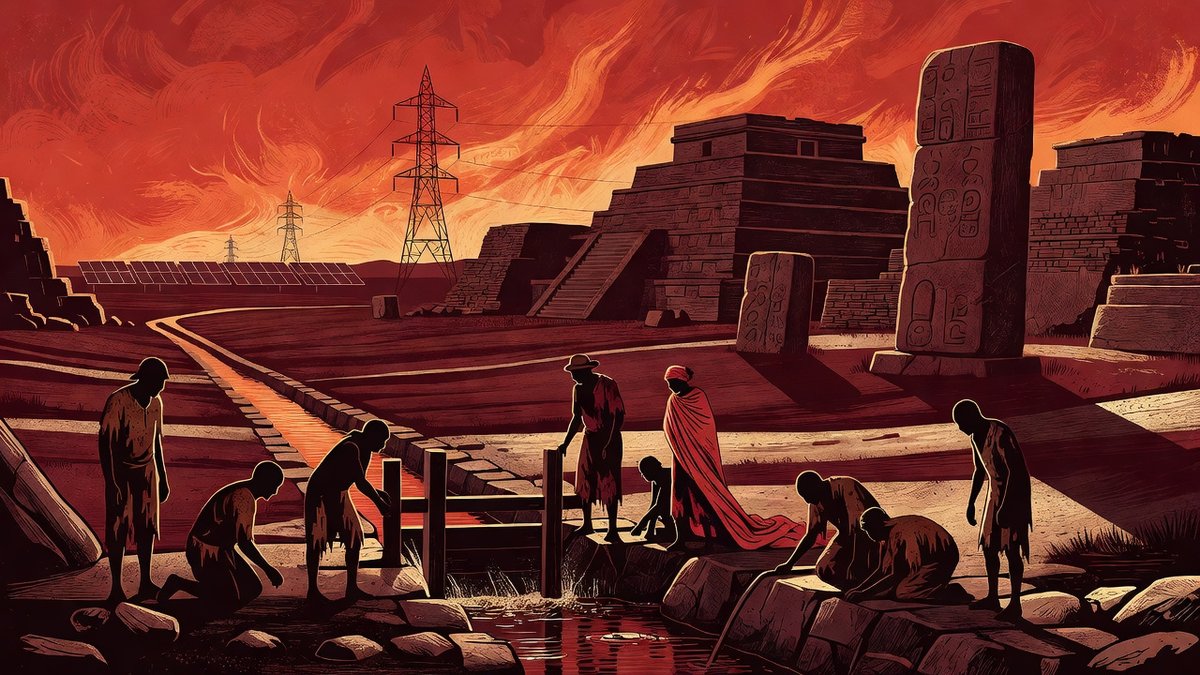
One hectare of avocados in Michoacán consumes up to sixteen hundred liters of water per kilogram produced. A residential solar panel in Costa Rica can feed surplus power back into the grid, and depending on the tariff in effect, that surplus is worth a different amount each month. A company reporting flawless ESG metrics can still be financing, within the same portfolio, projects that contradict them. Three scenarios. Three sectors. The same underlying problem. Sustainability is a system's capacity to maintain its function without depleting the resources that sustain it, because every model operates within limits that someone, at some point, has to decide how to divide. That definition sounds obvious. What's less obvious is who does the dividing, by what criteria, and who benefits from keeping the conversation technical so it never has to touch the political.
In finance, the language has grown sophisticated. The ESG framework was born as an attempt to incorporate externalities into financial risk calculations. If a company pollutes a river, that cost eventually comes back as regulatory or legal risk. Better to measure it now. But optimizing ESG strategy has largely become optimizing ESG reporting. The organizations that score best on these frameworks aren't necessarily the ones causing the least harm. They're the ones that document best.
So who defines what counts as a valid ESG criterion, and who audits that definition? The answer points back to the same financial institutions managing the assets these frameworks are supposed to regulate. It's governance grading its own homework. You don't need to imagine bad faith to see the structural problem. When the actor holding the pen also writes the exam, the exam tends to hand out good grades. The Generosity in the Doorway explores this tension in its discussion of resource distribution. Every proposal for how to divide resources presupposes an actor with authority. Few explain what stops that actor from rewriting the rules once the authority is in hand.
For anyone simply paying the electric bill or buying groceries, this means that the sustainability reaching the end consumer has already been filtered through decisions made long before, in offices they never set foot in.
In agriculture, agro-sustainability faces an even more direct version of the problem, because here the resources are physical and finite. AENOR lays this out clearly in its analysis of the sector. It's not just about cutting chemical inputs. It requires rethinking the entire chain, from land tenure to access to irrigation water. That access isn't distributed neutrally. In Mexico, the ejido embodies a communal land-tenure logic that in theory favors equitable distribution, but in practice competes against agribusinesses that corner water rights through concessions.
When there's no trustworthy external referee, shared resources tend to fragment into de facto territories. Shared resources. Rules that are actually enforced. That's what makes the difference. Elinor Ostrom spent much of her career documenting the exceptions to this tendency—communities that did manage to govern common resources without privatization or collapse. Her core findings: clear rules, verifiable monitoring, and sanctions proportional to the harm done. Ancient Mesoamerican societies already faced similar divisions of water and land through systems that reflected power and reciprocity.
This echoes the same reciprocity principle examined in Stones don't lie, but historians sometimes do. Cycles of contribution and consequence need the right speed—not so slow that no one connects action to outcome, not so fast that they breed paranoid surveillance. Successful agro-sustainability, where it exists, follows that same rhythm.
Distributed energy generation illustrates the third angle, and it's perhaps the most instructive one, because here the technology has already solved the hard part. Grupo ICE in Costa Rica documents its grid hosting-capacity map in detail. Any user can install solar panels and feed surplus power into the system. The technical infrastructure to measure this precisely already exists. The problem is no longer technical—it's tariff-based. Applicable rates change over time, and those changes determine whether generating your own power is a good deal, a wash, or a loss.
Technology democratized production. The tariff structure decides whether that democratization translates into real benefit or stays a symbolic gesture. Confusing technical capacity with distributional structure is precisely the mistake that lets well-intentioned projects end up benefiting those who need them least. A distributed generation system without fair tariffs favors whoever already has the capital to install panels, while leaving the full bill to whoever doesn't.
The measurement infrastructure already exists, or is close to existing, in all three cases. We know how to calculate water footprints and audit emissions. Measuring kilowatts fed into the grid with minute-by-minute precision is also a solved problem. What remains unsolved is who controls that measurement infrastructure and under what accountability rules it operates. Institutional game theory has been saying something simple for decades that we keep ignoring: a poorly designed incentive system produces rational behavior that is collectively destructive—not because the actors are bad, but because the rules fail to align individual benefit with the sustainability of the whole.
I don't have a neat solution for this, and it would be dishonest to pretend I do. What I can offer is a distinction that helps in reading any sustainability proposal that comes along in the years ahead. Ask first whether it solves a technical problem or a problem of power distribution, because the two usually come bundled together, and the technical packaging almost always conceals the political decision. ESG frameworks, agro-sustainability certifications, and distributed generation tariffs are, above all, decisions about who bears the cost and who reaps the benefit. The technology that makes them possible is, by comparison, the easy part.
But will we keep letting the same actors decide who divides the resources and who writes the rules?
Sources
1. Global Dev Journal — From Digital to Global Governance: Strategic Optimization
2. Revista AENOR No. 364 — Agro-sustainability: Challenge and Future of the Agricultural Sector
3. Grupo ICE — Distributed Generation: Tariffs and Grid Hosting-Capacity Map