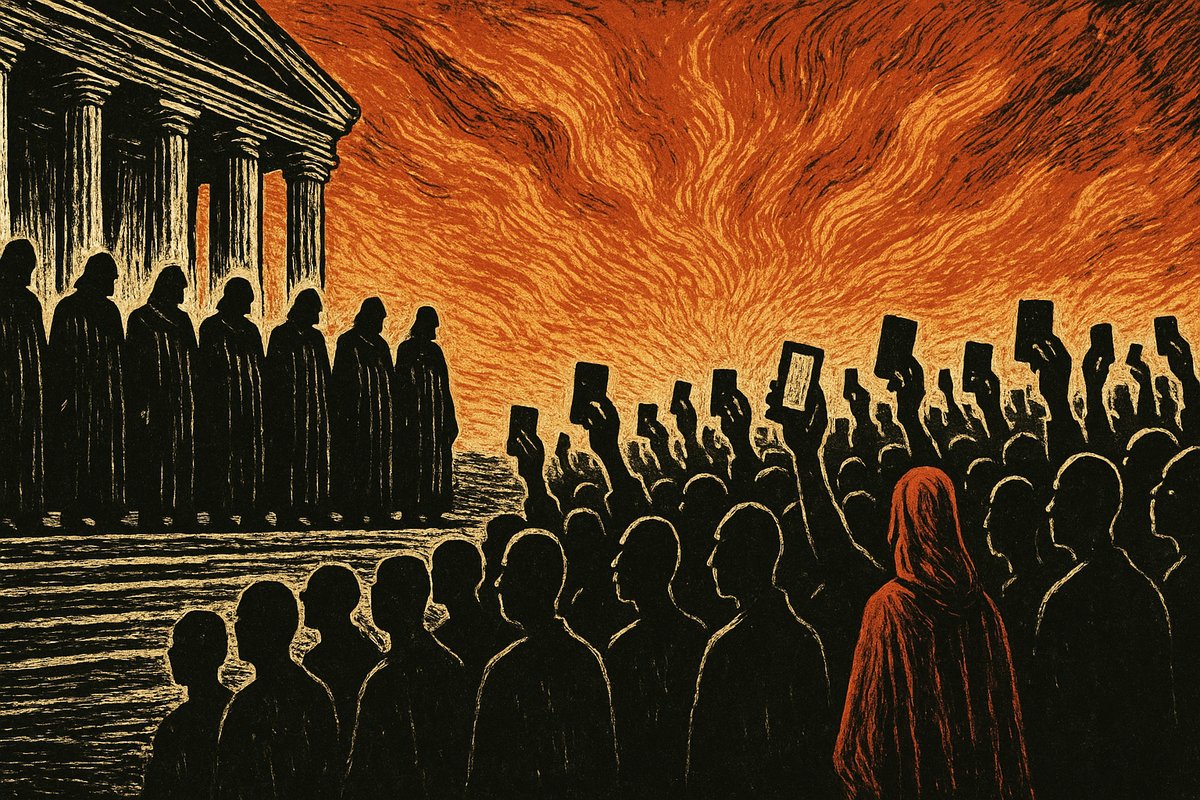
On August 14, 2026, nine judges in Paris sent an uncomfortable message to an entire government. Protecting children does not justify surveilling every adult. France's Constitutional Council declared unconstitutional the law that would have banned social media for those under fifteen. It deemed the measure disproportionate with respect to freedom of expression and the right to privacy. A blanket ban is disproportionate because it requires an entire population to prove its age without clear legal guarantees about what happens to that data afterward. That's the definition the court ultimately gave the problem.
The law was born with good intentions. Like almost all laws that end up before a constitutional court. The argument seemed solid: platforms generate anxiety in teenagers, fuel social comparison, and deploy algorithms designed to capture attention at any cost. France tried to solve it with a lock. The judges saw a different dynamic. A rule that failed to distinguish between genuinely risky services and those where harm to minors hadn't even been proven. It also forced every adult user to hand over proof of identity just to keep using their account.
What followed happened fast. Emmanuel Macron asked his prime minister, Sébastien Lecornu, to draft a new version of the law. This time within the bounds allowed by European law. The goal was to have it ready by spring 2027, before the presidential term ends. A tight deadline for a problem no country has solved cleanly.
Why does a court that in theory defends citizens end up blocking a law meant to protect minors? The answer isn't that the judges don't care about children. They identified a dangerous mechanism. Any age-verification system needs to check everyone's age, not just that of possible minors. That "everyone" includes every adult using Instagram, TikTok, or X on French soil.
The actors in this story go beyond the government and the court. The European Commission is pushing similar regulations under the Digital Services Act and is watching France as a test case. Meta, TikTok, and X would prefer a fragmented, country-by-country framework. It gives them room to negotiate. A uniform European rule would force them to redesign their products from scratch. Nearly invisible in the debate are the age-verification technology providers, companies selling biometric or facial-scanning systems. They stand to gain a great deal if the new rule requires that infrastructure at national scale.
This tension has surfaced before. It recalls the case of OpenAI and its decision not to flag worrying conversations before a tragedy in Canada. The dilemma is the same. How much privacy are we willing to sacrifice to prevent a harm we cannot measure precisely? Ofcom in the UK asked the same question about Telegram and its encrypted chats. A questionnaire that didn't seem neutral. It pointed toward more surveillance disguised as child protection. France repeated the pattern. This time a court said no.
What does this mean for the coming months? Lecornu has to find a middle ground that probably doesn't fully exist. Protecting minors without turning every French adult into a permanent suspect who must prove their identity just to go online. Options include device-level rather than platform-level age verification, restrictions on recommendation algorithms for accounts flagged as belonging to minors, or stronger parental controls. None of these solutions is perfect. Any of them could end up back in the same court if the proportionality calculation is off.
Families hoping for a decisive fix lose out in the short term. Now they have to wait until 2027. The social media industry gains, without meaning to, another year and a half of operating under the current rules. Brussels is watching closely, because the next French law, if it survives constitutional scrutiny, will become the template for the rest of the European Union.
There's a pattern I've observed for a while now. When a state tries to solve, with a single law, a problem that touches millions of families in completely different contexts, the result tends to be either too lax or too invasive. In Las Piedras No Mienten I explore why human scale — small communities, decisions made close to the actual problem — tends to produce better outcomes than national mandates designed to apply equally in Paris and in a village in Brittany. It's not that national laws are useless. It's that when they try to be the only tool, they end up blocked by their own ambition.
The parallel few mention in the press coverage is that of the medieval guilds. They controlled access to knowledge under the excuse of guaranteeing quality when in reality they were protecting their monopoly, as the historical records of the era show. Age verification as the original law framed it didn't just filter out minors. It filtered out the anonymity of anyone who preferred not to hand over their official ID to a private platform just to comment on a video. Protection without surveillance.
Sébastien Lecornu has until spring 2027 to write a law that protects teenagers without asking their parents for ID. In the meantime, any French fifteen-year-old can still open an account this very afternoon. How do you build a framework that looks out for the youngest without eroding everyone's freedoms?