The New Commons Incubator, an initiative of GovLab alongside Microsoft and UNESCO, announced it will support linguistic and cultural data commons led by indigenous communities. As far as the incubator's and UNESCO's own sources indicate, no participating communities have been named yet, and there are no results to evaluate. Nor is the exact launch date confirmed. What exists is a promise and a stated goal: that the domain belong to the communities.
A data commons is a collective resource whose rules of access and use are defined by those who produce it, because actual control is what distinguishes this arrangement from a mere repository. That definition serves as our yardstick. This piece, then, is not a verdict on the initiative. It is a list of criteria to determine, once the announcements arrive, whether what gets built is a commons or an enclosure with better PR. Some mention the Deb Haaland news as political backdrop. I leave it as context and nothing more.
First, the history. The English enclosures, between the sixteenth and nineteenth centuries, turned pastures, forests, and open fields into closed property. They were presented as modernization — more productivity, better crops, legal order. There was a grain of truth in that narrative, which is why it worked. The underlying trend, however, is different. A collective resource shifts into private management precisely when a technology emerges that gives it value. Back then it was the wool market. Today it's language models: a language with few speakers and little documentation becomes scarce raw material.
Who lost the most in those enclosures? The commoners lost access, almost always — except where strong local rules existed. That exception is the key to everything that follows. What protected some was not the landowner's goodwill. It was their own institutions, backed by the capacity to enforce them.
That's where Elinor Ostrom comes in. Her work, which earned her the Nobel Prize in Economics in 2009, documented commons that survived for centuries without being privatized or nationalized. Her principles provide a concrete test: clear boundaries on the resource and on who belongs, rules set by the community itself, monitoring, graduated sanctions, and the right to self-organize without an external authority overriding it. Applied to language and cultural data, the test gets uncomfortable. Who draws the line between shareable data and sacred knowledge? Who monitors its use?
The underlying question is who sets the real rules in this incubator. My instinct is that whoever funds and hosts the infrastructure does. That Microsoft is a partner doesn't disqualify the project. It does, however, demand questions about licenses, storage terms, usage rights, and veto power. I'm speaking here in terms of reasonable speculation, not established fact: the sources don't spell out those terms. But in any such structure, whoever owns the servers usually holds the practical last word — regardless of what the press release says.
Let's turn to cui bono. Financially, the biggest winners from a well-documented, legitimized linguistic archive are AI companies. They get quality data with a consent label attached. Communities, by contrast, only gain power if they secure real contractual control. The story being told is one of responsible inclusion. And it's a good story — which is exactly why it's worth scrutinizing. Those already training models on indigenous data without consent are the ones most grateful for the distraction. A visible, well-meaning initiative serves them as a comparative alibi. Responsible inclusion without contractual control is an enclosure by another name.
None of this means communities are a homogeneous bloc. Nor that companies act in bad faith by definition. Some communities will want to share their language for educational purposes; others won't want to share anything. Both decisions are legitimate. That's precisely the point — the decision has to be theirs. Companies aren't monoliths either; there are internal teams genuinely trying to do this right. But good intentions don't substitute for mechanisms.
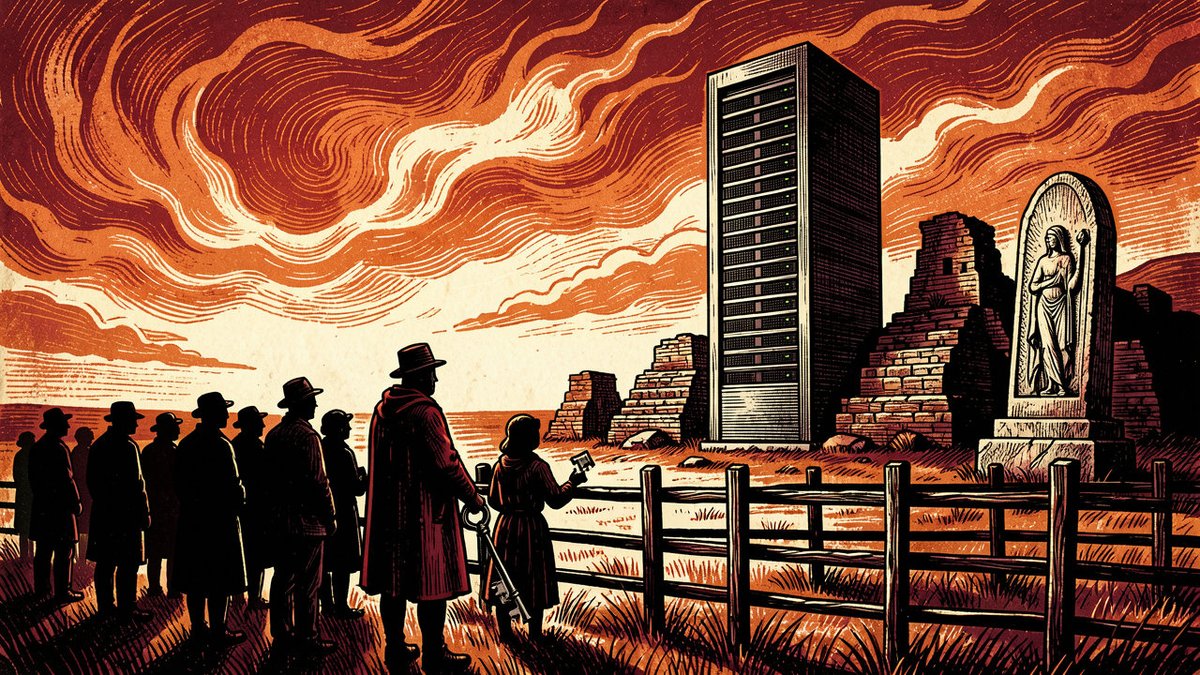
What would real control look like? I think of it as systems design, because that's what governance is. It requires prior, informed, and revocable consent — not a box checked once. Licenses need to travel with the data and limit commercial use absent explicit agreement, with written benefit-sharing clauses. Communities need to directly administer the technical permissions. They need to hold the keys. Not borrow them. Effective veto power over new uses is essential, including the ability to withdraw data and track its trail. And feedback through audits that are legible and triggerable by the community, with graduated sanctions for noncompliance. A charter without that feedback loop is mere decoration.
This connects to something I develop in Stones Don't Lie. Those who produce value lose control over it, almost always without warning. It happened to English peasants. It happens when cognitive labor gets absorbed into structures that others manage. A community's language is labor accumulated over centuries. Turning it into an input is fine only if it answers to whoever produced it.
I still don't know how any of this will be verified. I recognize that even an impeccable contractual design can fail if the community lacks technical and legal resources. That's the most likely crack — support for local capacity matters as much as the license itself. It's worth following the initiative with these questions in hand. Which communities? What contract? Who hosts the servers? Who gets to say no? If the answers arrive with names, texts, and servers under community control, something new will exist. If they bring only principles, we already know this story.
What if communities secure not just the data, but the real key to their digital future?
Sources:
1. New Commons Incubator (GovLab, Microsoft, UNESCO): announcement materials for the initiative.
2. UNESCO: materials on the initiative and on indigenous linguistic and cultural data.
3. Elinor Ostrom, Governing the Commons (1990).