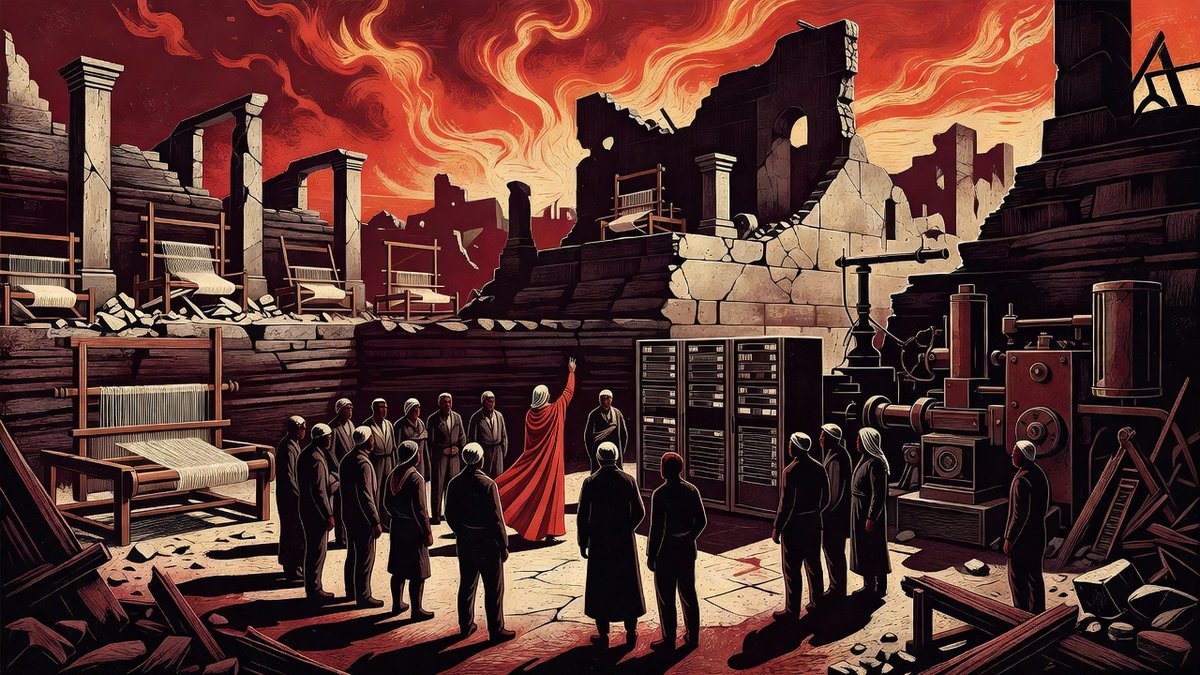
"What we use, what we reject." That's the slogan accompanying Solidarity AI 2026, the conference set to take place in Bangkok from November 12 to 15. There are no results yet. No final declarations, no agreements. I'm writing before it happens, and I flag that from the start so as not to offer conclusions that don't yet exist.
What does exist is the question. Solidarity AI is a collective bet on deciding about technology, because it turns a supposed technical inevitability into a political act. That's the question the industry prefers not to ask. Almost all debate about AI gets reduced to how to adopt it faster. This slogan proposes another path. A community can look at a tool and say no.
A collective decision about technology is real power. It stops being technical fate and becomes politics. That's why it unsettles those who live off adoption being the only verb available.
Why does it matter that cooperatives are the ones raising this? Whoever owns the model and decides where it's deployed holds more power than whoever simply uses it. The most relevant technical question rarely comes down to a model's capabilities. It's who owns it. I like building systems. But I believe the people affected should be able to reject them.
Thailand offers a curious backdrop. Bangkok Post and Khaosod have been tracking the advance of AI in the country. That environment surrounds the conference. It isn't the conference's subject. I simply mention it in passing. I don't intend to diagnose an ecosystem others know better.
Rejection carries bad press because of a caricature. People say "Luddite" to dismiss someone supposedly afraid of progress. Medieval and modern guilds always negotiated. Which machines entered the workshop. Under what conditions. With what rules. It wasn't fear. It was governance of the craft.
The English Luddites of 1811-1816 followed that same logic. They broke looms imposed without their consent. Organized rejection. Negotiation by other means when there was no table to negotiate at.
The Frame Breaking Act of 1812 made breaking looms a capital offense. The crackdown was brutal. The uncomfortable lesson is that rejection without institutional power doesn't hold. Three cooperatives. One slogan. A different bet.
That's why what cooperatives are doing today is more interesting. They don't just say no. They build the alternative and equip themselves with legal and economic structure that lets them sustain their decisions. In Stones Don't Lie, currently in the works, I explore how the alternatives that survive keep structures alive, not just protest. I mention it here only as a framework, without giving more away.
Farox, Cambá, and Nayra, from Argentina, are building open generative AI under collective ownership. That's verifiable. I won't add user figures, budgets, or architecture details I haven't confirmed. The structural fact is enough. The model doesn't belong to a shareholder. The rules governing its use are discussed among those building it.
Why is this an alternative and not mere ethical critique? The big platforms' model concentrates data, compute, and decisions. It treats common knowledge as raw material. Collective ownership and commons management change the structure itself. Anyone who's read Ostrom recognizes the bet. Commons hold up through clear rules, mutual oversight, and graduated sanctions. Linux offers another example. Anyone can audit it. That transparency strengthens it.
One nuance that matters. Being a cooperative doesn't guarantee real control. If a third party audits or manages the code, formal ownership falls short. I discussed this when writing about Bharat Taxi. The same limit applies here. I'll leave the other cooperative platform experiences at that single mention, since I've already covered them.
If you ask honestly who wins, cooperative networks in the Global North and in emerging economies strengthen their bargaining power and their own narrative. The social and solidarity economy is advancing. Community-funded cooperatives could also win. But that's where the real problems begin. There's an obvious contrast between compute concentrated in a handful of companies and smaller-scale cooperatives. That analysis is mine, not a fact from the conference.
Can they sustain themselves financially and grow without ceding control? I'm still not sure. Anyone who claims to know the answer is probably selling something.
The big AI labs benefit from the distraction. If the debate stays symbolic, a nice slogan costs them nothing. What would cost them something is a verifiable rule banning a specific deployment. No cooperative AI governance framework has been approved yet. Today these are topics under discussion. Best not to mistake them for settled facts.
After Bangkok, these are the questions I'll keep following. Whether "what we reject" translates into rules someone can verify, or stays a manifesto. Who decides within each cooperative when membership doesn't agree. What happens when rejecting a tool costs clients or compute. And the most practical one: how do AI commons fund something that today demands infrastructure almost no one in emerging economies possesses?
It's worth experimenting with humility. Guilds negotiated for centuries, and the Luddites lost for lack of structure. Between those two extremes lies a space barely being explored.
Which structures will actually hold up once rejection carries real consequences?